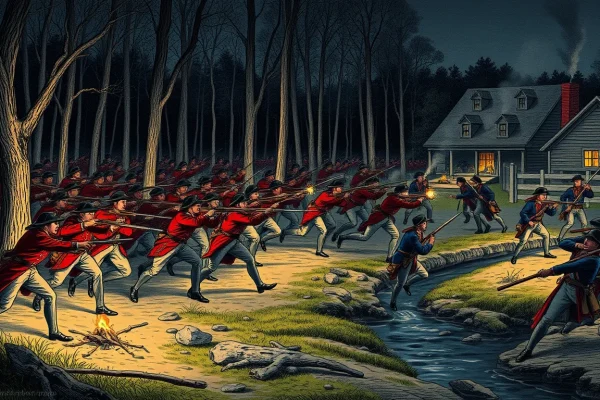
Battle of Stoney Creek
The Battle of Stoney Creek, fought on 6 June 1813, was a British night attack that captured two American generals and halted the American invasion of Upper Canada, restoring British control over the Niagara Peninsula.

The Battle of Stoney Creek, fought on 6 June 1813, was a British night attack that captured two American generals and halted the American invasion of Upper Canada, restoring British control over the Niagara Peninsula.
During the War of 1812, the Royal Navy progressively blockaded the American coast, devastating U.S. foreign and coastal trade, collapsing customs revenue, and contributing to a severe financial crisis. The blockade was a decisive British strategic tool that crippled the American economy and helped force the United States toward peace.
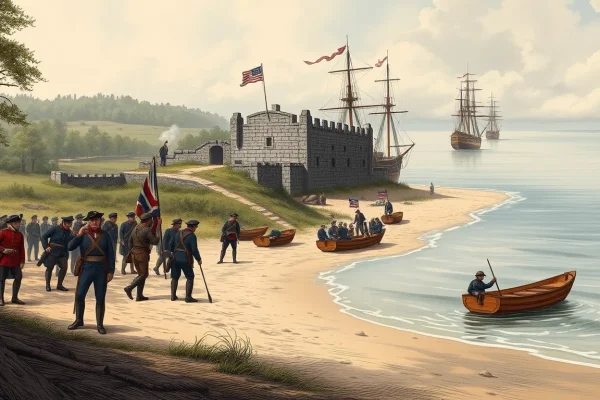
The Battle of Fort Oswego (1814) was a British raid on the American post at Oswego, New York, on 6 May 1814, during the War of 1812. Though the British captured the fort and village, they failed to secure the heavy naval guns intended for the American squadron on Lake Ontario, limiting the strategic impact of their victory.
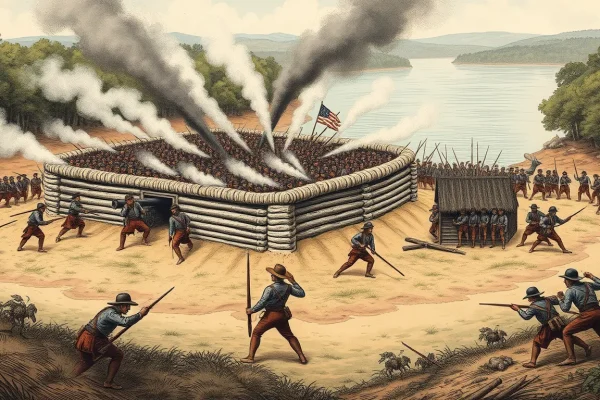
The Battle of Horseshoe Bend, fought on March 27, 1814, was the decisive engagement of the Creek War, in which U.S. forces under Major General Andrew Jackson, aided by Cherokee and Lower Creek allies, overwhelmed the Red Stick warriors at a fortified peninsula on the Tallapoosa River in Alabama, breaking Red Stick resistance and leading to massive land cessions.
The War of 1812, though militarily inconclusive, prompted a fundamental shift in British policy from containing the United States to accommodating its rise, setting the stage for a century of Anglo-American peace and eventual alliance.
The War of 1812 was fought across the United States, British North America (Canada), and the Atlantic Ocean, encompassing several distinct theaters: the Old Northwest, the Niagara and St. Lawrence frontiers, the Chesapeake Bay, the Gulf Coast, and the high seas. Understanding these geographic zones is essential to comprehending the conflict’s strategies and outcome.
The Battle of Fort Stephenson on August 1–2, 1813 was a decisive American victory during the War of 1812, in which Major George Croghan’s small garrison repelled a British assault at Lower Sandusky (present-day Fremont, Ohio).
The Lundy’s Lane Battlefield in Niagara Falls, Ontario, is the site of the bloodiest battle of the War of 1812, fought on July 25, 1814, where British and Canadian forces under Gordon Drummond halted the American army’s advance into Upper Canada, ending the American offensive.
Philip Bowes Vere Broke commanded HMS Shannon during the War of 1812 and on 1 June 1813 captured USS Chesapeake off Boston, a victory that restored Royal Navy prestige after American frigate successes. Broke’s rigorous gunnery training made Shannon one of the most effective frigates of the era.
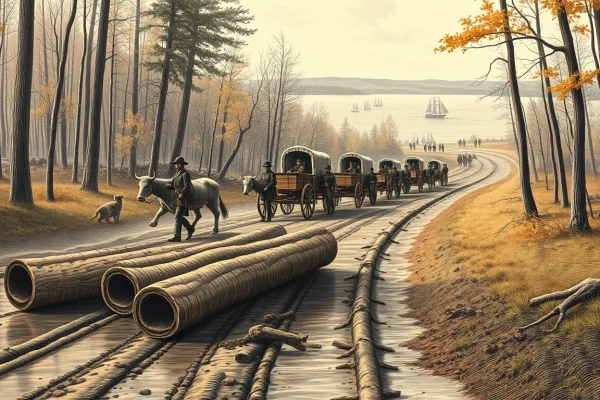
During the War of 1812, the limited and primitive roads of North America, combined with heavy reliance on waterways, dictated how armies moved, where they fought, and why some campaigns failed. This article examines the state of transportation infrastructure and its critical impact on the conflict.