
Short Answer
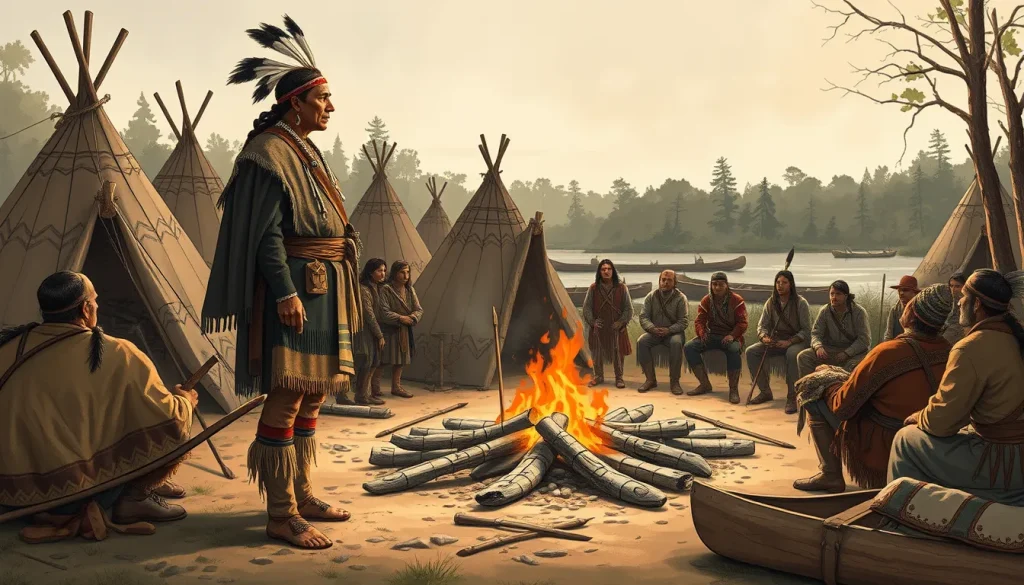
Tecumseh’s Confederacy was a pan-Indigenous alliance in the Great Lakes and Ohio Valley region, active from about 1805 to 1813, that sought to resist United States expansion and defend Indigenous land and sovereignty. Led by the Shawnee war leader Tecumseh and inspired by the religious revitalization preached by his brother Tenskwatawa, known as the Prophet, it became a major Indigenous power in the Old Northwest and an ally of Britain during the War of 1812. The alliance reached its height in 1812 and 1813 but fractured after Tecumseh was killed at the Battle of the Thames on October 5, 1813. Its rise and fall reshaped the war in the Northwest, exposed the limits of British Indigenous alliances, and left a lasting legacy in Indigenous and Canadian historical memory.
Historical Context
The confederacy emerged from decades of war, displacement, and treaty-making after the American Revolution. The 1783 Treaty of Paris transferred British claims east of the Mississippi to the United States, but many Indigenous nations in the Ohio Valley and Great Lakes did not accept that Britain had the right to cede their homelands. American settlement north of the Ohio River increased, leading to the Northwest Indian War of the late 1780s and early 1790s. At the 1794 Battle of Fallen Timbers, Major General Anthony Wayne’s American army defeated a coalition of Indigenous nations, and the 1795 Treaty of Greenville forced several nations to cede much of present-day Ohio and parts of Indiana to the United States.
After Greenville, Shawnee, Lenape, Miami, Wyandot, and other peoples were increasingly confined to shrinking lands and pressured by American settlers, surveyors, and officials. Many Shawnee had already lost their Ohio towns and hunting grounds. The 1803 Louisiana Purchase and subsequent American expansion intensified fears that Indigenous nations would be permanently dispossessed. At the same time, Britain retained posts and influence in Upper Canada and maintained trade and diplomatic ties with Indigenous nations, even after the 1794 Jay Treaty. American officials suspected Britain of encouraging Indigenous resistance, while British officials saw Indigenous alliances as a buffer for Canada.
In 1805, a religious revival transformed the political landscape. After the death of Lenape leader Buckongahelas, accusations of witchcraft spread among several communities. Tenskwatawa, a Shawnee man named Lalawethika, emerged as a prophet. He condemned alcohol, witchcraft, and the adoption of many American ways, and he taught that Indigenous peoples should reject further land cessions and return to traditional practices. His message attracted followers from multiple nations, including Shawnee, Wyandot, Mingo, Odawa, Potawatomi, and Lenape communities. Tecumseh, already known as a warrior, became the movement’s principal political and military leader around 1808.

What Happened
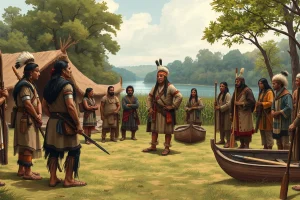
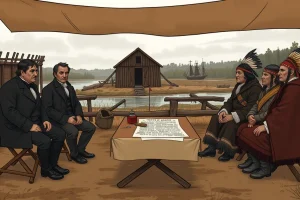
In 1808, Tenskwatawa and Tecumseh established Prophetstown near the confluence of the Wabash and Tippecanoe rivers in present-day Indiana. The settlement became a gathering place for warriors and families from many nations and a center of resistance to American expansion. In 1809, American officials negotiated the Treaty of Fort Wayne, purchasing a large tract of land from several Indigenous leaders. Tecumseh and Tenskwatawa rejected the treaty, arguing that land was held in common and that no single nation could sell it without the consent of all. Tecumseh confronted Governor William Henry Harrison at Vincennes in 1810, demanding that the treaty be rescinded, but Harrison refused.
In 1811, while Tecumseh traveled south to recruit allies among the Creek, Cherokee, Choctaw, and Chickasaw, Harrison marched on Prophetstown with about 1,000 soldiers and militia. On November 7, 1811, Tenskwatawa’s warriors attacked Harrison’s camp before dawn at the Battle of Tippecanoe. The American force held its ground and then destroyed Prophetstown. The battle became known in the United States as a victory for Harrison, though Indigenous resistance continued. Tecumseh returned to find the settlement ruined and the confederacy shaken, but he renewed recruiting and strengthened ties with Britain as war between the United States and Britain approached.
The United States declared war on Britain in June 1812. Tecumseh and his confederacy allied with British forces in Upper Canada under Major General Isaac Brock. Their partnership produced early successes. In July 1812, British and Indigenous forces captured Fort Mackinac. In August 1812, Tecumseh and Brock compelled Brigadier General William Hull to surrender Detroit without a major battle. Around the same time, the American garrison at Fort Dearborn, near modern Chicago, evacuated and was attacked by Potawatomi warriors, with many soldiers and civilians killed. These victories gave the British and their Indigenous allies control over much of the Old Northwest.
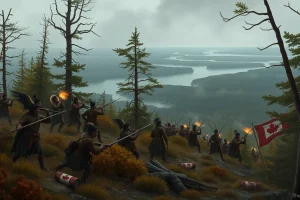
In 1813, the alliance fought a series of campaigns. British and Indigenous forces under Colonel Henry Procter and Tecumseh besieged Fort Meigs in northern Ohio in April and May, but failed to capture it. In August, they attacked Fort Stephenson and were repulsed. The September 10, 1813 Battle of Lake Erie gave the United States naval control of the lake, cutting British supply lines and forcing Procter to retreat from the Detroit frontier. Tecumseh reluctantly withdrew with the British into Upper Canada. On October 5, 1813, Harrison’s American army caught Procter’s retreating force near Moraviantown on the Thames River. In the Battle of the Thames, the British regulars quickly broke, and Tecumseh was killed. The confederacy dissolved as a major military alliance. Some Indigenous resistance continued, including among the Sauk and Meskwaki, but without the broad coalition Tecumseh had built. The December 1814 Treaty of Ghent ended the war between Britain and the United States, and Britain abandoned its Indigenous allies in the peace settlement.
Why It Matters
In the short term, Tecumseh’s Confederacy helped Britain defend Upper Canada and delayed American control of the Old Northwest. Its victories at Detroit, Mackinac, and Fort Dearborn embarrassed the United States and exposed the weakness of its northwestern frontier. Tecumseh’s death at the Thames removed the alliance’s most capable diplomat and war leader. The United States soon regained the initiative, and after the war it negotiated a series of treaties that forced many Indigenous nations to cede more land or move west. The Treaty of Ghent did not restore Indigenous sovereignty or the lands lost before and during the war, despite the hopes of Britain’s Indigenous allies.
In the longer term, the confederacy became a landmark in the history of pan-Indigenous resistance. It demonstrated that nations with different languages, customs, and local interests could cooperate around shared goals of land defense and cultural survival. It also revealed the fragility of such coalitions when military defeat, the death of a charismatic leader, and the withdrawal of a European ally disrupted them. Historical memory is divided. In Canada, Tecumseh is often remembered as a heroic ally who helped save Upper Canada. In the United States, nineteenth-century accounts sometimes portrayed him as a noble but doomed adversary or as a British instrument, while modern scholarship emphasizes Indigenous agency. Historians such as Donald R. Hickey and Peter Cozzens argue that the confederacy should be understood as an independent movement with its own objectives, not merely a proxy of Britain. John Sugden and R. David Edmunds stress Tecumseh’s diplomatic and military skill, while Cozzens reassesses Tenskwatawa as a co-architect whose religious message created the movement’s unifying purpose.
Definition
Tecumseh’s Confederacy was a loose political and military alliance of Indigenous nations and villages, not a formal state with fixed borders or centralized institutions. Its core was the Shawnee movement around Tenskwatawa and Tecumseh, but it drew support from Lenape, Wyandot, Miami, Potawatomi, Kickapoo, Wea, Piankeshaw, Ojibwe, Odawa, Menominee, Sauk, Meskwaki, Ho-Chunk, Mingo, Seneca, and other peoples. Its goals included halting American land cessions, defending communal Indigenous land rights, resisting cultural assimilation, and securing British support against the United States. Leadership rested on persuasion, kinship, reputation, and consensus rather than coercive authority.
Background
The confederacy grew from the failures of earlier resistance and accommodation. The Treaty of Greenville had left many Indigenous nations with reduced territories and uncertain sovereignty. American officials continued to negotiate land cessions with individual leaders, while settlers encroached on hunting grounds. Tenskwatawa’s religious teachings offered a cultural and spiritual explanation for crisis and a program for renewal. Tecumseh supplied the political and military strategy, traveling widely to persuade nations to join a common cause. The British presence in Upper Canada provided an alternative source of trade goods, arms, and diplomatic support, especially as American-British relations deteriorated over maritime rights, impressment, and trade restrictions.
How It Worked
The confederacy operated through networks of villages, kinship, and warrior societies rather than a single command structure. Prophetstown served as a headquarters and gathering place, but local chiefs and communities retained considerable autonomy. Tenskwatawa’s teachings provided a shared ideology and ritual focus; Tecumseh’s diplomacy and personal prestige attracted warriors and negotiated alliances. British officials supplied arms, ammunition, provisions, and military coordination, but they did not fully control Indigenous decisions. Tecumseh often acted independently and pressed British commanders to respect Indigenous interests. The alliance was strongest when it could deliver victories and supplies, and it weakened when those failed.
Competing Viewpoints
Interpretations of the confederacy have shifted over time. Nineteenth-century American accounts often depicted Tecumseh as a tragic but exceptional figure while treating Tenskwatawa as a fraud or fanatic. British and Canadian accounts have tended to emphasize Tecumseh’s role in saving Upper Canada and his partnership with Isaac Brock. Modern historians disagree about how centralized the confederacy was. Some describe it as a broad pan-Indigenous movement with a coherent ideology; others stress that it was a pragmatic and fragile coalition of local groups with different priorities. There is also debate over British influence. Official British records often called Indigenous warriors auxiliaries, but scholars such as Hickey argue that this language obscures Indigenous agency and independent war aims. Cozzens argues that Tenskwatawa, not Tecumseh alone, was essential to the movement’s rise. These disagreements reflect the uneven survival of Indigenous voices in the documentary record and the different national and scholarly perspectives from which the alliance has been studied.
Role in the War of 1812
For Tecumseh and his allies, the War of 1812 was a continuation of their own struggle against American expansion. The British alliance offered weapons, supplies, and a base in Upper Canada, while Britain gained skilled Indigenous warriors and knowledge of the terrain. The partnership produced the capture of Detroit and Mackinac, the attack on Fort Dearborn, and the sieges of Fort Meigs and Fort Stephenson. After the Battle of Lake Erie, British power on the lake collapsed, and Procter’s retreat left Tecumseh’s warriors exposed. At the Battle of the Thames, the British regulars were quickly routed, and Tecumseh was killed. His death broke the alliance’s central leadership, and the confederacy ceased to function as a unified military force. The war in the Northwest continued in places, but the British and American peace of 1814 did not secure Indigenous rights.
Consequences and Historical Interpretation
The fall of Tecumseh’s Confederacy opened the Old Northwest to accelerated American settlement and treaty pressure. After 1815, the United States negotiated treaties that removed or confined many Indigenous nations, and the era of Indian removal followed in the 1830s. For Britain and Canada, the alliance became part of a narrative of mutual defense, though British officials ultimately prioritized peace with the United States over Indigenous claims. For Indigenous peoples, the confederacy remained a powerful example of unity and resistance. Historians continue to debate its significance: was it the last great chance to create an Indigenous buffer state, a defensive coalition doomed by superior American numbers and British unreliability, or a movement whose influence persisted in later pan-Indigenous activism? The most durable scholarly conclusion is that Tecumseh’s Confederacy was neither a British puppet nor a simple rebellion, but a complex alliance of Indigenous nations pursuing sovereignty, land, and survival in a continental war.
Primary Sources
- Treaty of Greenville, 1795. This treaty ended the Northwest Indian War and ceded large parts of Ohio to the United States. It is essential for understanding the land losses that fed later resistance, but it records the American and accommodating-chief perspective and does not represent the views of those who rejected it.
- William Henry Harrison’s report on the Battle of Tippecanoe, 1811. Harrison’s official report to the Secretary of War describes the battle and justifies his actions. It is a key American source, but it is self-serving and must be read alongside Indigenous and British accounts.
- Isaac Brock’s correspondence and proclamations, 1812. Brock’s letters and public statements show how British officials viewed the Indigenous alliance and the defense of Upper Canada. They reveal British strategy but rarely record Indigenous objectives in their own words.
- Henry Procter’s report on the Battle of the Thames, 1813. Procter’s account explains the British retreat and defeat. It is a defensive document written by a commander facing criticism, and it should be compared with American reports and Indigenous testimony.
- Treaty of Ghent, 1814. The peace treaty ended the war between Britain and the United States. Article IX addressed peace with Indigenous nations and restoration of rights, but the final settlement did not secure a lasting Indigenous homeland. The treaty text is a legal document, not a record of Indigenous aspirations.
- Tenskwatawa’s teachings and Tecumseh’s speeches. No verbatim manuscript record of most of their speeches survives. Their words are known through reports, letters, and later recollections by American, British, and Indigenous observers. These sources are valuable but filtered through translation, memory, and political bias.
Further Reading
- Donald R. Hickey, Tecumseh’s War: The Epic Conflict for the Heart of America. Westholme Publishing.
- Peter Cozzens, Tecumseh and the Prophet: The Shawnee Brothers Who Defied a Nation. Knopf, 2020.
- John Sugden, Tecumseh: A Life. Henry Holt, 1997.
- R. David Edmunds, Tecumseh and the Quest for Indian Leadership. Little, Brown, 1984.
- Colin G. Calloway, The Shawnees and the War for America. Viking, 2007.
- Alan Taylor, The Civil War of 1812: American Citizens, British Subjects, Irish Rebels, and Indian Allies. Knopf, 2010.
- James H. Marsh and Tabitha de Bruin, ‘Tecumseh,’ The Canadian Encyclopedia.
- National Park Service and Parks Canada historic-site materials on Tippecanoe Battlefield, Prophetstown, and the Battle of the Thames.
References
- Wikipedia contributors, ‘Tecumseh’s confederacy,’ Wikipedia, The Free Encyclopedia, https://en.wikipedia.org/wiki/Tecumseh%27s_confederacy.
- James H. Marsh and Tabitha de Bruin, ‘Tecumseh,’ The Canadian Encyclopedia, https://thecanadianencyclopedia.ca/en/article/tecumseh.
- Peter Cozzens, Tecumseh and the Prophet: The Shawnee Brothers Who Defied a Nation (New York: Knopf, 2020), publisher description at Penguin Random House Higher Education, https://penguinrandomhousehighereducation.com/book/?isbn=9781524733261.
- Donald R. Hickey, Tecumseh’s War: The Epic Conflict for the Heart of America (Yardley, PA: Westholme Publishing), https://www.westholmepublishing.com/book/tecumsehs-war-hickey/.
- Joseph Bryan Icenhower, Tecumseh and the Indian confederation, 1811-1813: the Indian nations east of the Mississippi are defeated (New York: F. Watts, 1975), Internet Archive, https://archive.org/details/tecumsehindianc00icen.
FAQ
What was Tecumseh's Confederacy?
It was a loose pan-Indigenous political and military alliance in the Old Northwest, active from about 1805 to 1813, that resisted United States expansion and allied with Britain during the War of 1812.
When did Tecumseh's Confederacy form and fall?
It began forming around Tenskwatawa's religious revival in 1805 and became a major alliance under Tecumseh by 1808. It collapsed after Tecumseh was killed at the Battle of the Thames on October 5, 1813.
Did Tecumseh's Confederacy fight for Britain?
It allied with Britain during the War of 1812, but it pursued its own goals of defending Indigenous land and sovereignty. British officials supplied arms and coordination, but they did not fully control Indigenous decisions.
Why did Tecumseh's Confederacy collapse?
The death of Tecumseh at the Battle of the Thames removed its central leader, while the British retreat after the Battle of Lake Erie cut off military support. Internal divisions and American military pressure then broke the alliance apart.
Leave a Reply