
Short Answer
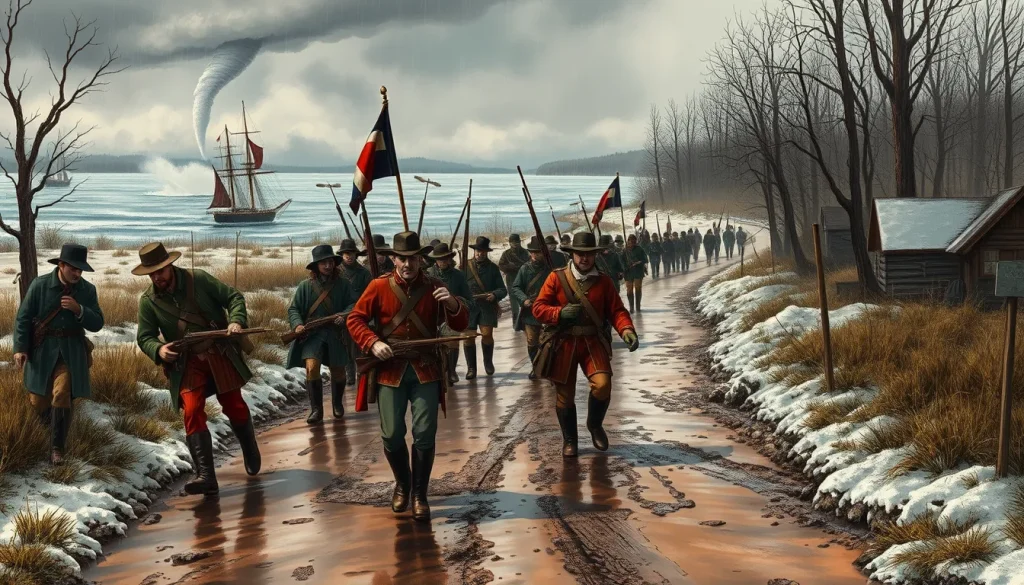
Weather and seasons played a significant, often decisive, role in shaping military campaigns during the War of 1812 (1812–1815). Across the vast theaters of North America—from the Great Lakes and St. Lawrence River to the Chesapeake Bay and Gulf Coast—armies and navies contended not only with each other but with extreme cold, mud, storms, and variable winds. These environmental factors influenced logistics, troop health, naval tactics, and the timing of offensives, occasionally determining the outcome of battles and the broader course of the war. Understanding this dimension is essential for a complete picture of the conflict.
Historical Context
The War of 1812 was fought between the United States and Great Britain, with Indigenous nations, Canadian militia, and local populations playing crucial roles. The conflict stemmed from maritime grievances, impressment of American sailors, and British support for Indigenous resistance to U.S. expansion. The primary theaters were the Great Lakes–St. Lawrence region, the Niagara Frontier, the Chesapeake Bay, and the Gulf Coast. In an era before railroads and paved highways, military movement relied heavily on water routes, and thus on weather conditions that affected lakes, rivers, and roads. The climate of northern temperate North America was characterized by severe winters, hot and humid summers, and unpredictable storms. British and American commanders alike had to plan campaigns around seasonal cycles: winter quarters, spring mud, summer heat, and autumn storms. As historian Erin Spinney notes, winter cold—with its accompanying diseases and logistical demands—was a central challenge for British army and naval forces operating north of the Chesapeake, while southern theaters faced hurricane seasons and tropical diseases.
What Happened
Weather and seasonal events directly intersected with military operations throughout the war. In August 1812, just weeks after the U.S. declaration of war, the Great Louisiana Hurricane struck on August 19, damaging the naval station at New Orleans, washing ships ashore on Lake Pontchartrain, and flooding Fort St. Phillip, where most soldiers drowned. The storm set back American naval preparations in the region for months. In the north, the winter of 1812–1813 brought extreme cold that halted major operations and exacerbated supply shortages. The following year, on September 10, 1813, the Battle of Lake Erie hinged on a shift in wind. Initially favoring the British squadron under Commander Robert H. Barclay, the winds changed to advantage the American commodore Oliver Hazard Perry, allowing him to maneuver the USS Niagara through the British line and capture the HMS Detroit and HMS Queen Charlotte. This victory secured American control of Lake Erie and led to the recapture of Detroit and the Battle of the Thames, where Tecumseh was killed.
In 1814, weather again intervened dramatically. After British forces captured Washington, D.C. on August 24 and burned the Capitol and White House, a severe thunderstorm and tornado struck the city the next day. The storm tore roofs from buildings, uprooted trees, and reportedly killed more British soldiers through flying debris than the battle itself. It also doused the fires and covered the British withdrawal. Later that year, on September 11, the Battle of Lake Champlain took place under conditions that emphasized the importance of naval superiority on the lakes, as the Duke of Wellington later remarked. Winter campaigns, such as the British advance on New Orleans in late 1814 and January 1815, were hampered by cold, rain, and mud, though the battle itself on January 8, 1815, was fought in relatively clear weather. Throughout the war, disease—often linked to seasonal heat and cold—claimed more lives than combat.

Why It Matters
The influence of weather and seasons on the War of 1812 had immediate and lasting consequences. The Louisiana hurricane delayed American naval operations in the Gulf, contributing to the region’s vulnerability. The wind shift at Lake Erie directly enabled a strategic victory that secured the Northwest for the United States and shattered Indigenous resistance in the region. The Washington tornado not only spared the city from further destruction but also became part of American historical memory, often cited as a providential intervention. In the longer term, the war demonstrated the critical importance of environmental planning in military affairs. Historians interpret these events through various lenses: some emphasize the role of contingency and luck, while others, such as environmental historians, stress the structural challenges of operating in North America’s harsh climate. Spinney argues that British medical officers developed extensive knowledge of cold-weather logistics and disease management, reflecting an early form of environmental adaptation. Vermette and others highlight how weather acted as both friend and foe, capable of saving or destroying armies. The war thus offers a case study in how nature shapes human conflict, a theme that continues to resonate in military history.
Definition
In the context of the War of 1812, weather and seasons shaped military campaigns refers to the many ways in which atmospheric conditions, seasonal cycles, and extreme weather events influenced the planning, execution, and outcomes of military operations. This encompasses not only battles but also logistics, troop health, naval tactics, and strategic decision-making. The study of these influences falls within environmental history and military geography, examining the interaction between human conflict and the natural world.
Background
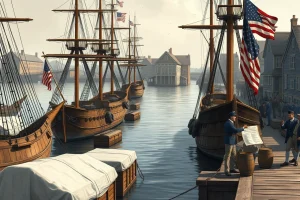
The North American continent in the early nineteenth century presented a challenging environment for military operations. The Great Lakes and St. Lawrence River system formed a crucial corridor, but freezing in winter and unpredictable winds in summer made naval control tenuous. The Niagara Frontier and Lake Champlain were similarly affected by seasonal ice and storms. In the South, the Gulf Coast experienced hurricane season from June to November, while the Chesapeake Bay was subject to violent summer thunderstorms and unpredictable winds. Armies of the period relied on horse-drawn transport and waterborne supply; rain could turn roads into impassable mud, and snow and ice could halt movement entirely. Disease, particularly malaria and dysentery, flourished in hot, humid summers and in unsanitary winter camps. British forces, accustomed to a milder climate, found the North American winters especially severe, as documented in Admiralty correspondence and medical reports.
How It Worked
Weather and seasons affected campaigns through several mechanisms. First, temperature extremes determined the feasibility of military movement: winter cold forced armies into quarters, while spring thaws created mud that delayed offensives. Second, ice and snow could be both obstacle and advantage—frozen lakes allowed movement but also trapped ships; ice bridges sometimes enabled surprise attacks. Third, storms—hurricanes, tornadoes, and thunderstorms—could destroy supplies, scatter fleets, and disrupt command. Fourth, winds were decisive in naval warfare on the lakes, where sailing ships depended entirely on direction and strength of breeze. Fifth, seasonal diseases, such as malaria in summer and respiratory illnesses in winter, sapped army strength. Finally, the psychological impact of weather—demoralization from cold, fear of storms—could influence morale and decision-making. These factors operated in combination, making weather a constant, unpredictable variable in every campaign.
Competing Viewpoints
Historians disagree about the extent to which weather and seasons determined the outcome of the War of 1812. Some scholars emphasize contingency, viewing events like the Washington tornado or the wind shift at Lake Erie as fortunate accidents that altered the war’s course. Others, particularly environmental historians, argue that structural environmental factors—such as the severity of winters or the timing of hurricane season—were more consistently influential, shaping strategy and logistics regardless of individual battles. A related debate concerns British versus American perspectives: British sources often portray the North American climate as exceptionally harsh and debilitating, while American accounts sometimes celebrate weather as a providential ally. There is also discussion of how much commanders learned from environmental challenges; Spinney documents British medical efforts to adapt to cold, but some military historians contend that logistical failures were more due to poor planning than weather itself. These viewpoints are not mutually exclusive, and most historians now recognize that weather acted as a significant but not sole determinant of events.
Role in the War of 1812
Specific examples illustrate the role of weather and seasons across the conflict. The Great Louisiana Hurricane of August 1812 crippled American naval readiness in the Gulf, delaying operations and contributing to the region’s defensive weaknesses. On Lake Erie in September 1813, a sudden wind shift turned near-defeat into victory for Commodore Perry, leading directly to American control of the lake and the subsequent Thames campaign. In August 1814, the tornado that struck Washington, D.C., after the British burning not only caused casualties among the occupiers but also extinguished fires and hastened their withdrawal, saving the city from total destruction. On Lake Champlain in September 1814, naval engagements were similarly influenced by winds and weather, contributing to American victory. Winter conditions shaped the British campaign against New Orleans, with cold rains and mud impeding the advance before the final battle. Throughout, disease and exposure remained constant threats, with medical officers like William Dent noting that severe winter weather could destroy malaria in Kingston. These episodes demonstrate that weather was not merely a backdrop but an active participant in the war.
Consequences and Historical Interpretation
The immediate consequences of weather-related events included strategic shifts, such as American control of Lake Erie and the preservation of Washington. Longer-term, the war highlighted the need for military planners to account for environmental factors, influencing later American military thought. Historical interpretation has evolved from simple narratives of heroic triumph or divine intervention to more nuanced environmental analyses. The 2012 bicentennial spurred new scholarship, including Vermette’s article on weather as both friend and foe, and Spinney’s work on British medical responses to cold. These studies reveal that weather and seasons were integral to the experience of soldiers, sailors, and civilians, shaping not only battles but daily life and survival. The War of 1812 thus serves as a compelling case study of the intersection between human conflict and the natural environment.
Primary Sources
Contemporary documents and accounts provide valuable evidence of weather’s impact. The memoir of British officer George Robert Gleig describes the violent storm that struck Washington in August 1814, noting the prodigious force of the wind that tore off roofs and doused fires; his account, while vivid, reflects a participant’s perspective and may exaggerate certain details. British naval and medical records, such as Admiralty correspondence regarding Halifax’s severe climate and surgeon William Dent’s observations on winter destroying malaria in Kingston, offer insight into how military professionals understood and responded to environmental challenges. Ships’ logs from the Great Lakes often record wind conditions that influenced engagements. American newspapers and private letters sometimes described storms and seasonal hardships. These sources must be read critically, as they reflect the biases, limited vantage points, and rhetorical purposes of their authors. No single source provides a complete picture; historians must corroborate across multiple accounts.
Further Reading
- Vermette, Stephen. “Friend and Foe: Weather and the War of 1812.” Weatherwise 65, no. 1 (2012): 26–33.
- Spinney, Erin. “‘The Hardships he labours under … in that severe Climate:’ Environment, Seasonality, and British Military Operations in Northern Temperate North America 1756–1814.” Papers in Canadian History and Environment, no. 5 (March 2024): 1–45.
- Rauch, Steven J. The Campaign of 1812. Washington, D.C.: Center of Military History, United States Army, 2013.
- Callo, Joseph F. “How the Battles of Lake Erie and Lake Champlain Influenced the American Narrative.” Hudson River Valley Review 29, no. 1 (Autumn 2012).
- Pritzker Military Museum & Library. “Weather & Landscapes in The War of 1812.” Accessed 2025.
References
- Vermette, Stephen. “Friend and Foe: Weather and the War of 1812.” Weatherwise 65, no. 1 (2012): 26–33. https://doi.org/10.1080/00431672.2012.635994.
- Rauch, Steven J. The Campaign of 1812. Washington, D.C.: Center of Military History, United States Army, 2013. https://history.army.mil/Portals/143/Images/Publications/Publication%20By%20Title%20Images/C%20Pdf/CMH_Pub_74-2.pdf.
- Pritzker Military Museum & Library. “Weather & Landscapes in The War of 1812.” https://www.pritzkermilitary.org/weather-landscapes-war-1812.
- Spinney, Erin. “‘The Hardships he labours under … in that severe Climate:’ Environment, Seasonality, and British Military Operations in Northern Temperate North America 1756–1814.” Papers in Canadian History and Environment, no. 5 (March 2024): 1–45. https://doi.org/10.32920/25556115.
- Callo, Joseph F. “How the Battles of Lake Erie and Lake Champlain Influenced the American Narrative.” Hudson River Valley Review 29, no. 1 (Autumn 2012). http://www.josephcallo.com/images/HRVR29pt1_Callo.pdf.
FAQ
How did the Louisiana hurricane affect the War of 1812?
The August 1812 hurricane damaged the naval station at New Orleans, destroyed ships, flooded Fort St. Phillip, and delayed American naval preparations in the Gulf region for months.
What role did weather play in the Battle of Lake Erie?
A shift in wind direction on September 10, 1813, allowed Commodore Perry to maneuver his squadron and defeat the British, securing American control of Lake Erie.
Did a tornado really save Washington, D.C. in 1814?
A severe thunderstorm and tornado struck Washington on August 25, 1814, after the British burning. It caused casualties among British troops, doused fires, and hastened their withdrawal, though historians debate how decisive it was.
Leave a Reply