
Short Answer
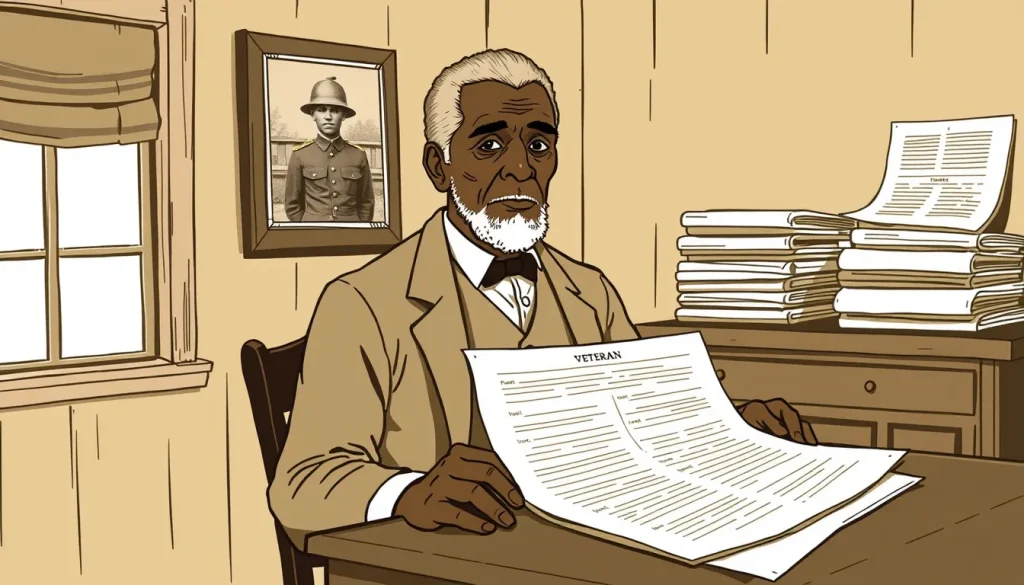
War of 1812 pension records are a critical source for tracing African American veterans who served in the U.S. Army, Navy, and state militias between 1812 and 1815. These records, chiefly created under pension acts of 1871 and 1878, contain extensive personal and service information that can identify Black soldiers and sailors, their families, and even their paths from slavery to service. For historians and genealogists, these documents offer one of the few systematic ways to recover the service and post-war lives of African American participants in the conflict.
Historical Context
During the War of 1812, African Americans served on both sides of the conflict. In the American forces, free Black men enlisted in the Regular Army, state militias, and the Navy, while enslaved men sometimes substituted for their masters or volunteered for service. In the British forces, the Royal Navy and Colonial Marines recruited enslaved men who escaped to British lines, with promises of freedom. The war saw significant Black participation, including the notable Battalion of Free Men of Color at the Battle of New Orleans, the Black soldiers who fought at the Battle of Lake Erie, and the hundreds of Black sailors on American privateers and warships. However, official records were often incomplete and did not consistently note race, making later identification difficult.
After the war, the U.S. government initially offered pensions only for service-connected death or disability, as provided by acts of 1813 and 1816. It was not until the later nineteenth century that Congress authorized service-based pensions for all War of 1812 veterans. The Acts of February 14, 1871 (16 Stat. 411) and March 9, 1878 (20 Stat. 27) allowed surviving veterans, their widows, and in some cases their heirs to claim pensions based on completed service. Because these acts came decades after the war, they prompted thousands of elderly veterans—including many African Americans—to document their service through pension applications. These applications, preserved in National Archives Record Group 15, now constitute an essential resource for researching Black participation.
What Happened
Under the 1871 and 1878 acts, surviving War of 1812 veterans—or their widows—could file claims for a federal pension. The applications required proof of service, including the veteran’s regiment or vessel, dates and locations of enlistment and discharge, and sometimes an honorable discharge certificate. Because many veterans were elderly and often had no other documentation, they provided narratives of their service, along with affidavits from witnesses, including fellow soldiers, officers, or family members. Widows’ applications included marriage details and proof of the veteran’s death.

These applications were consolidated into files, with an envelope for each application that listed the veteran’s name, claim number, and often notes on the service. The National Archives microfilmed the outer envelopes in 1960 as the Index to War of 1812 Pension Application Files (M-313), which serves as the primary name index to the pension files. The actual case files contain the full application papers, supporting affidavits, and government service verification records. For many African American veterans, these files are sometimes the only surviving evidence of their military service outside of scattered muster rolls and pay records.
In addition to pensions, veterans could claim bounty land under acts of 1811, 1812, 1842, 1850, 1852, and 1855. Bounty land applications, often filed alongside pension claims, provide similar genealogical details. The records also include some applications for African American sailors and soldiers who served in the British forces, though these are less systematically documented in U.S. archives.
Why It Matters
The pension records are invaluable for reconstructing the participation of African American veterans, a group often omitted from traditional military histories. For genealogists, the files provide concrete dates, places, and family relationships that allow researchers to trace ancestors back to the war period. For historians, the records reveal the scale of Black service, the social status of free and enslaved soldiers, and the conditions under which they served.
The records also complicate the narrative of African American service. Many veterans had to prove their status (free or enslaved) and sometimes their age, which could be approximate. The existence of these late-nineteenth-century pensions illustrates how the U.S. government slowly acknowledged the service of Black veterans, even as the nation was retreating from Reconstruction-era civil rights. The stories embedded in the pension files, such as that of Jordan Noble, the Black drummer at the Battle of New Orleans, or Ned Simmons, who joined the British and was re-enslaved after the treaty, demonstrate the breadth of African American experience in the war.
Definition
War of 1812 pension records are the official federal documents created when Veterans or their survivors applied for a military pension for service in the War of 1812. These records include applications, supporting evidence (such as affidavits, discharge papers, marriage certificates), and government correspondence. The term also encompasses the associated bounty land warrant applications. In the context of African American research, they serve as a systematic source for identifying Black soldiers and sailors who served in the U.S. forces.
Background
Pension systems for U.S. veterans began with the Revolutionary War. For the War of 1812, initial acts (1813, 1816) granted pensions only for death or disability incurred in service. It was not until 1871 that Congress offered a pension to any veteran who served 60 days and received an honorable discharge; the 1878 act reduced the service requirement to 14 days or participation in any engagement. These acts reflected both a desire to acknowledge aging veterans and political considerations as the Civil War generation sought to honor an earlier conflict. The resulting pension files are among the most detailed personal documents in the National Archives for the early republic.
How It Worked
Veterans or their widows submitted an application using standardized forms. The application asked for the veteran’s full name, age, place of residence at time of service, enlistment and discharge dates, commander’s name or vessel, and any discharges or muster rolls in their possession. Because many African Americans were illiterate or had limited access to records, applications often relied on witnesses—former comrades or officers—who could attest to the service. The War Department then verified the claim against compiled service records, muster rolls, and other military documents. Once approved, the pension was paid semiannually, and the file was retained.
For African American veterans, the process presented unique hurdles. Those who had been enslaved often lacked surnames or had changed names after emancipation. Their military service might have been recorded under the surname of an enslaver or under a given name only. Pension examiners sometimes attempted to identify veterans by physical descriptions, but errors and inconsistencies were common. Despite these obstacles, the files often contain explicit statements about race, as well as the names of former enslavers, which can be genealogical gold.
Competing Viewpoints
Historians and genealogists differ in their assessment of the reliability and completeness of these records. Some emphasize the extraordinary detail and personal narratives, arguing that the pension files offer a uniquely rich window into the lives of common soldiers. Others caution that the late date of the applications (many filed in the 1870s and 1880s) means they are retrospective and may contain memory errors, embellishments, or even fraudulent claims. Moreover, because many African American veterans did not apply—either because they were unaware of the benefits, could not prove service, or died before the acts—the records underrepresent the true number of Black participants. Additionally, the records cover only U.S. forces; African Americans who served in British units, such as the Colonial Marines, do not appear in U.S. pension files.
Another viewpoint concerns the motivation of the applicants. Some historians argue that the pension files, because they were produced in an era of heightened racial segregation, reflect the veterans’ desire to assert their citizenship and service claims. The files can be read as documents of social history, revealing how Black veterans framed their sacrifice to the federal government. These competing interpretations highlight the importance of using the records critically, cross-referencing with military service records and other sources.
Role in the War of 1812
The pension records themselves were not created during the war, but they document the service of African Americans as it actually occurred. For example, the records identify free Black soldiers who enlisted in the Regular Army—such as the approximately 400 free Black soldiers in the U.S. Army during the war, as noted in Eric Eugene Johnson’s Black Regulars in the War of 1812—as well as Black soldiers in state militias like the Louisiana Battalion of Free Men of Color and Black seamen who served under commanders like Oliver Hazard Perry on Lake Erie. The records also reveal the presence of enslaved men who served voluntarily or for compensation, and who later sought recognition through pensions. Thus, the records capture the diverse military roles African Americans played, from combatants to laborers, on the American side.
Consequences and Historical Interpretation
The pension records have had a significant impact on modern understanding of African American service in the War of 1812. They have been used to compile rosters and to reconstruct individual biographies. For instance, the pension of Jordan Noble (who served as a drummer in the 7th U.S. Infantry) documents his participation in the Battle of New Orleans and his later life, providing a rare first-person account of a Black soldier. Ned Simmons’ story, known largely through British records, is supplemented by U.S. pension applications of other Black veterans, demonstrating the interconnected nature of the conflict.
Scholars have also used these records to analyze the long-term effects of military service on Black veterans, including how they used their veteran status to claim citizenship and social standing in the late nineteenth century. The fact that so many veterans, then in their seventies or eighties, took the trouble to apply for pensions underscores the importance they attached to their wartime service. These records continue to be essential for genealogical research, and the ongoing digitization projects (such as the Preserve the Pensions initiative) are making them more accessible than ever.
Primary Sources
The key primary sources for researching African American War of 1812 veterans through pensions include:
- Index to War of 1812 Pension Application Files (M313): A microfilm index of the envelopes of pension files, available at the National Archives and online via Ancestry.com and FamilySearch. It provides the veteran’s name and claim number, facilitating access to the full file.
- War of 1812 Pension and Bounty-Land Warrant Application Files (Record Group 15): The actual case files held at the National Archives Building in Washington, D.C., containing the application, affidavits, and service verification. These are not all digitized, but many are available through Fold3.com and other databases.
- Compiled Military Service Records (Record Group 94): For volunteer soldiers, these records can verify the service details contained in pension applications and are searchable online.
- Registers of Enlistment for the Regular Army (Record Group 94): These registers list soldiers, including Black regulars, and provide enlistment information.
These sources must be used with care, cross-referencing names and service details to account for variations in spelling and the use of aliases.
Further Reading
- Eric Eugene Johnson, Black Regulars in the War of 1812 (Heritage Books, 2015).
- Gene Allen Smith, “Accounts of African American Service During the War of 1812,” National Park Service, 2017.
- Claire Kluskens, “Military Records for African-American Genealogy: Suggestions for Researchers,” presentation notes, National Archives.
- Kathleen Brandt, “Researching War of 1812 Veterans,” Archives.com, 2012.
- National Archives and Records Administration, “Pre-World War I U.S. Army Pension and Bounty Land Applications,” research guide.
References
- National Archives and Records Administration, Index to War of 1812 Pension Application Files (M313), 1960. https://www.archives.gov/files/research/military/army/dc/m313.pdf
- National Archives and Records Administration, “Pre-World War I U.S. Army Pension and Bounty Land Applications.” https://www.archives.gov/research/military/army/pensions
- Gene Allen Smith, “Accounts of African American Service During the War of 1812,” National Park Service, August 14, 2017. https://www.nps.gov/articles/accounts-of-african-american-service-during-the-war-of-1812.htm
- Kathleen Brandt, “Researching War of 1812 Veterans,” Archives.com, June 12, 2012. https://www.archives.com/experts/brandt-kathleen/researching-war-of-1812-veterans.html
- Claire Kluskens, “Military Records for African-American Genealogy: Suggestions for Researchers,” National Archives presentation, n.d. https://twelvekey.com/wp-content/uploads/2018/02/african-american-military-final.pdf
FAQ
How can I find a War of 1812 pension file for an African American veteran?
Start with the M313 Index to War of 1812 Pension Application Files, searchable online at Ancestry.com and FamilySearch. Then order the full case file from the National Archives or access digitized files on Fold3.
Do pension records include enslaved veterans?
Yes, some pension files exist for men who were enslaved at the time of service. These records may mention the enslaver's name and the circumstances of enlistment, aiding in tracing enslaved ancestry.
Are there pension records for African Americans who served with the British?
No, U.S. pension records cover only U.S. forces. British pension and military records, such as those for the Royal Navy and Colonial Marines, are held in The National Archives (UK) and other repositories.




Leave a Reply