The Niagara Campaign of 1814

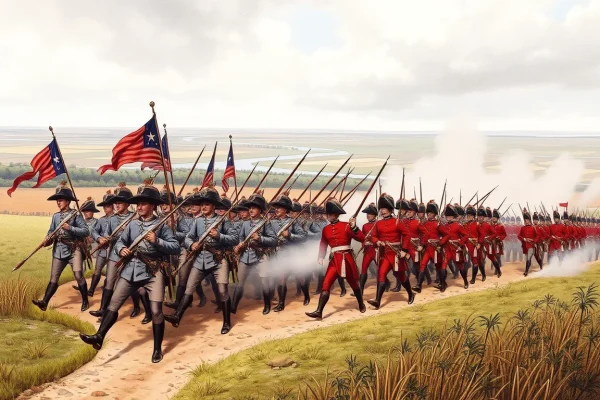
The Niagara Campaign of 1814 was the final American invasion of Upper Canada during the War of 1812, encompassing the capture of Fort Erie, the Battles of Chippawa and Lundy’s Lane, and the protracted Siege of Fort Erie, ultimately ending in an American withdrawal without territorial gain.

Read More →

St. Lawrence Campaign of 1813

The St. Lawrence Campaign of 1813 was the most ambitious American offensive of the War of 1812, a two-pronged attempt to capture Montreal that ended in defeat at Chateauguay and Crysler’s Farm, permanently securing the St. Lawrence corridor and ending realistic hopes of conquering Canada.

Read More →

Why 1814 Was the Decisive Year of the War of 1812

The year 1814 proved decisive in the War of 1812 because the defeat of Napoleon freed thousands of British regulars for North America, shifting the conflict from a stalemate to a series of invasions that culminated in the burning of Washington, successful American defenses at Plattsburgh and Baltimore, and the Gulf Coast campaign that ended at New Orleans.

Read More →

Desertion During the War of 1812

Desertion plagued both the American and British armies during the War of 1812, sapping manpower, undermining campaigns, and prompting harsh punishments. Driven by low pay, harsh discipline, and bounty fraud, desertion rates peaked in 1814 and shaped the conflict’s outcome.

Read More →

Battle of Baltimore (1814)

The Battle of Baltimore, fought September 12–14, 1814, was a combined British land and naval attack on Baltimore, Maryland, during the War of 1812. After burning Washington, D.C., British forces failed to seize Baltimore because American defenders held at North Point and Fort McHenry. The battle inspired Francis Scott Key to write ‘The Star-Spangled Banner.’

Read More →

Western Expansion and Native Resistance Before 1812

Western expansion of the United States into the trans-Appalachian West between the Revolution and the War of 1812 provoked sustained Native American resistance, culminating in conflicts such as Fallen Timbers and Tippecanoe. This struggle over land and sovereignty became a principal cause of the War of 1812, as Indigenous nations forged alliances with British Canada to check American encroachment.

Read More →

War of 1812 Timeline: 1807–1815

A chronological reference to the War of 1812 covering the crisis years from the 1807 Chesapeake–Leopard affair and Embargo Act through the Treaty of Ghent and the Battle of New Orleans. The timeline places the war’s diplomatic, naval, military, and Indigenous events in a single dated sequence from 1807 to 1815.

Read More →

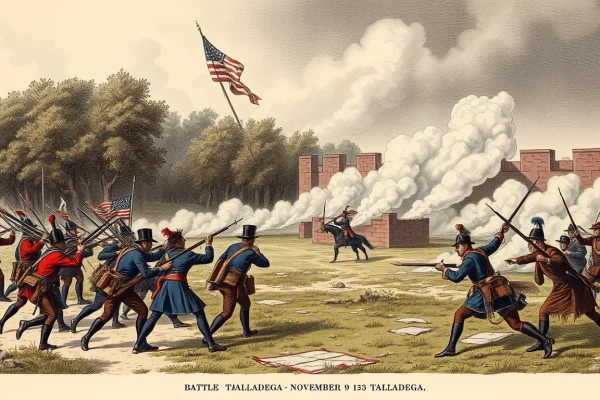
Battle of Talladega

On November 9, 1813, American forces under Andrew Jackson broke a Red Stick Creek siege of Fort Leslie near present-day Talladega, Alabama, killing about 300 warriors during the Creek War component of the War of 1812. The victory strengthened the U.S.–Creek alliance and diminished Red Stick strength.

Read More →