
Short Answer
The Niagara Campaign of 1814 was the final major American offensive into Upper Canada during the War of 1812. Fought along the Niagara River from July to November 1814, it saw the capture of Fort Erie, the battles of Chippawa and Lundy’s Lane, and the costly British siege of Fort Erie, ultimately ending in an American withdrawal and no permanent territorial change. The campaign is significant for demonstrating the maturation of the U.S. regular army under Winfield Scott and Jacob Brown, and for its heavy casualties relative to other actions.
Historical Context
By 1814, the War of 1812 had reached a stalemate. American invasions of Canada in 1812 and 1813 had failed, while British forces had captured Fort Niagara and burned American frontier towns in December 1813. With Napoleon’s defeat in Europe, Britain began sending veteran troops to North America, raising the stakes for the upcoming campaign. The United States, seeking a decisive victory to strengthen its bargaining position, planned a renewed invasion of Canada. American military leaders rejected an attack on the stronghold of Kingston, Ontario, as too risky, and instead focused on the Niagara Peninsula, a narrow strip of land between Lakes Ontario and Erie.
What Happened
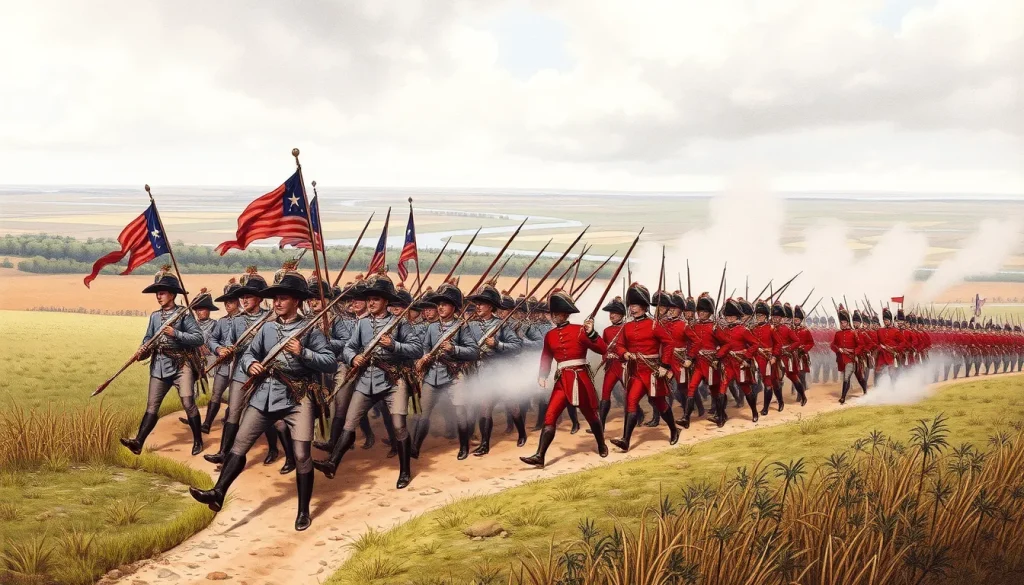
The campaign opened on 3 July 1814 when Major General Jacob Brown’s Army of the Niagara crossed the river and captured Fort Erie. His force consisted of two regular brigades, one under Brigadier General Winfield Scott, and a brigade of volunteer militia. After the fall of Fort Erie, Brown advanced north. On 5 July, Scott’s brigade encountered a British force under Major General Phineas Riall near Chippawa Creek. In a sharp engagement, the well-trained American regulars repulsed the British attack, proving that American infantry could stand against the British. After a series of maneuvers, on 25 July the two armies clashed at Lundy’s Lane near Niagara Falls. The battle was a brutal, close-quarters struggle that continued after dark; both sides suffered heavy losses and claimed victory. Brown, Scott, and British commander Gordon Drummond were all wounded. The Americans, though not decisively beaten, were exhausted and fell back to Fort Erie. British forces under Drummond laid siege to the fort in early August. A major British assault on 15 August was repulsed with severe losses, including a catastrophic magazine explosion. A subsequent American sortie on 17 September damaged British siege works. The Americans, now led by Major General George Izard, held the fort until early November, when they destroyed the works and withdrew to the American side of the river, ending the campaign.
Why It Matters
The Niagara Campaign of 1814 was the most professionally conducted American military effort of the war. It demonstrated that American regulars, properly trained and led, could fight on equal terms with British veterans. Although the campaign failed to secure any lasting territorial gain, it restored American confidence after earlier humiliations and became a foundation for post-war military reform. The heavy losses at Lundy’s Lane and the siege of Fort Erie highlighted the bloody costs of the frontier conflict. Historians debate whether the campaign was a near-miss that could have changed the war’s outcome or a strategically futile venture that exposed the limits of American expansionist ambitions. The campaign’s legacy influenced the professionalization of the U.S. Army and shaped the memory of the war as a formative moment in American national identity.
Prelude
Following the American burning of Newark (Niagara-on-the-Lake) in December 1813, British forces retaliated by capturing Fort Niagara and burning the villages of Lewiston, Black Rock, and Buffalo. This cycle of destruction set the stage for a renewed American counter-offensive in 1814. The U.S. War Department, now under Secretary of War John Armstrong, planned a major invasion to seize the Niagara Peninsula and cut British communications between Lake Erie and Lake Ontario. The American strategy prioritized territorial conquest as a bargaining chip for peace negotiations.
Forces and Commanders
American forces, designated the Army of the Niagara, were commanded by Major General Jacob Brown, a militia officer who had proven himself in 1813. His field command comprised two regular brigades: the first under Brigadier General Winfield Scott, and the second under Brigadier General Eleazer Wheelock Ripley. A brigade of militia volunteers, led by Brigadier General Peter B. Porter, accompanied the army. British forces in the region included regulars, Canadian militia, and Indigenous allies. The overall command rested with Lieutenant General Gordon Drummond, the Lieutenant Governor of Upper Canada, with Major General Phineas Riall commanding the forward elements.
Battlefield and Map Context
The Niagara Peninsula extends about thirty-six miles between Lake Ontario and Lake Erie, bounded by the Niagara River to the west. The river is narrow and easily crossed near its mouth, but the terrain becomes more rugged near the falls. Key points were Fort George near the lake, Fort Erie at the southern end, and the portage road connecting them. The presence of the Niagara Escarpment and dense woods shaped tactical movements. The campaign centered on Fort Erie, Chippawa Creek, and Lundy’s Lane near the falls.
Battle Chronology
3 July: American forces landed above Fort Erie and captured the fort after a brief bombardment. 5 July: Battle of Chippawa – Scott’s brigade defeated Riall’s force near the mouth of Chippawa Creek. 25 July: Battle of Lundy’s Lane – A fierce engagement along a ridge near Niagara Falls, lasting until midnight; both armies suffered heavy casualties and the Americans withdrew the next morning. 2 August: British under Drummond began formal siege operations against Fort Erie. 15 August: A British night assault was repulsed with heavy losses, including a mine explosion that killed many attackers. 17 September: American sortie from Fort Erie destroyed British siege batteries. 19 October: After learning of American plans to withdraw, Drummond lifted the siege. 21 October: Battle of Cook’s Mills – A minor engagement between American and British detachments. 5 November: American forces destroyed Fort Erie and returned to New York.
Casualties and Losses
Casualty figures vary by source. The most commonly cited totals for the entire campaign are approximately 3,086 British and Canadian losses (490 killed, 1,442 wounded, 1,069 captured, 85 missing) and 2,343 American losses (461 killed, 1,449 wounded, 319 captured, 114 missing). The Battle of Lundy’s Lane alone accounted for over 800 casualties on each side. The British assault of 15 August cost them over 600 men, including many killed in the explosion.
Result
The campaign was inconclusive. The Americans failed to gain any permanent territorial foothold in Upper Canada, but they did demonstrate tactical competence and inflicted severe casualties on the British. Both sides claimed victory, but the American withdrawal in November effectively ended the invasion.
Strategic Consequences
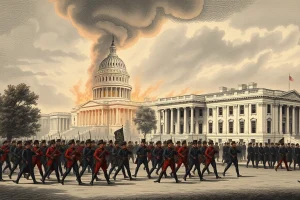
The campaign failed to shift the strategic balance in the war. The United States could not sustain an offensive on the Niagara Peninsula, and British reinforcements arriving from Europe would soon enable counter-offensives elsewhere, including the burning of Washington, D.C. However, the success at Chippawa and the determined defense of Fort Erie bolstered American morale and provided a foundation for post-war military reforms. The campaign also contributed to the decision of both sides to seek peace, as neither could achieve a decisive advantage.
Primary Accounts
Contemporary accounts include official reports by Jacob Brown, Winfield Scott, and Gordon Drummond, which are preserved in the U.S. National Archives and the British National Archives. American soldier letters and diaries, such as those of Lieutenant Martin Leach, provide personal perspectives on the battles and siege. British participants, like Captain William Hamilton, left accounts that describe the horror of the August assault. These sources are valuable but often colored by the desire to promote careers or national narratives.
Battlefield Today
Several sites are preserved and interpreted today. Fort Erie National Historic Site in Ontario, Canada, preserves the fort and its surviving earthworks. Old Fort Niagara in New York, though more associated with earlier conflicts, served as a British base in 1814. The Battlefield of Lundy’s Lane is now within the city of Niagara Falls, Ontario, and features Drummond Hill Cemetery, a focal point of the battle. Chippawa Battlefield Park marks the site of the Battle of Chippawa. These locations are managed by agencies such as Parks Canada and local historical societies.
Primary Sources
Key primary sources include the official correspondence of Jacob Brown and Winfield Scott, published in the American State Papers: Military Affairs. British sources include the courts-martial and dispatch of Gordon Drummond, held at the Library and Archives Canada. The diary of Captain William Hamilton of the 100th Regiment details the siege of Fort Erie. American soldier Thomas J. Hill’s memoir, “The Campaign of 1814,” offers a junior officer’s perspective. These sources must be read critically, as they reflect the biases and limited knowledge of their authors.
Further Reading
- Donald E. Graves, The Battle of Lundy’s Lane: The Battle That Saved Canada (2009).
- John C. Fredriksen, Niagara, 1814: The United States Army’s Quest for Tactical Parity in the War of 1812 (1993, dissertation).
- Richard V. Barbuto, Niagara, 1814: The Campaign for the Niagara Peninsula (2014).
- Joseph Whitehorne, The Battle for Baltimore, 1814 (1997, for comparative context).
- Parks Canada, Fort Erie National Historic Site (official guide).
References
- U.S. Army Center of Military History, “War of 1812 Campaigns,” https://history.army.mil/Research/Reference-Topics/Army-Campaigns/Brief-Summaries/War-of-1812-Campaigns/.
- Richard V. Barbuto, “The War of 1812 on the Niagara River,” The Army Historical Foundation, https://armyhistory.org/the-war-of-1812-on-the-niagara-river/.
- John C. Fredriksen, “Niagara, 1814: The United States Army quest for tactical parity in the War of 1812 and its legacy,” Providence College Digital Commons, https://digitalcommons.providence.edu/dissertations/AAI9332746.
- “Niagara campaign,” Wikipedia, https://en.wikipedia.org/wiki/Niagara_campaign.
FAQ
What was the main objective of the Niagara Campaign of 1814?
The United States aimed to capture the Niagara Peninsula to gain a strategic foothold for negotiating peace from a position of strength, after earlier invasions had failed.
Why did the campaign end without a clear winner?
Both sides suffered heavy casualties and neither could sustain a decisive advance. The Americans returned to New York after destroying Fort Erie, while the British could not dislodge them.
How did the campaign affect the post-war U.S. Army?
The success at Chippawa and the disciplined performance of American regulars provided impetus for military reforms, including improved training and professionalism, shaping the army's development.


Leave a Reply