The Battle of New Orleans Explained

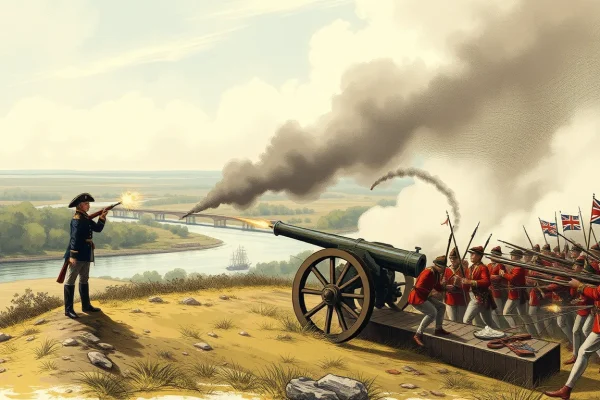
The Battle of New Orleans, fought on January 8, 1815, was the last major engagement of the War of 1812, in which American forces under Andrew Jackson decisively repelled a British invasion of Louisiana. Though the Treaty of Ghent had already been signed, the battle’s outcome shaped American national pride and confirmed U.S. control of the Mississippi Valley.
Read More →

Commodore Joshua Barney’s Last Stand at Bladensburg

On August 24, 1814, Commodore Joshua Barney and his Chesapeake Flotilla and Marines made a stand at Bladensburg, Maryland, during the British Chesapeake campaign. Their disciplined artillery and musket fire briefly checked the British advance, but the larger American force collapsed around them. Barney was wounded and captured, and the British went on to burn Washington, D.C. The action became the final military stand of Barney’s career and a symbol of naval resistance in an otherwise devastating American defeat.

Read More →

Commodore Oliver Hazard Perry and the Battle of Lake Erie

Commodore Oliver Hazard Perry commanded the U.S. squadron that defeated the British Royal Navy on Lake Erie on 10 September 1813. The victory secured American control of the lake, forced the British to abandon Detroit, and led to the Battle of the Thames. Perry’s famous dispatch, “We have met the enemy and they are ours,” became a defining moment of the War of 1812.

Read More →

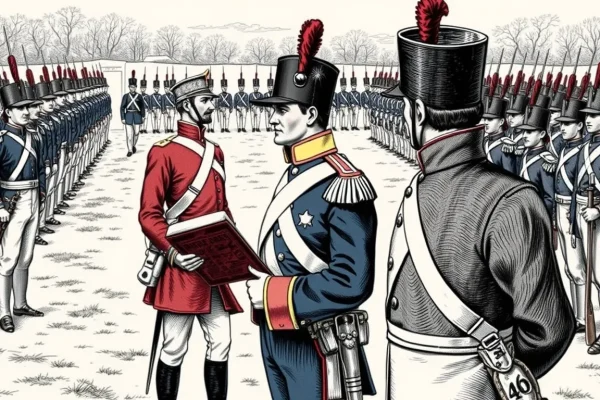
The U.S. Army’s First Standardized Drill Regulations After the War of 1812

After the War of 1812, the U.S. Army adopted a single tactical manual—the Rules and Regulations for the Field Exercise and Manoeuvres of Infantry, compiled by a board of officers under Winfield Scott and authorized by Congress in December 1814. This manual, based on the French Réglement of 1791, replaced the aging Steuben’s Blue Book and the incomplete Smyth’s Tactics, establishing the first truly standardized infantry drill for the regular army.

Read More →

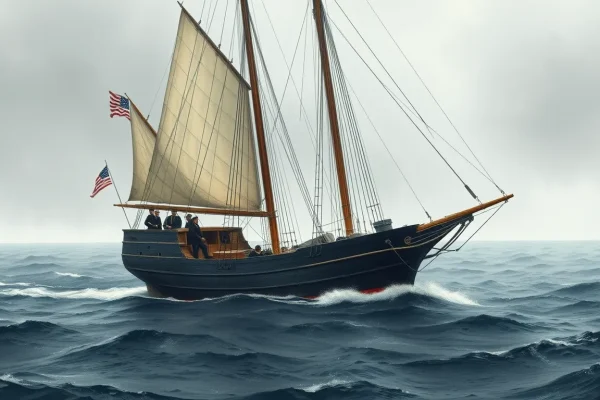
The Disappearance of USS Wasp: What Happened to Blakeley’s Sloop?

USS Wasp, a 22-gun American sloop-of-war commanded by Master Commandant Johnston Blakeley, sailed from Portsmouth, New Hampshire, on 1 May 1814 and vanished after a last confirmed contact on 9 October 1814. During that single cruise she took thirteen prizes and defeated two Royal Navy sloops. Her fate — foundering in a gale, a magazine explosion, or some other cause — has never been established.

Read More →

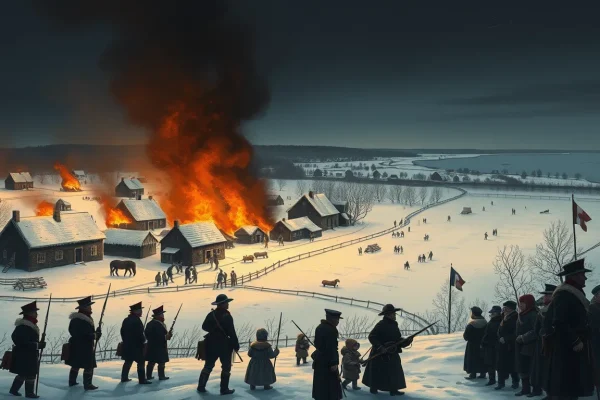
The Burning of Newark: A Case Study of Civilian Suffering

The Burning of Newark occurred on the night of 10 December 1813, when retreating American forces under Brigadier General George McClure set fire to the Upper Canadian village of Newark. The destruction left hundreds of civilians, mostly women and children, without shelter in winter and became a notorious episode of the War of 1812. It triggered a cycle of retaliatory burnings on the Niagara Frontier and was later cited among the justifications for the British burning of Washington in 1814.

Read More →

What Happened to the American Generals Captured at Stoney Creek?

Brigadier Generals John Chandler and William H. Winder of the United States Army were captured by British troops during a night attack at Stoney Creek, Upper Canada, on 5-6 June 1813. Both were taken prisoner along with the American artillery, held in British custody, and eventually exchanged back to American service. Their loss crippled the American command and ended the 1813 American advance along the Niagara Peninsula.

Read More →