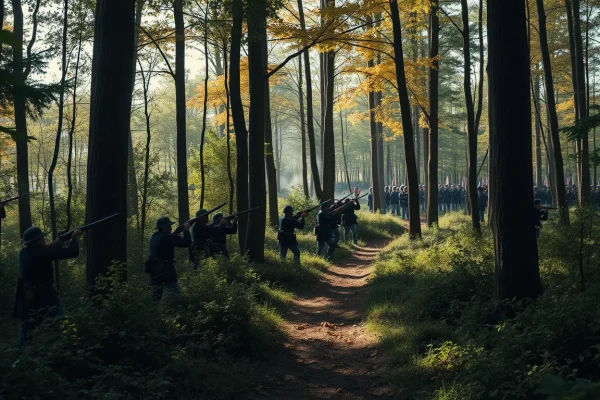
The Northwest Campaign of 1812

The Northwest Campaign of 1812–1813 was the series of operations along the Detroit frontier, Lake Erie, and the Ohio Country that opened the War of 1812. It saw the American surrender of Detroit, the River Raisin massacre, the siege of Fort Meigs, and ended with the Battle of the Thames and the death of Tecumseh.

Read More →

Northwest Campaign of 1813

The Northwest Campaign of 1813 was a series of American operations in the Great Lakes region, including the Battle of Frenchtown, Sieges of Fort Meigs, Battle of Lake Erie, and Battle of the Thames, which ended Tecumseh’s confederacy and secured American control of the Northwest.

Read More →

Fort Detroit During the War of 1812

Fort Detroit, a key American frontier post on the Detroit River, was surrendered to British and Indigenous forces under Isaac Brock and Tecumseh on August 16, 1812, after a failed American invasion of Upper Canada. The surrender was a major early American defeat, but the fort was recaptured in 1813 following the Battle of Lake Erie.

Read More →

The Battle of Tippecanoe and the Road to the War of 1812

Fought on November 7, 1811, the Battle of Tippecanoe pitted U.S. forces under William Henry Harrison against the Shawnee-led confederacy of Tecumseh and his brother Tenskwatawa. The American victory near the Tippecanoe River destroyed Prophetstown, intensified Indian resistance, and became a major catalyst for the American declaration of war against Britain in 1812.

Read More →

First Siege of Fort Meigs

The First Siege of Fort Meigs (28 April–9 May 1813) was a British and Indigenous attempt to capture the American fort on the Maumee River in Ohio. The American garrison under William Henry Harrison successfully held the fort, forcing the British to withdraw despite a costly defeat of an American relief column.

Read More →