Henry Procter: The British General Who Fled the Battle of the Thames

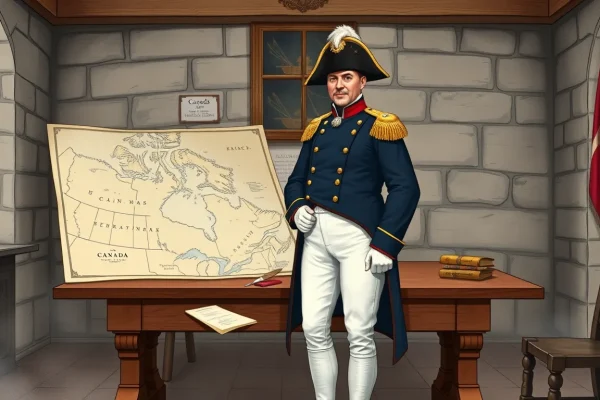
Henry Procter (c. 1763–1822) was a British Army officer who commanded the Detroit frontier in Upper Canada during the War of 1812. He is best known for his defeat at the Battle of the Thames, or Moraviantown, on 5 October 1813, where Tecumseh was killed and Procter retreated with survivors. A court-martial later found him guilty on several charges related to the retreat, ending his career. Historians continue to debate how much his failure reflected personal incompetence and how much it reflected poor supply, low reinforcements, and the loss of Lake Erie.

Read More →

What Was Tecumseh’s Confederacy and How Did It Shape the War of 1812?

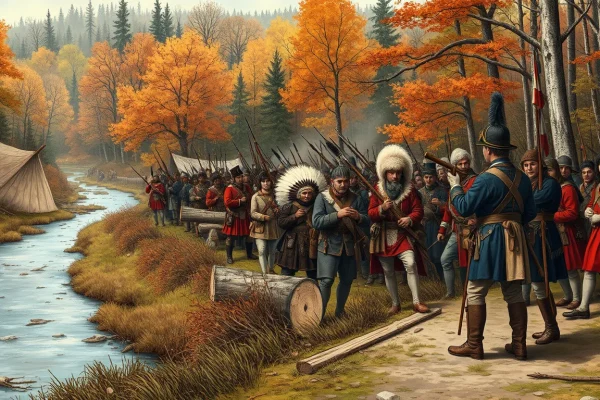
Tecumseh’s Confederacy was a pan-Indigenous alliance of Great Lakes and Ohio Valley nations, built around the teachings of the Shawnee prophet Tenskwatawa and the leadership of his brother Tecumseh, that resisted United States expansion between roughly 1805 and 1813. It fought alongside Britain and Upper Canada in the War of 1812, helped force the surrender of Detroit, and fragmented after Tecumseh was killed at the Battle of the Thames on October 5, 1813.

Read More →

Captain James Lawrence of the USS Chesapeake

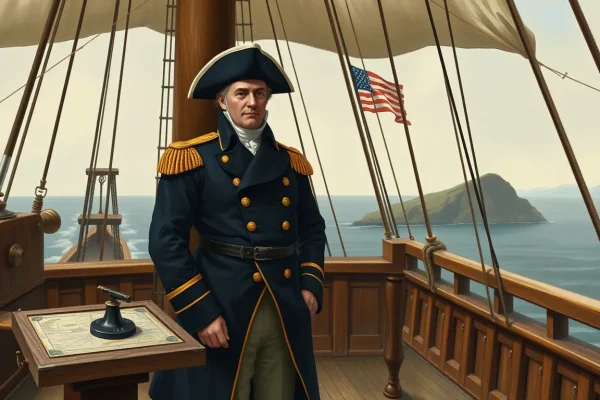
James Lawrence (1781–1813) was a United States Navy officer who commanded the frigate USS Chesapeake during the War of 1812. On June 1, 1813, he engaged HMS Shannon off Boston, was mortally wounded, and died after his ship was captured. He is remembered for the dying order ‘Don’t give up the ship,’ which became a naval motto.

Read More →

African American Participation in the War of 1812: Forgotten Heroes

African American soldiers, sailors, and laborers played a significant but often overlooked role in the War of 1812 (1812–1815). Both free blacks and enslaved individuals served on the American and British sides, driven by promises of freedom, citizenship, or necessity. Their contributions were vital in battles from Lake Erie to New Orleans, yet their stories have been largely ignored in mainstream histories.

Read More →

James Madison During the War of 1812

James Madison, the fourth President of the United States, led the nation through the War of 1812, from the declaration of war in 1812 to the Treaty of Ghent in 1814 and the Battle of New Orleans in 1815. His leadership was marked by early military setbacks, naval successes, the burning of Washington, and a profound transformation of Republican principles.

Read More →

Isaac Chauncey and the War of 1812

Isaac Chauncey commanded U.S. naval forces on Lake Ontario during the War of 1812, building a fleet from scratch at Sackets Harbor and leading it in raids and battles against the British. Though criticized as overly cautious, his logistical achievements were vital to American efforts on the northern frontier.

Read More →

James FitzGibbon

James FitzGibbon (1780–1863) was an Irish-born British officer in the War of 1812, celebrated for his guerrilla tactics, his role at the Battle of Beaver Dams, and his connection to Laura Secord’s famous warning.

Read More →

William Bainbridge

William Bainbridge (1774–1833) was a U.S. Navy officer whose capture of HMS Java in 1812 made him a national hero and solidified the reputation of the American frigate navy during the War of 1812.

Read More →