
Short Answer
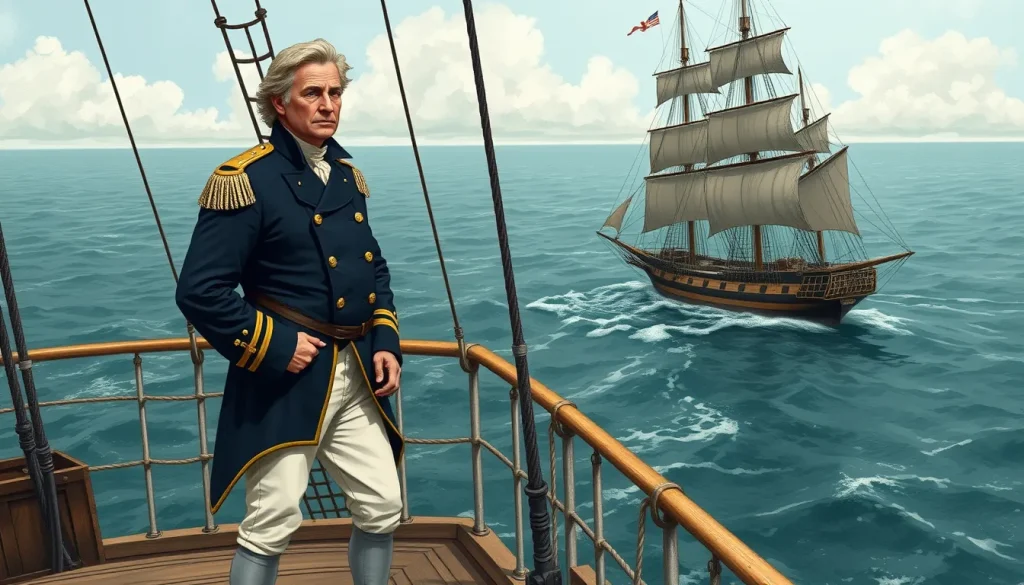
James Barron (September 15, 1768 – April 21, 1851) was a United States Navy officer who commanded the frigate USS Chesapeake during the Chesapeake-Leopard Affair of June 22, 1807. In that incident, HMS Leopard attacked and boarded Chesapeake off Hampton Roads, Virginia, after Barron refused a British demand to search his ship for alleged deserters. Barron’s surrender and subsequent court-martial made him a central and controversial figure in the diplomatic crisis that helped move the United States toward the War of 1812. This article concerns the American naval officer James Barron; it does not treat other individuals of the same name.
Historical Context
Barron’s career unfolded during the Anglo-French wars that followed the French Revolution. By 1807, Britain and France were locked in a global conflict, and the Royal Navy enforced blockades and interdicted neutral trade. The United States, as a neutral carrier, profited from trade with both belligerents but also suffered from British and French restrictions. A persistent flashpoint was impressment: the Royal Navy claimed the right to stop merchant and naval vessels and remove men it considered British subjects, including deserters. American officials contested both the practice and the broad British definition of British subject, which could sweep in American citizens.
The U.S. Navy was small in 1807. Its frigates were prestigious but few, and the service depended on a thin officer corps. James Barron belonged to that corps by family background, apprenticeship, and early service. His assignment to command Chesapeake placed him at the intersection of fleet readiness, diplomatic tension, and personal reputation. The British also had a direct interest in recovering deserters, especially after a series of high-profile escapes from Royal Navy ships. In the spring of 1807, several men sought refuge in the United States, and some enlisted in the U.S. Navy. Their presence aboard Chesapeake helped trigger the confrontation.
What Happened
In early 1807, USS Chesapeake lay at Norfolk, Virginia, being fitted for service. Barron, newly appointed to command her, was ordered to prepare for a Mediterranean cruise. The ship was not fully ready: her crew included many inexperienced men, her deck and storerooms were cluttered, and her guns were not properly prepared for action. On June 22, 1807, Chesapeake left Hampton Roads and passed into the Atlantic. She was soon hailed by HMS Leopard, a British fourth-rate commanded by Captain Salusbury Pryce Humphreys.

Humphreys demanded that Chesapeake permit a search for British deserters. Barron refused, arguing that a foreign warship had no right to search an American naval vessel. Leopard then opened fire at close range. Chesapeake was caught unprepared; only a small number of her guns could be brought to bear, and her crew suffered casualties. Barron struck his colors after the British fired several broadsides. A British boarding party removed four men. The incident became known as the Chesapeake-Leopard Affair.
Public outrage in the United States was immediate. President Thomas Jefferson issued a proclamation ordering British warships out of American waters, and Congress passed the Embargo Act of 1807, which restricted American trade in an attempt to pressure Britain and France. Barron faced blame for the ship’s condition. A court-martial convened in January 1808. It found him guilty of failing to prepare Chesapeake for possible action and suspended him from command for five years without pay. Barron later argued that the Navy Department had rushed the ship to sea and that he had not been given adequate time or resources. His critics, however, held that a commanding officer bore final responsibility for readiness.
Why It Matters
The Chesapeake-Leopard Affair was one of the most humiliating episodes in the early history of the U.S. Navy. It exposed American naval weakness and made impressment and the right of search vivid issues for the public. The diplomatic crisis that followed contributed to the atmosphere of grievance that eventually led to the declaration of war against Britain in June 1812. For Barron personally, the affair ended his active sea command for years. The court-martial and the later duel with Stephen Decatur turned him into a symbol of disputed honor and professional accountability.
Historians disagree about how much blame Barron should bear. Some emphasize his responsibility to ensure his ship was ready for action and note that he failed to clear for battle or to take defensive measures. Others stress that the Navy Department, Secretary Robert Smith, and the hurried fitting out of Chesapeake left the ship in poor condition. They argue that Barron became a convenient scapegoat for a systemic failure. The affair also demonstrated how quickly naval incidents could become national political crises in the years before the War of 1812.
Early Life
James Barron was born on September 15, 1768, in Hampton, Virginia. His father, also named James Barron, was a merchant captain who commanded the Virginia State Navy during the American Revolution. The family had deep maritime and naval connections: his brother Samuel Barron also served in the Virginia navy and later in the U.S. Navy, and the Barron family owned property and a shipyard in Hampton. James apprenticed on his father’s ships, gaining practical seamanship before entering the new United States Navy.
On March 9, 1798, Barron received a lieutenant’s commission in the U.S. Navy. He served aboard the frigate United States under Captain John Barry during the Quasi-War with France. According to later naval accounts, Barron showed courage and seamanship during a severe storm, helping to secure the ship’s masts. He was promoted to captain in 1799 and commanded the sloop-of-war Warren in the closing months of the Quasi-War.
Role Before the War
During the First Barbary War, Barron commanded the frigate Essex and served in the Mediterranean Squadron under his brother, Commodore Samuel Barron. He helped protect American merchant shipping and participated in the blockade of Tripoli. In 1805, he sat on the court of inquiry that examined Captain William Bainbridge’s loss of USS Philadelphia near Tripoli. On April 15, 1806, Barron was appointed to command the Mediterranean Squadron, and on April 22 he was promoted to commodore. The following year he was assigned to Chesapeake.
By 1807, therefore, Barron was an experienced officer with service in the Quasi-War and the Barbary Wars. His record before the Chesapeake-Leopard Affair included combat, diplomacy, and squadron command. That earlier career matters because it complicates the later image of Barron as merely the officer who surrendered Chesapeake.
Role During the War of 1812
Barron did not hold an active command during the War of 1812. His five-year suspension, imposed after the 1808 court-martial, removed him from sea duty. He spent much of the period in Europe, including time in Copenhagen, pursuing commercial interests. He returned to the United States seeking reinstatement, but his reputation remained contested, and the Navy did not give him a wartime fleet or ship command. This absence is a crucial limitation on his wartime biography: Barron’s connection to the War of 1812 is chiefly through the Chesapeake-Leopard Affair and the diplomatic tensions that preceded the war, not through battles fought between 1812 and 1815.
His suspension also meant that the Navy lost the services of a senior officer during a period of expansion and conflict. Some officers and officials believed Barron had been punished enough; others thought his return would damage discipline. The result was a prolonged personal and professional stalemate.
Major Actions
Barron’s most famous action was the Chesapeake-Leopard Affair on June 22, 1807. As commander of Chesapeake, he refused a British search demand and then suffered the consequences when Leopard attacked. The surrender of his ship and the removal of four men by the British made him a central figure in the ensuing diplomatic crisis. His court-martial in January 1808 was the second major event of his career: it convicted him of failing to prepare for action and suspended him from command.
The third major action came years later. After his suspension and return, Barron became embroiled in a bitter dispute with Commodore Stephen Decatur, who had criticized him publicly. On March 22, 1820, Barron and Decatur fought a pistol duel near Bladensburg, Maryland. Both men were wounded; Decatur died of his wound the same day. Barron survived. The duel shocked many Americans and became a notorious example of the era’s honor culture and the personal feuds within the officer corps.
Contemporary Accounts
Contemporary evidence for Barron’s career is uneven. The court-martial record of 1808 is the most important source for the Chesapeake-Leopard Affair. It includes testimony from officers and crew, technical details about the ship’s condition, and Barron’s defense. The record is invaluable, but it was shaped by legal strategy: participants had reasons to defend themselves, shift blame, or protect superiors. Naval correspondence between Barron and the Navy Department, including Secretary Robert Smith, provides context about the rushed outfitting of Chesapeake. These letters are administrative and often terse, but they help establish what Barron was told and when.
British sources include reports from Captain Humphreys and Admiralty correspondence. They present the search and seizure from the Royal Navy’s perspective and tend to emphasize the legal claim to recover deserters. American newspapers in 1807 were highly partisan. Federalist and Republican papers interpreted the affair through their own political lenses, sometimes emphasizing national humiliation, sometimes criticizing Jefferson’s response. Later accounts, including Barron’s own statements and the correspondence surrounding the Decatur duel, are valuable but self-serving. They reveal how Barron and his supporters constructed his reputation after the fact.
Later Life
After the duel with Decatur, Barron recovered from his wound and continued in the Navy, though he never regained the active sea command he had once held. He served in shore assignments and administrative duties. In 1839, by seniority, he became the senior officer of the United States Navy. He held that position until his death. Barron died on April 21, 1851, in Norfolk, Virginia, and was buried in Portsmouth, Virginia.
His later years were quieter than his earlier career, but the controversies of 1807 and 1820 followed him. He remained a subject of debate among naval officers and historians, with some viewing him as a martyr to political and departmental failures and others as an officer who had failed in a moment of crisis.
Historical Legacy
James Barron’s legacy is divided. He is remembered primarily for two things: the surrender of Chesapeake to Leopard in 1807 and the duel that killed Stephen Decatur in 1820. Both episodes are central to early American naval history and to the culture of honor in the officer corps. The Chesapeake-Leopard Affair helped set the United States on the road to the War of 1812, and Barron’s name is inseparable from that incident.
Modern historians generally avoid a simple verdict. Some see Barron as negligent for not preparing his ship for action, while others point to the Navy Department’s failures and the impossible position of a commander sent to sea in an unready frigate. The duel with Decatur is often interpreted as a tragic product of personal honor and factional strife rather than as a simple morality tale. Barron’s earlier service in the Quasi-War and Barbary Wars is sometimes overshadowed, but it was real and earned him promotion and command. His life illustrates how quickly a naval officer’s reputation could be made or destroyed in the turbulent years before and after the War of 1812.
Primary Sources
- Court-martial proceedings of Captain James Barron, 1808. The record of the trial contains testimony on the readiness of Chesapeake, the actions of Barron and his officers, and the legal arguments of the prosecution and defense. It is the essential source for the affair, but it reflects the interests and memories of participants under oath and in a punitive proceeding.
- Correspondence between James Barron and the Navy Department, 1807. Letters involving Secretary of the Navy Robert Smith document orders, complaints, and the hurried preparation of Chesapeake. They help establish the administrative context but rarely give a full picture of conditions aboard ship.
- British Admiralty and Captain Humphreys’s reports, 1807. These records explain the Royal Navy’s search demand and the firing on Chesapeake from the British side. They are official and self-justifying, and they reflect British legal assumptions about deserters and impressment.
- American newspaper accounts, 1807. Federalist and Republican newspapers reported the affair with sharply different emphases. They are useful for public reaction, but they are partisan and sometimes inaccurate.
- Barron-Decatur correspondence and duel accounts, 1819–1820. Letters and published accounts surrounding the duel reveal the personal conflict and the code of honor. They are often defensive and retrospective.
No verified verbatim transcript of a key Barron quotation is reproduced here. Researchers should consult the original court-martial record, the Naval History and Heritage Command, and published documentary editions for exact wording.
Further Reading
- Ian W. Toll, Six Frigates: The Epic History of the Founding of the U.S. Navy (New York: W. W. Norton, 2006).
- Spencer C. Tucker, Stephen Decatur: A Life Most Bold and Daring (Annapolis: Naval Institute Press, 2004).
- Donald R. Hickey, The War of 1812: A Forgotten Conflict (Urbana: University of Illinois Press, 2012).
- William S. Dudley, ed., The Naval War of 1812: A Documentary History (Washington, DC: Naval Historical Center, multiple volumes).
- David S. Heidler and Jeanne T. Heidler, eds., Encyclopedia of the War of 1812 (Annapolis: Naval Institute Press, 2004).
- Naval History and Heritage Command, Washington, DC, for ship histories, manuscript collections, and research guides.
References
- Wikipedia contributors, ‘James Barron,’ Wikipedia, The Free Encyclopedia, https://en.wikipedia.org/wiki/James_Barron.
- William Prom, ‘The Heroic James Barron,’ Naval History Magazine 38, no. 2 (April 2024), https://www.usni.org/magazines/naval-history-magazine/2024/april/heroic-james-barron.
- Ian W. Toll, Six Frigates: The Epic History of the Founding of the U.S. Navy (New York: W. W. Norton, 2006).
- Spencer C. Tucker, Stephen Decatur: A Life Most Bold and Daring (Annapolis: Naval Institute Press, 2004).
- Donald R. Hickey, The War of 1812: A Forgotten Conflict (Urbana: University of Illinois Press, 2012).
FAQ
Who was James Barron?
James Barron was a United States Navy officer born in 1768 and died in 1851. He served in the Quasi-War and Barbary Wars, commanded USS Chesapeake during the Chesapeake-Leopard Affair of 1807, and later became the Navy's senior officer in 1839.
What was Barron's role in the Chesapeake-Leopard Affair?
Barron commanded USS Chesapeake when HMS Leopard demanded to search his ship for alleged British deserters. He refused, Leopard attacked, and after Chesapeake was disabled Barron surrendered and struck his colors. A British boarding party removed four men.
Was James Barron blamed for the Chesapeake-Leopard Affair?
Yes. A court-martial in January 1808 convicted him of failing to prepare Chesapeake for possible action and suspended him for five years without pay. Some historians argue he was partly a scapegoat for the Navy Department's rushed fitting out of the ship.
Did James Barron fight in the War of 1812?
No. Barron was suspended after his 1808 court-martial and spent much of the War of 1812 in Europe pursuing commercial interests. He did not receive an active sea command during the conflict.


Leave a Reply