How Did the British Army Supply Its Troops in Upper Canada?

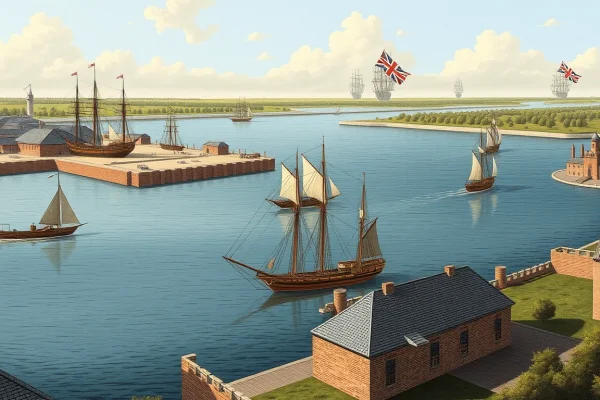
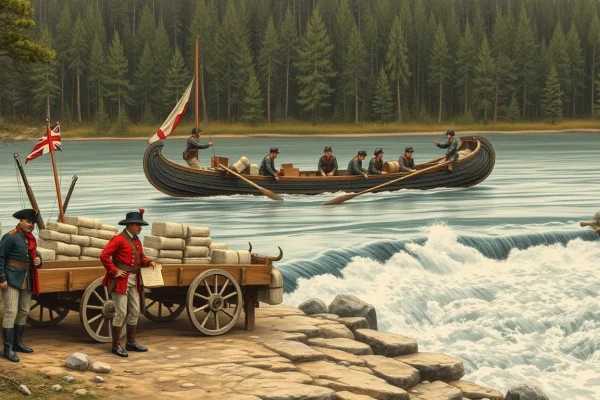
During the War of 1812, the British Army in Upper Canada depended on a fragile supply chain running from Quebec and Montreal up the St. Lawrence River to Kingston and then across the Great Lakes. The Commissariat and Ordnance departments combined local purchases, imported provisions, smuggling, and bateau transport to keep regulars, militia, and Indigenous allies in the field. Upper Canada’s small agricultural base and poor roads made shortages common, and the vulnerability of the St. Lawrence line shaped British strategy throughout the war.
Read More →

The Role of Logistics in the American Failure to Conquer Canada

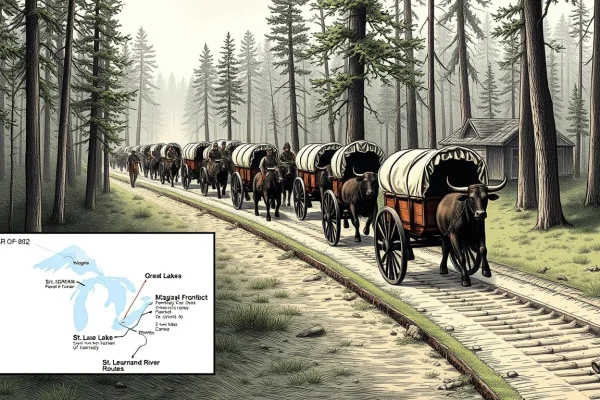
The American failure to conquer Canada during the War of 1812 was fundamentally a logistical failure. Inadequate transportation networks, poor roads, and vast distances prevented the United States from sustaining invading armies, while the British, despite their own difficulties, managed to maintain their forces. This article examines how logistics shaped the northern campaigns.

Read More →

How Did the British Commissariat Supply Its Forces in Canada During the War of 1812?

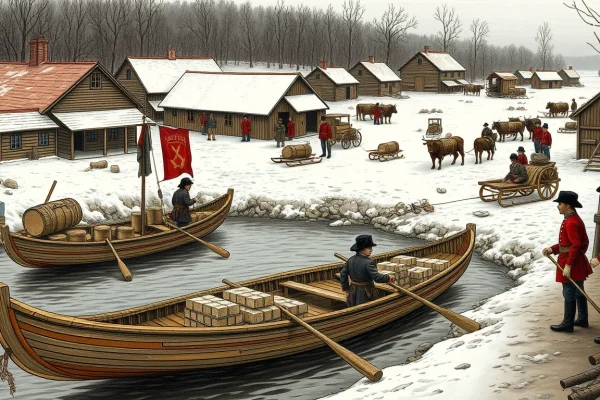
The British Commissariat supplied British, Canadian, and Indigenous forces in Canada during the War of 1812 by contracting for food, forage, and transport, moving stores by bateaux and lake vessels, and issuing regulated rations. Its work shaped strategy, limited offensives, and helped prevent the collapse of British North America despite chronic shortages.

Read More →

How the War of 1812 Changed Canada

The War of 1812 (1812–1814) between the United States and Great Britain transformed British North America by fostering a shared Canadian identity, weakening Indigenous power, and shaping future political development. The conflict repelled American invasions and created conditions for a distinct Canadian nation.

Read More →

The War of 1812 and Canada: Invasions, Defence, and Memory

The War of 1812 was fought largely on Canadian ground: the British provinces of Upper and Lower Canada were the main targets of American land offensives between 1812 and 1814. British regulars, Canadian militia and fencibles, provincial naval forces, and Indigenous allies repelled the invasions. The Treaty of Ghent left borders unchanged, and the successful defence of Canada became a cornerstone of English-Canadian historical memory.

Read More →

Did the United States Invade Canada in 1812?

Yes, the United States launched multiple invasions of British North America (Canada) in 1812 as part of the War of 1812, aiming to conquer the provinces as bargaining chips. The invasions failed, with American forces surrendering at Detroit and Queenston Heights and withdrawing from the Lake Champlain front.

Read More →

Kingston During the War of 1812

Kingston, Upper Canada, served as the British naval and military headquarters on Lake Ontario during the War of 1812. Despite being a vital shipbuilding and supply centre, it faced only one direct American attack in November 1812 and remained a key defensive strongpoint throughout the conflict.

Read More →