
Short Answer
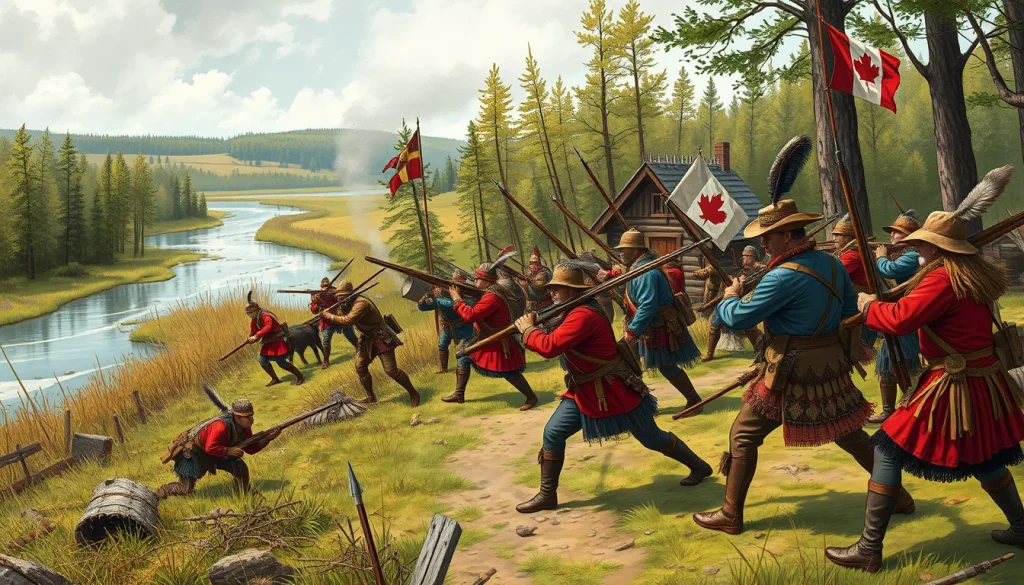
The War of 1812 (1812–1814) was a military conflict between the United States and Great Britain, fought on land and water across North America. As a British colony, Canada—then a collection of provinces including Upper Canada and Lower Canada—became a principal battleground. The war’s outcome, though a return to pre-war boundaries, profoundly altered Canada’s political culture, relationships with Indigenous peoples, and sense of nationhood, making it a foundational event in Canadian history.
Historical Context
The British North American colonies of the early 19th century were a patchwork of peoples: Loyalists who had fled the American Revolution, French-speaking Catholics along the St. Lawrence, British regulars, and a large number of recent American immigrants attracted by cheap land. Their loyalty to the Crown was uncertain. Britain, embroiled in the Napoleonic Wars, imposed naval measures that angered the United States, including blockades and impressment of American sailors. American expansionists, known as War Hawks, eyed Canada as a prize and believed invasion would be easy. The United States declared war on Great Britain on June 18, 1812, expecting to seize Canada.
What Happened
American plans targeted Upper Canada (modern Ontario) as the most vulnerable. In July 1812, General William Hull invaded from Detroit but was forced to surrender to British General Isaac Brock and the Shawnee leader Tecumseh. At Queenston Heights in October, Brock was killed, but his forces, including Canadian militia and Mohawk warriors, repelled an American invasion. In 1813, American victories on Lake Erie forced British withdrawal from Detroit, and Tecumseh was killed at the Battle of the Thames. The Americans burned the capital of Upper Canada, York (Toronto), but British forces retaliated by burning Washington, D.C. Battles at Chateauguay and Crysler’s Farm in 1813 turned back American attempts to capture Montreal. The war ended with the Treaty of Ghent in December 1814, which restored all pre-war borders.
Why It Matters
The war’s immediate effects were economic disruption and loss of life, but its longer-term consequences were more significant. Canadians participated in the defence of their homeland, especially the militia, which became a source of pride. The war created a shared experience for diverse groups—British regulars, French-Canadian militiamen, Indigenous warriors, and Black refugees—who fought together. It also ended any realistic threat of American annexation, leading to the demilitarization of the border after 1815. For Indigenous nations, however, the war was catastrophic: they lost Tecumseh, their buffer state vision disappeared, and American westward expansion accelerated. Later historians have interpreted the war as a crucible of Canadian identity, though they differ on the extent of Canadian agency and the significance of Indigenous contributions.
Definition
By “changed Canada,” historians refer to the ways the conflict altered political loyalties, social relationships, and the collective identity of the British North American colonies. The war did not create a Canadian nation, but it provided a set of events and heroes that later generations came to view as foundational.
Background
Before the war, many colonists in Upper Canada had no strong attachment to Britain, and the United States expected to be welcomed as liberators. The population was divided, and some residents even collaborated with American invaders. The war forced a choice, and overwhelmingly the armed population chose to defend their colonies, often inspired by British leadership and promises of land.
How It Worked
The war changed Canada by forcing cooperation among disparate groups. The militia system mobilized farmers and frontiersmen, who fought alongside British regulars and allied First Nations. Victories against the invading Americans—especially at Queenston Heights, Chateauguay, and Crysler’s Farm—were celebrated and became symbols of colonial resilience. The unsuccessful American invasions also reinforced a sense of being different from the republic to the south, strengthening ties to Britain after the war.
Competing Viewpoints
Interpretations vary widely. Some Canadian historians, such as Pierre Berton, emphasized the decisive role of Canadian volunteers and portrayed the war as a Canadian victory. Others, like Alan Taylor, argue that the war was a complex civil conflict where many Canadians, including Indigenous peoples and recent immigrants, had divided loyalties. Indigenous perspectives highlight the betrayal of their efforts by British and Canadian allies, and the loss of Indigenous territory as a result of American expansion. The debate centers on whether the war truly forged a “Canadian” identity or whether it was an imperial conflict in which colonists participated primarily out of self-interest.
Role in the War of 1812
The war itself was the catalyst for change. It brought together British regulars, French-Canadian militia, Mohawk and other Indigenous warriors, and Black soldiers who had escaped slavery in the United States. This cooperation, though imperfect, created a model for later Canadian multiculturalism. The war also exposed the weakness of colonial defence, prompting Britain to invest in fortifications and naval forces, which contributed to the later development of local political autonomy.
Consequences and Historical Interpretation
Immediate consequences included the demilitarization of the Great Lakes through the Rush-Bagot Agreement of 1817 and a long period of peace with the United States. In the colonies, the war reinforced British connection and fostered a unique “Canadian” identity, distinct from both Britain and the United States. It also weakened Indigenous nations, who lost land and political power. Over the long term, the war influenced the movement toward Confederation in 1867, as a shared history of defending against American invasion provided a narrative for national unity. Historians today note that while the war changed Canada, the change was uneven: English Canada embraced it as a founding story, while French Canada and Indigenous peoples often remember it differently, emphasizing loss and the failure of promises.
Primary Sources
Several contemporary documents illuminate the war’s impact on Canada. General Isaac Brock’s correspondence, including his dispatches before his death at Queenston Heights, reveals British strategy and confidence. General William Hull’s proclamation to Canadians in July 1812, warning of “instant destruction” if they allied with Britain, shows American expectations and threats. The Treaty of Ghent, signed December 24, 1814, formally ended the war and restored the status quo, providing the diplomatic framework for peace. The personal diaries and letters of participants, such as those of soldiers and settlers, offer insight into ordinary experiences. Each source has biases: official reports often exaggerate successes, while civilian accounts may romanticize or demonize the enemy.
Further Reading
- Berton, Pierre. The Invasion of Canada, 1812–1813. Toronto: McClelland & Stewart, 1980.
- Berton, Pierre. Flames Across the Border, 1813–1814. Toronto: McClelland & Stewart, 1981.
- Taylor, Alan. The Civil War of 1812: American Citizens, British Subjects, Irish Rebels, & Indian Allies. New York: Alfred A. Knopf, 2010.
- Marsh, James H., Pierre Berton, and Tabitha de Bruin. “War of 1812.” The Canadian Encyclopedia. Historica Canada, 2012.
- National Park Service. “Legacies of the War of 1812.” U.S. Department of the Interior, 2013.
References
- Marsh, James H., et al. “War of 1812.” The Canadian Encyclopedia, Historica Canada, modified July 16, 2026, https://thecanadianencyclopedia.ca/en/article/war-of-1812.
- Dictionary of Canadian Biography. “The War of 1812.” University of Toronto/Université Laval, https://www.biographi.ca/en/special_1812.html.
- National Park Service. “Legacies of the War of 1812.” U.S. Department of the Interior, 2013, https://www.nps.gov/subjects/warof1812/legacies-of-the-war-of-1812.htm.
- Office of the Governor General of Canada. “Bicentennial of the Declaration of the War of 1812.” Speech, Niagarn-on-the-Lake, June 16, 2012, https://gg.ca/en/media/news/2012/bicentennial-declaration-war-1812-0.
- Stoddard, Grant. “War of 1812: Violence, Glory and a New Canadian-ness.” BBC News, June 19, 2012, https://www.bbc.com/news/magazine-18497113.
FAQ
Did the War of 1812 actually change Canada's borders?
No. The Treaty of Ghent restored all boundaries to their pre-war status. However, the war solidified the British northern border and ended American ambitions to annex Canada.
How did the War of 1812 contribute to Canadian identity?
The war provided a shared experience of defending against American invasion, uniting British, French-Canadian, and Indigenous fighters. This experience was later celebrated in Canadian historical narratives, fostering a sense of distinctness from the United States.
What was the impact on Indigenous peoples in Canada?
Indigenous allies suffered heavy losses, including the death of Tecumseh. They also lost any hope of a separate Indigenous state in the Ohio Valley, and American westward expansion accelerated. Their contributions were often forgotten or downplayed by British and Canadian leaders.

Leave a Reply