Shipbuilding at Sackett’s Harbor

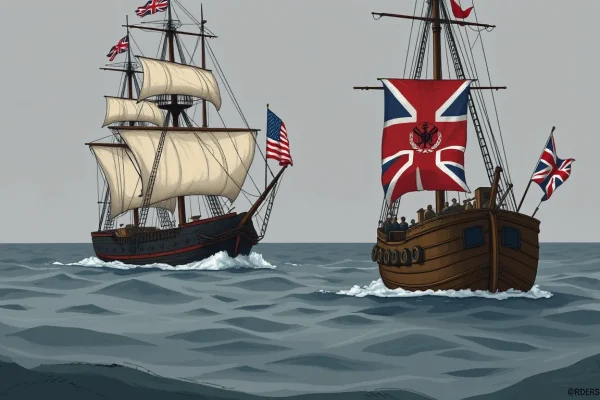
During the War of 1812, Sackett’s Harbor on Lake Ontario became the most active American naval station, where shipbuilder Henry Eckford constructed a fleet that challenged British control of the lake. The rivalry with British Kingston marked a major wartime shipbuilding race.

Read More →

How Infantry Fought in the War of 1812

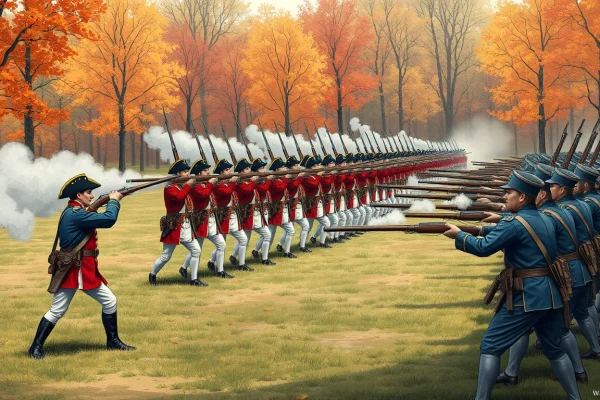
During the War of 1812, infantry on both sides fought with smoothbore muskets, massed formations, and bayonet charges, adapting European linear tactics to North American terrain. The war saw the evolution of American regulars from inexperienced troops to competent professionals, while militia proved unreliable in cross-border operations.

Read More →

Why Did New England Oppose the War of 1812?

New England’s opposition to the War of 1812 stemmed from deep-seated Federalist political resistance, economic dependence on maritime trade, and fears that the conflict served the interests of the Democratic-Republican South and West. This sectional opposition culminated in the Hartford Convention and shaped the decline of the Federalist Party.

Read More →

The Burning of the U.S. Capitol (1814)

On August 24, 1814, British forces captured Washington, D.C., and burned the U.S. Capitol, the President’s House, and other public buildings in retaliation for American destruction of York (Toronto) in 1813. It was the only time a foreign power occupied and burned the American capital.

Read More →

How the War of 1812 Shaped Canadian Identity

The War of 1812 between the United States and Great Britain played a pivotal role in shaping a distinct Canadian identity. By repelling American invasions, British North America fostered a sense of unity, loyalty to the Crown, and anti-American sentiment that would evolve into a national consciousness. This article examines the war’s impact on Canadian identity, considering historical evidence and competing interpretations.

Read More →

Choctaw Fighters at the Battle of New Orleans

At the Battle of New Orleans on January 8, 1815, about fifty to sixty Choctaw warriors, led by Pierre Juzan, fought alongside Andrew Jackson’s forces. They played a key role in skirmishing and holding the American left flank, contributing to the American victory and demonstrating the vital contributions of Indigenous allies in the War of 1812.

Read More →