John Norton and the War of 1812

John Norton (Teyoninhokarawen), a Cherokee-Scottish Mohawk leader, played a pivotal role in the War of 1812 by commanding Indigenous warriors for the British on the Niagara frontier, notably at Queenston Heights. His memoir remains a rare Indigenous perspective on the conflict.
Read More →

Roger Hale Sheaffe

Roger Hale Sheaffe was a British Army officer who served in Upper Canada during the War of 1812, taking command after Isaac Brock’s death at Queenston Heights. His retreat at York in 1813 led to his removal from command and a controversial legacy.

Read More →

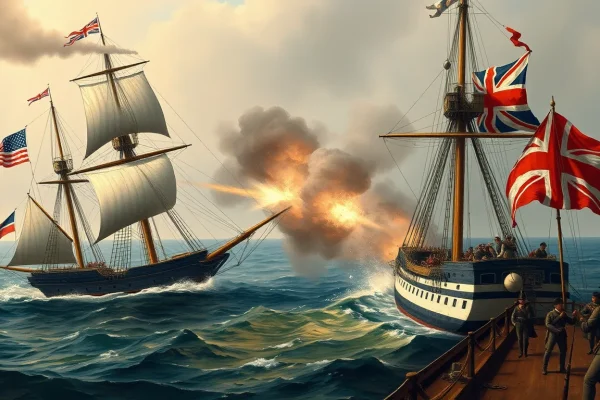
Why Did HMS Shannon Defeat USS Chesapeake?

On 1 June 1813, HMS Shannon defeated USS Chesapeake off Boston in a short but bloody action. The British victory resulted largely from Captain Philip Broke’s rigorous gunnery training and the superior discipline of his crew, which overwhelmed a larger but ill-prepared American ship. The defeat ended American frigate supremacy and became a symbol of naval preparedness.

Read More →

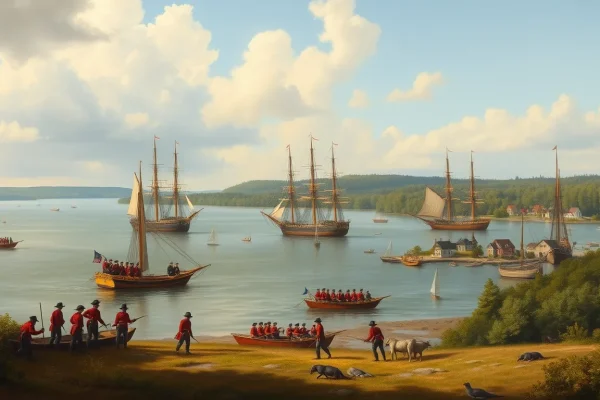
British Campaign Against Maine

The British Campaign Against Maine (1814–1815) was a series of combined naval and military operations that occupied eastern Maine, then part of the District of Massachusetts, establishing the short-lived colony of ‘New Ireland’. Led by Sir John Coape Sherbrooke, the British captured Castine, Hampden, and Bangor, holding the territory until the Treaty of Ghent restored it to the United States.

Read More →

Why Did the Treaty Restore the Status Quo?

The Treaty of Ghent restored the status quo ante bellum because neither the United States nor Britain had achieved its war aims, and both were eager for peace after a costly military stalemate. The treaty returned all conquered territory, left pre-war boundaries unchanged, and deliberately avoided the issues of impressment and neutral trade, which had faded as British wartime needs ended.

Read More →

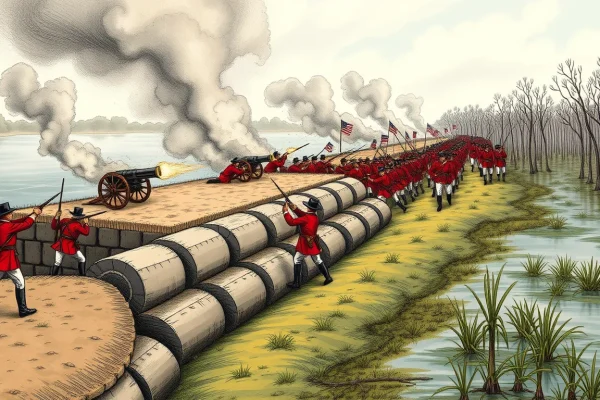
The New Orleans Campaign

The New Orleans Campaign was the final British military effort of the War of 1812, culminating in the decisive American victory at the Battle of New Orleans on January 8, 1815. Though fought after the Treaty of Ghent had been signed, the campaign became a cornerstone of American national identity and propelled Andrew Jackson to the presidency.

Read More →

Muskets Used in the War of 1812

The War of 1812 saw the widespread use of smoothbore flintlock muskets, including the British Brown Bess and the American Springfield Model 1795, alongside rifles and older militia arms. These firearms shaped infantry tactics and influenced the outcome of battles from Canada to the Gulf Coast.

Read More →