
Short Answer
The New Orleans Campaign was the last major military operation of the War of 1812, initiated by Great Britain to capture the strategic port city of New Orleans and control the Mississippi River. Beginning with British landings on the Louisiana coast in December 1814 and ending after the British withdrawal in January 1815, the campaign culminated in a decisive American victory at the Battle of New Orleans on January 8, 1815. Although the Treaty of Ghent had been signed in Europe two weeks earlier, the campaign became a seminal event in American history, shaping national memory and elevating Andrew Jackson to heroic status.
Historical Context
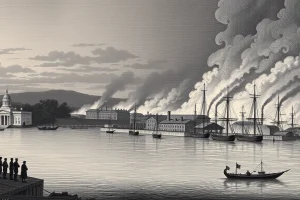
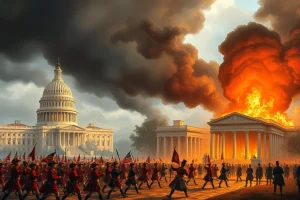
With the defeat of Napoleon in the spring of 1814, Great Britain was able to redirect its military resources to the ongoing conflict with the United States. Britain aimed to seize New Orleans, the gateway to the American interior and the Mississippi River, which carried roughly one-third of American produce. Control of the city would sever the western United States from the East, threaten trade, and provide a major bargaining chip in the peace negotiations then under way at Ghent, Belgium. The British planned a two-pronged strategy: one force struck at Chesapeake Bay, leading to the burning of Washington, D.C., in August 1814, while another expedition under Vice Admiral Sir Alexander Cochrane assembled at Jamaica for an assault on the Gulf Coast.
The American defense of the Gulf region was led by Major General Andrew Jackson, who had recently won victories against the Creek Nation at the Battle of Horseshoe Bend in March 1814. Jackson moved to Mobile, Alabama, and then to New Orleans, arriving on December 1, 1814. He assembled a heterogeneous force of U.S. regulars, Tennessee and Kentucky militia, free men of color, and Baratarian privateers under Jean Lafitte, all tasked with defending the city against a British attack that was anticipated from several directions.
What Happened
The British fleet, carrying over 8,000 veteran troops from the Peninsular War, arrived off Ship Island on December 7, 1814. To approach New Orleans without risking the heavily fortified Mississippi River, Cochrane decided to enter Lake Borgne, an estuary east of the city. A force of British gunboats overwhelmed the American flotilla on December 14, securing the lake. British troops then transferred to shallow-draft boats and moved through bayous, landing at the Villere plantation on the east bank of the Mississippi, about ten miles below New Orleans, on December 23.
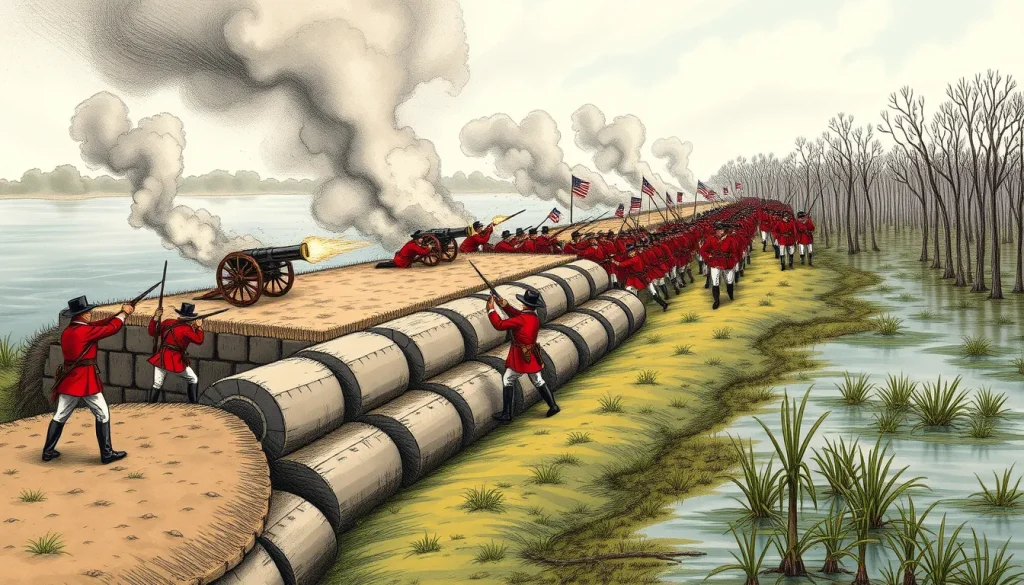
Jackson, alerted to the landing, launched an immediate night attack on December 23. The American force, supported by the gunboat USS Carolina, surprised the British encampment but the engagement remained indecisive in the darkness. Jackson then withdrew to a prepared defensive line along the Rodriguez Canal, a dry millrace bordering the Chalmette plantation. The line extended from the Mississippi River on the west to an impassable cypress swamp on the east, a distance of about three-quarters of a mile. Over the following days, American troops strengthened the earthworks, which became known as Line Jackson.
Lieutenant General Sir Edward Pakenham, Wellington’s brother-in-law, arrived to take command of the British forces on Christmas Day. After a failed reconnaissance on December 28 and an artillery bombardment on January 1, 1815, Pakenham determined to launch a full-scale infantry assault. His plan called for a feint against the east bank and a crossing of the Mississippi to seize American artillery on the west bank, which could enfilade the American line. Colonel William Thornton’s force was to cross the river before dawn on January 8, but delays in obtaining boats meant the crossing was completed only after the main attack had begun.
At dawn on January 8, British columns advanced in dense formation against the American earthworks. The assault was doomed almost immediately. The 44th Regiment, tasked with carrying fascines and ladders to fill the ditch and scale the parapet, had advanced without them. American artillery and musketry from behind the breastworks devastated the attackers. Pakenham was severely wounded by grapeshot and died during the battle. In the space of about twenty minutes, the British suffered staggering losses. The simultaneous attack on the west bank succeeded temporarily, but with the main assault repulsed, the British withdrew. Under Major General John Lambert, the British remained in front of New Orleans until January 18, then re-embarked and sailed away.
Why It Matters
The New Orleans Campaign had no direct effect on the outcome of the war, as the Treaty of Ghent had been signed on December 24, 1814, and was ratified by the U.S. Senate in February 1815. Yet the American victory produced an outsized psychological impact. It gave the United States a triumphant conclusion to an otherwise frustrating conflict, fostering a sense of national pride and confirming American independence in the public mind. The battle became an annual national holiday on January 8, celebrated for several decades. Andrew Jackson’s leadership propelled him to the presidency in 1828, and his image became inseparable from the campaign. Historians have debated the campaign’s strategic significance: some argue it was strategically irrelevant because of the treaty, while others contend that it prevented a possible British occupation and demonstrated the viability of the American republic.
Prelude
The British expedition against New Orleans originated in 1814, as Admiral Cochrane proposed capturing the city to control the Mississippi and cripple American trade. After assembling forces in Jamaica, the fleet sailed to the Gulf of Mexico, arriving off the Mississippi coast in December. Jackson, anticipating an attack, placed batteries at Fort St. Philip and Fort Bowyer and coordinated defenses around the city. He also welcomed the services of Jean Lafitte’s Baratarian smugglers, who supplied artillery, ammunition, and manpower despite American military authorities’ earlier hostility.
Forces and Commanders
British and Allied Forces: The British force comprised approximately 8,000 troops under the overall command of Lieutenant General Sir Edward Pakenham. Major units included the 4th, 7th, 21st, 43rd, 44th, 85th, 93rd, and 95th Regiments of Foot, all veterans of the Peninsular War. Major General Samuel Gibbs led the main assault column, while Major General John Keane commanded the reserve. Colonel William Thornton led the west bank attack.
American Forces: Major General Andrew Jackson commanded approximately 4,500 men. This force included U.S. regular infantry, artillery, marines, sailors, Tennessee and Kentucky militia, a battalion of free men of color, and Baratarian privateers. Jackson’s senior subordinates included General William Carroll, General John Coffee, and Major General J. R. Williams.
Battlefield and Map Context
The decisive battle took place on the Chalmette plain, about five miles southeast of New Orleans. The natural terrain consisted of flat, open ground along the Mississippi, bordered by swamps and the Rodriguez Canal—a shallow drainage ditch that ran perpendicular to the river. The plain was approximately 1,500 yards wide between the river and the cypress swamp. This terrain channeled any frontal advance directly into the American artillery and musketry. Modern maps of the battlefield are maintained by Jean Lafitte National Historical Park and Preserve.
Battle Chronology
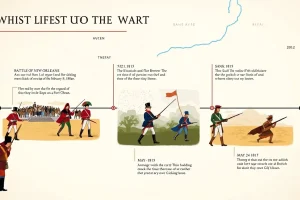
- December 14, 1814: British gunboats defeat an American flotilla on Lake Borgne.
- December 23, 1814: British troops land below New Orleans; Jackson launches a night attack at Villere plantation.
- December 28, 1814: British reconnaissance forces probe the American line; skirmishing.
- January 1, 1815: British artillery engages American batteries; the Americans gain the advantage.
- January 8, 1815: British launch a full-scale assault; Pakenham is killed; the attack collapses with heavy casualties.
- January 18, 1815: British forces withdraw and re-embark.
Casualties and Losses
Official returns for January 8, 1815, give British losses as 291 killed, 1,262 wounded, and 484 captured or missing—a total of over 2,000, or about 25% of the attacking force. American casualties were remarkably low: 13 killed, 39 wounded, and 19 missing. This disparity is among the most lopsided in contemporary European warfare. Some later estimates vary slightly, but these figures are widely accepted by historians.
Result
The Battle of New Orleans was a complete American victory. The British were unable to break through Jackson’s fortified line and were forced to retreat. The campaign ended with the British evacuation, leaving New Orleans under American control. The victory was the most decisive American land battle of the War of 1812.
Strategic Consequences
Strategically, the campaign had negligible effect on the war’s outcome because the Treaty of Ghent had already been signed. However, it prevented a likely British occupation of the lower Mississippi Valley and ensured American control of the river. In the longer term, the victory boosted American national self-confidence, reinforced the idea of Manifest Destiny, and contributed to the mythology of frontier heroism. For Britain, the defeat was a humiliating end to a costly conflict, although it did not significantly alter the British perception of the war.
Primary Accounts
Contemporary sources include the memoir of G. R. Gleig, a British officer who participated in the campaign; the official report of Andrew Jackson to Secretary of War James Monroe; and the narrative of Major General Jackson’s aide, Edward Livingston. American engineer Arsène Lacarrière Latour produced a detailed history with maps. These accounts vary in perspective: Gleig emphasizes the difficulties of the terrain and the failure of the assault, while Latour highlights the strength of the American defenses. Each must be read for its national bias.
Battlefield Today
The Chalmette Battlefield is preserved as part of the Jean Lafitte National Historical Park and Preserve, operated by the National Park Service. Visitors can see the reconstructed Rodriguez Canal, the earthworks of Line Jackson, and a monument to the battle. The park offers interpretive programs and maintains a visitor center. The battlefield is listed on the National Register of Historic Places.
Primary Sources
- G. R. Gleig, The Campaigns of the British Army at Washington and New Orleans, 1814-1815 (1879). A British participant’s journal-based memoir, written several years after the events but containing contemporary observations.
- Andrew Jackson’s military reports to the Secretary of War (December 1814–January 1815). Official American dispatches describing defenses, engagements, and losses.
- Arsène Lacarrière Latour, Historical Memoir of the War in West Florida and Louisiana in 1814-15 (1816). An American engineer’s account with maps and documents.
- British official returns of casualties, dated January 9, 1815. Provide the basis for casualty numbers.
Further Reading
- Robin Reilly, The British at the Gates: The New Orleans Campaign in the War of 1812 (1974).
- Robert V. Remini, The Battle of New Orleans: Andrew Jackson and America’s First Military Victory (1999).
- Matthew B. Dale, The Staff Ride Handbook for the Battles of New Orleans, 23 December 1814-8 January 1815 (Combat Studies Institute Press, 2015).
- Jean Lafitte National Historical Park and Preserve, Chalmette Battlefield – interpretive materials and battlefield guide.
References
- G. R. Gleig, The Campaigns of the British Army at Washington and New Orleans, 1814-1815, https://www.mirrorservice.org/sites/ftp.ibiblio.org/pub/docs/books/gutenberg/1/8/4/7/18479/18479-h/18479-h.htm (Project Gutenberg).
- American Battlefield Trust, “Battle of New Orleans: The Last Battle of the War of 1812,” https://www.battlefields.org/learn/articles/battle-new-orleans-last-battle-war-1812 (accessed [current date]).
- Jerome Greene, “The New Orleans Campaign of 1814-1815 in Relation to the Chalmette Battlefield,” NPS History, https://npshistory.com/publications/jela/lost_riverfront/Part_1.pdf (accessed [current date]).
- “Battle of New Orleans – War of 1812,” https://thewarof1812.org/battles/battle-of-new-orleans/ (accessed [current date]).
- Matthew B. Dale, The Staff Ride Handbook for the Battles of New Orleans, 23 December 1814 – 8 January 1815, Combat Studies Institute Press, 2015, https://www.govinfo.gov/content/pkg/GOVPUB-D110-PURL-gpo76777/pdf/GOVPUB-D110-PURL-gpo76777.pdf (accessed [current date]).
FAQ
Why was the Battle of New Orleans fought after the War of 1812 had ended?
The Treaty of Ghent was signed on December 24, 1814, but it took time for news to cross the Atlantic. Neither side in New Orleans knew the treaty had been signed when the battle took place on January 8, 1815.
What was Andrew Jackson's role in the New Orleans Campaign?
Jackson commanded the American forces, orchestrating the defense of New Orleans, building fortifications, and leading the night attack on December 23, 1814. His leadership at the Battle of New Orleans made him a national hero.
Why did the British forces suffer such heavy losses at New Orleans?
The British attempted a frontal assault against a well-fortified position. The 44th Regiment failed to bring the fascines and ladders needed to cross the canal and scale the earthworks, leaving the troops exposed to devastating artillery and musketry fire.
Leave a Reply