
Short Answer
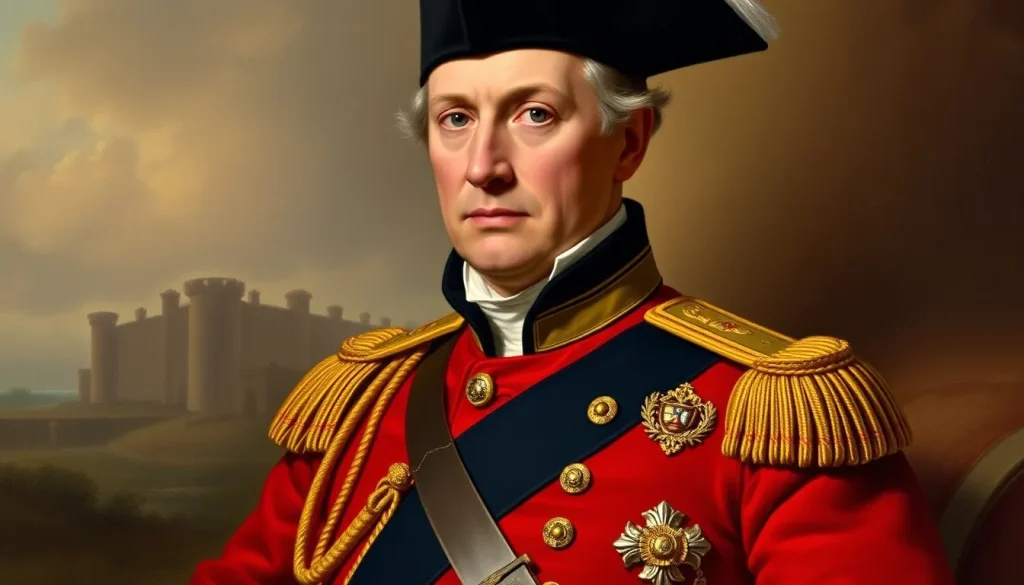
Roger Hale Sheaffe (15 July 1763 – 17 July 1851) was a British Army officer and colonial administrator who served prominently in the War of 1812 in Upper Canada. Born in Boston, Massachusetts, Sheaffe rose through the British military hierarchy and became Isaac Brock’s subordinate, later assuming command after Brock’s death at the Battle of Queenston Heights. His decision to retreat at the Battle of York in 1813 led to his removal from command, overshadowing his earlier tactical success and leaving a controversial legacy.
Historical Context
The War of 1812 was fought between the United States and Great Britain, with British North America (Canada) as a primary battleground. Upper Canada, with its small population of British settlers and Indigenous allies, faced repeated American invasions across the Niagara River and the Detroit frontier. The British military relied on regular troops, Canadian militia, and Indigenous warriors to defend the province. In 1812, Major General Isaac Brock was the military commander of Upper Canada, while Lieutenant General Sir George Prevost served as Governor-in-Chief. The Niagara frontier, where Fort George and Queenston were located, was strategically vital, and York, the provincial capital, was a symbol of British authority.
What Happened
Sheaffe arrived at Fort George on 18 August 1812, just as Brock departed to oppose the American invasion from Detroit. Sheaffe assumed command of the Niagara frontier forces. During the brief armistice following Prevost’s truce with American General Henry Dearborn, Sheaffe negotiated a supplementary agreement with American commander Stephen Van Rensselaer, restricting reinforcements and supplies to the upper Great Lakes. Prevost disapproved, but did not publicly disavow Sheaffe to avoid embarrassment.
On 13 October 1812, American forces crossed the Niagara River at Queenston and captured the heights. Brock rushed from Fort George and was killed during a counterattack. Sheaffe, arriving around noon, organized a flanking movement with regulars, militia, and Indigenous allies, attacking the American left flank along the top of the heights. His tactics routed the American force, taking nearly 1,000 prisoners and securing a decisive British victory. For this success, Sheaffe was appointed military commander of Upper Canada and later created a baronet in January 1813.
In April 1813, an American force of about 1,700 men under Henry Dearborn attacked York. Sheaffe had roughly 700 regulars and militia plus some Indigenous warriors. After initial fighting, Sheaffe concluded that further resistance was futile and withdrew the regulars toward Kingston, leaving the militia to negotiate a surrender. The Americans occupied the capital and burned public buildings. Sheaffe’s retreat was widely criticized by Upper Canadian officials and civilians, and he was relieved of his military and civil commands in June 1813. He was posted to Montreal and then recalled to Britain later that year.
Why It Matters
Sheaffe’s career mirrors the challenges of leadership in Upper Canada during a fragile period. His victory at Queenston Heights proved the effectiveness of combined regular, militia, and Indigenous forces under competent direction, but his decision at York cost him the confidence of the province. Historians have debated whether his retreat was a pragmatic military choice or a failure of nerve. Sheaffe’s removal marked a turning point in the British command structure and contributed to the narrative of Brock as the hero, while Sheaffe’s own contributions were relegated to footnotes. His actions shaped the early defence of Upper Canada, influencing how later commanders like Francis de Rottenburg approached the conflict.
Early Life
Roger Hale Sheaffe was born in Boston, Massachusetts, to William Sheaffe, a Harvard graduate and Deputy Collector of Customs, and Susannah Child. After his father’s death in 1771, his mother ran a boarding house. During the American Revolution, Hugh Percy, later 2nd Duke of Northumberland, stayed there and took an interest in young Sheaffe, sponsoring his education at a military academy in England. Sheaffe received his first commission as an ensign in the 5th Foot in 1778, with Percy purchasing his subsequent promotions.
Role Before the War
Sheaffe served with the 5th Foot in Ireland from 1781 to 1787, then was posted to Canada. Over the next decade, he served at Quebec, Montreal, Detroit, and Fort Niagara. In 1794, Lieutenant Governor John Graves Simcoe sent him to Sodus on Lake Ontario to protest American settlement on Indigenous lands. Sheaffe was promoted captain in 1795. He returned to England in 1797, purchased a majority in the 81st Foot, and later transferred to the 49th Foot as lieutenant-colonel under Isaac Brock. The regiment saw action in Holland in 1799 and the Baltic in 1801. In 1802, the 49th was sent to Upper Canada, where Sheaffe commanded Fort George. In 1803, a mutiny at the fort was suppressed, with Brock attributing blame to Sheaffe’s harsh discipline. Sheaffe remained in the province, rising to major-general in 1811.
Role During the War
When the War of 1812 began, Sheaffe was temporarily appointed to the army staff in Upper Canada by Prevost. He arrived at Fort George on 18 August 1812, assuming command of the Niagara frontier while Brock was at Detroit. Sheaffe’s early diplomacy with the armistice caused tension with Prevost. After Brock’s defeat at Queenston, Sheaffe became military and civil commander of Upper Canada. He implemented reforms, including militia legislation and support for unconventional warfare units. His tenure was short-lived due to the loss at York.
Major Actions
Sheaffe’s decisive action at Queenston Heights remains his most significant military achievement. By avoiding a frontal assault, he used terrain and flanking to defeat a numerically similar American force. At York, his decision to retreat preserved his regulars but forfeited the capital. He was also involved in strengthening naval and land defences and coordinating with Aboriginal allies. His management of the Niagara frontier in the months between the battles was notable for its attempt to address supply and militia issues.
Contemporary Accounts
Brock previously criticized Sheaffe for his harsh discipline, describing him as possessing “little knowledge of Mankind.” After Queenston, however, praise came from his superiors and the executive council of Upper Canada. At York, eyewitnesses accused him of cowardice, while others, like William Dummer Powell, defended his actions. Prevost stated that Sheaffe had shown “circumstances indicating an insufficiency” to the task of defending the province. These conflicting contemporary views reflect the divided opinions of the time.
Later Life
After being replaced by Francis de Rottenburg in June 1813, Sheaffe commanded at Montreal and later returned to Britain. He was appointed colonel of the 36th Regiment in 1829 and promoted to general in 1838. Sheaffe retired to Edinburgh, where he died on 17 July 1851. He was buried in Edinburgh. His family life included marriage to Margaret Coffin in Quebec, with whom he had several children, all of whom predeceased him.
Historical Legacy
Sheaffe is often overshadowed by Brock, who is celebrated as a martyr and hero. Historians such as J. Mackay Hitsman have reassessed Sheaffe more sympathetically, noting that at York he faced overwhelming odds and limited fortifications. Scholars still debate whether his retreat was a prudent decision or a failure of resolve. His victory at Queenston Heights is credited as a key British success, but his name is largely forgotten in public memory. In modern historical writing, he is recognized as a capable but flawed officer whose career was undone by the politics and pressures of colonial defence.
Primary Sources
Important primary sources include Sheaffe’s official dispatches to Sir George Prevost, Brock’s letters to Sheaffe and other officers, and the records of the Executive Council of Upper Canada. These documents are held at Library and Archives Canada and the National Archives (UK). The Dictionary of Canadian Biography entry cites these archival materials. No verbatim transcripts are provided here; readers are directed to the cited archives or published editions such as the Select British Documents of the Canadian War of 1812.
Further Reading
- Hitsman, J. Mackay. The Incredible War of 1812. University of Toronto Press, 1965.
- Hickey, Donald R. The War of 1812: A Forgotten Conflict. University of Illinois Press, 1989.
- “Sir Roger Hale Sheaffe.” The Canadian Encyclopedia. Available at: https://thecanadianencyclopedia.ca/en/article/sir-roger-hale-sheaffe
- “Sheaffe, Sir Roger Hale.” Oxford Dictionary of National Biography, 2004.
- “SHEAFFE, Sir ROGER HALE.” Dictionary of Canadian Biography, vol. 8. Available at: https://www.biographi.ca/en/bio/sheaffe_roger_hale_8E.html
References
- The Canadian Encyclopedia, “Sir Roger Hale Sheaffe,” https://thecanadianencyclopedia.ca/en/article/sir-roger-hale-sheaffe
- Oxford Dictionary of National Biography, “Sheaffe, Sir Roger Hale, baronet,” https://doi.org/10.1093/ref:odnb/25278
- Dictionary of Canadian Biography, “SHEAFFE, Sir ROGER HALE,” https://www.biographi.ca/en/bio/sheaffe_roger_hale_8E.html
- Hitsman, J. Mackay. The Incredible War of 1812. University of Toronto Press, 1965.
FAQ
What was Sheaffe's role at the Battle of Queenston Heights?
After Isaac Brock was killed, Sheaffe took command and led a flanking attack on the American left, forcing the surrender of nearly 1,000 American troops.
Why was Sheaffe removed from command in Upper Canada?
His decision to retreat at the Battle of York in April 1813 was deemed a failure, and he lost the confidence of the provincial government and civilian population.
How is Sheaffe remembered today?
Historians often view him as a capable but flawed officer overshadowed by Brock. Some argue his retreat at York was justified by the overwhelming odds, while others see it as a mistake.

Leave a Reply