
Short Answer
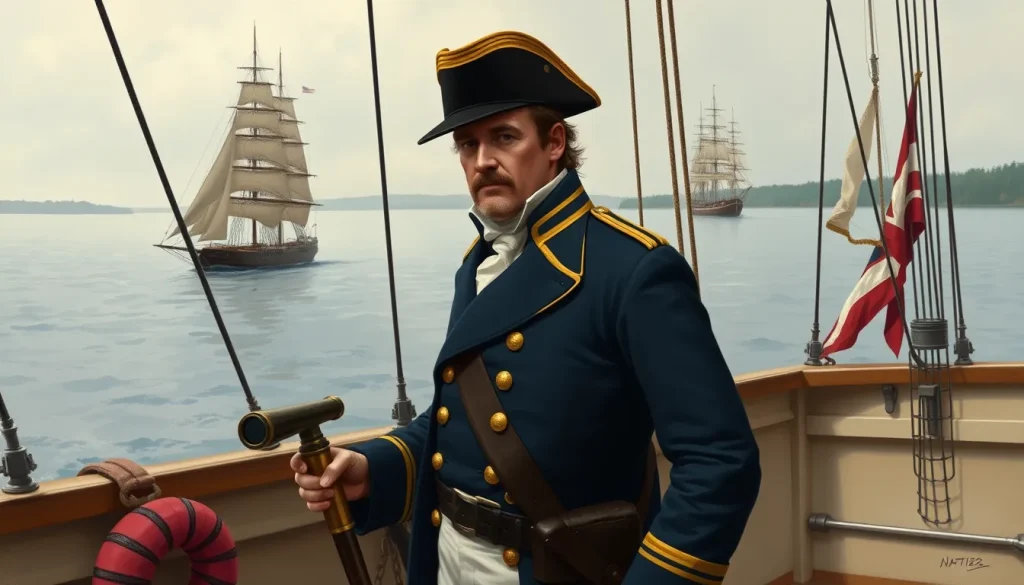
Commodore Sir James Lucas Yeo (7 October 1782 – 21 August 1818) was a Royal Navy officer who commanded British naval forces on Lake Ontario during the War of 1812. Appointed to the lakes command in March 1813, he directed the British squadron based at Kingston against the American squadron of Commodore Isaac Chauncey at Sackets Harbor. His command was central to the contest for the lake, which shaped British supply lines, troop movements, and amphibious operations in Upper Canada. Yeo is historically significant less for a single decisive battle than for the long naval arms race he managed and for the continuing debate over whether his caution was prudent or excessive.
Historical Context
The War of 1812 began in June 1812 after years of Anglo-American tension over maritime rights, trade restrictions, and frontier disputes. For both the United States and Britain, the Great Lakes and the St Lawrence corridor became critical military theaters. Lake Ontario was the easternmost of the contested lakes and the hinge between the St Lawrence River, Kingston, York, the Niagara Peninsula, and the American naval base at Sackets Harbor. Control of the lake allowed an army to move troops and supplies rapidly, to support raids and invasions, and to threaten the opponent’s shipyards and settlements. Because roads were poor and the distances immense, water transport was not a convenience but a strategic necessity.
Britain initially concentrated on the Napoleonic Wars in Europe, while the United States had greater freedom to act on the lakes. The Royal Navy’s Provincial Marine and regular naval forces were small, and the British had to build up their lake squadrons while defending Upper Canada. The appointment of a Royal Navy officer to command the lakes reflected the Admiralty’s recognition that the inland war required professional naval leadership. On Lake Ontario, the British base at Kingston faced the American base at Sackets Harbor, and each side spent the winters building, arming, and manning ever-larger vessels. The result was a naval arms race shaped by geography, weather, supply shortages, and the need to cooperate with land commanders.
What Happened
Yeo was appointed commander-in-chief on the lakes of Canada on 19 March 1813 and sailed for Canada that spring. He established his headquarters at Kingston and took command of a squadron that was initially undermanned, short of stores, and inferior in long-range firepower to Chauncey’s American force. Early in his command, his ships relied heavily on carronades, which were devastating at close range but less accurate at distance, while Chauncey’s squadron mounted longer-range guns. These material limits encouraged a cautious tactical approach and helped produce a series of inconclusive encounters rather than a decisive fleet battle.
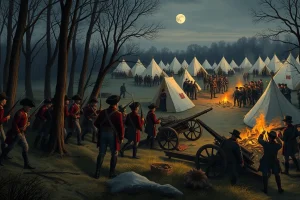
In May 1813, Yeo commanded the naval element of the British amphibious attack on Sackets Harbor under Governor General Sir George Prevost. The British landed troops and briefly threatened the American base, but the operation was withdrawn without destroying the American shipyard or squadron. Later in 1813, Yeo’s squadron and Chauncey’s squadron maneuvered against each other on the lake, including an engagement on 28 September 1813, but neither side won a decisive victory. The campaign became a contest of shipbuilding, supply, and endurance. During the winter of 1813–1814, Yeo oversaw the construction of larger and more heavily armed vessels at Kingston, including the Prince Regent and Princess Charlotte, which gave the British a stronger position on the lake in 1814.
In May 1814, Yeo’s squadron supported the British capture of Fort Oswego, where the attackers seized valuable naval stores and supplies. Through 1814 he used his squadron to support British army movements, protect Kingston, and contest American control of the lake. The British defeat on Lake Champlain in September 1814, under a different command, worsened Yeo’s already difficult relationship with Prevost. After the war ended, Yeo left Kingston in March 1815 and traveled through the United States, visiting Sackets Harbor and meeting his former opponent Chauncey in peacetime. He returned to England in May 1815 and delivered a frank report on the lake command to the Admiralty.
Why It Matters
Yeo’s command mattered immediately because it helped prevent the United States from achieving uncontested control of Lake Ontario. British control or denial of the lake protected Kingston, sustained supply routes, and supported the defense of Upper Canada. Yet Yeo’s squadron never destroyed Chauncey’s fleet, and the lake remained a contested space until the end of the war. The naval race on Lake Ontario also demonstrated how quickly inland waters could become major strategic theaters and how much resources both powers were willing to pour into them.
In the longer term, the war on the lakes contributed to the postwar demilitarization of the Great Lakes through the Rush–Bagot Treaty of 1817, which limited naval armaments on the lakes. Historians continue to debate Yeo’s performance. Many contemporaries and some later writers criticized him as overly cautious, even timid, and contrasted his caution with more aggressive British naval figures. Other historians, notably Robert Malcomson, emphasize that Yeo faced severe shortages of men, supplies, and ships, operated under Prevost’s land-command priorities, and had to preserve a fleet that could not easily be replaced. In this interpretation, Yeo’s caution was a rational response to material weakness rather than a personal failing. The debate reflects a broader question in War of 1812 historiography: whether command decisions should be judged by the opportunities available or by the constraints under which commanders acted.
Early Life
James Lucas Yeo was born on 7 October 1782 in Southampton, Hampshire, England, the eldest son of a naval victualling agent. He was educated near Winchester and entered the Royal Navy at about the age of ten as a midshipman aboard the Windsor Castle, aided by the patronage of Admiral Phillips Crosby. He rose rapidly: he became an acting lieutenant in 1796 aboard the sloop Albacore and was confirmed as lieutenant on 20 February 1797. Service in the West Indies brought him a bout of yellow fever, and after the Peace of Amiens in 1802 he was placed on half-pay during the brief peace with France.
Role Before the War
When war with France resumed in 1805, Yeo served as first lieutenant of the frigate Loire. At Muros Bay off Spain in 1805, he led a landing party of about fifty men against shore batteries, captured a stronger emplacement, and was wounded. He was promoted to commander and given command of the captured Confiance. In 1807 he became a post-captain. He later served in Portuguese and South American waters, and in 1809 he commanded a small allied force that captured Cayenne in French Guiana. For these services he received a Portuguese knighthood in the Order of Aviz and a British knighthood. In 1811 he was given command of the frigate Southampton. In 1812 the frigate was wrecked in the Bahamas, and although Yeo was court-martialed, the court exonerated him after finding that the reef was uncharted and the local currents were not properly documented.
Role During the War
Yeo’s central War of 1812 role was as commodore and commander-in-chief of British naval forces on the lakes of Canada, with Lake Ontario as the most important station. Based at Kingston, he was responsible for the British squadron, ship construction, manning, and cooperation with the army under Sir George Prevost. His principal opponent was Commodore Isaac Chauncey, whose American squadron operated from Sackets Harbor. The two commanders knew each other’s strengths and weaknesses, and their campaign became a prolonged duel for control of the lake. Yeo’s fleet often had to balance the need to fight with the need to preserve scarce ships and crews, and he frequently operated under orders that prioritized the army’s needs.
Major Actions
Yeo’s major actions included the May 1813 attack on Sackets Harbor, where he commanded the naval force supporting Prevost’s landing; the maneuvering campaign and engagement of 28 September 1813; the May 1814 attack on Fort Oswego, where his squadron helped capture valuable stores; and the 1814 shipbuilding effort at Kingston that produced the Prince Regent and Princess Charlotte. He also conducted convoy, blockade, and transport operations that supported British land forces. None of these actions produced a Trafalgar-like decision on Lake Ontario, but together they prevented an American naval monopoly and kept the British base at Kingston secure.
Contemporary Accounts
Contemporary evidence comes mainly from official dispatches, officers’ letters, and newspapers. Yeo’s reports to the Admiralty and his correspondence with Prevost present his decisions as responses to shortages and enemy strength. Chauncey’s letters and American naval records offer a different perspective, often criticizing Yeo’s caution while acknowledging the difficulty of forcing a decisive action. One American officer reportedly compared the two squadrons to two dogs, always growling and snapping but never biting. British and American newspapers followed the lake campaign closely, but their accounts were often shaped by patriotic expectations and incomplete information. These sources are valuable but must be read with attention to self-justification, delayed reporting, and the fog of war.
Later Life
After the war, Yeo was recalled to England. He left Kingston in March 1815 and visited Sackets Harbor, where he spent several days in the company of Chauncey. Arriving in England in May 1815, he delivered a lengthy report to the Admiralty. He was made a Knight Commander of the Order of the Bath in 1815. He then received command of a Royal Navy station on the west coast of Africa, where he patrolled against the slave trade. His health had long been weakened by tropical disease, and on 21 August 1818 he died of fever at sea. His body was preserved and returned to England, where he was buried at the Royal Garrison Chapel in Portsmouth on 8 September 1818.
Historical Legacy
Yeo’s historical legacy is divided. In Canadian and British naval memory, he is remembered as a professionally competent officer who held a difficult command, built up the Kingston squadron, and helped keep Lake Ontario from becoming an American lake. In much of the older literature, he appears as a cautious commander who missed chances for decisive victory. Modern historians tend to place greater weight on the structural constraints he faced: inadequate manpower, supply shortages, dependence on the army’s priorities, and an American squadron that was often better armed. His career also illustrates the wider importance of the War of 1812’s inland naval war, which is sometimes overshadowed by the more famous battles on Lake Erie and Lake Champlain. Yeo’s command was not decisive in the manner of a single great battle, but it was strategically significant because it kept the British position at Kingston viable and forced the United States to contest the lake throughout the war.
Primary Sources
The most important contemporary sources for Yeo’s Lake Ontario command are his official dispatches and letters to the Admiralty, his correspondence with Sir George Prevost and other British officials, and the letters and reports of Commodore Isaac Chauncey and other American naval officers. These are held in British and American archival collections, including the Admiralty records at The National Archives in Kew and United States naval records in the National Archives and Records Administration. Many key documents are printed in William Wood’s Select British Documents of the Canadian War of 1812 and in William S. Dudley’s The Naval War of 1812: A Documentary History. Contemporary newspapers such as the Naval Chronicle and American and Canadian papers provide useful but uneven coverage. All of these sources have limitations: official dispatches were written to justify decisions, letters could be shaped by personal rivalries, and newspaper reports often repeated rumor or patriotic exaggeration.
Further Reading
- Renée Lafferty, ‘Sir James Lucas Yeo,’ The Canadian Encyclopedia.
- Robert Malcomson, Lords of the Lake: The Naval War on Lake Ontario, 1812–1814 (1998).
- William S. Dudley, ed., The Naval War of 1812: A Documentary History, 3 vols. (1985–2002).
- William Wood, ed., Select British Documents of the Canadian War of 1812, 3 vols. (1920–1928).
- J. Mackay Hitsman, The Incredible War of 1812: A Military History (rev. ed. 1999).
- Donald E. Graves, Where Right and Glory Lead! The Battle of Lundy’s Lane, 1814 (1997).
References
- Renée Lafferty, ‘Sir James Lucas Yeo,’ The Canadian Encyclopedia, updated 16 December 2013, https://thecanadianencyclopedia.ca/en/article/sir-james-lucas-yeo.
- Robert Malcomson, Lords of the Lake: The Naval War on Lake Ontario, 1812–1814 (Annapolis: Naval Institute Press, 1998).
- William S. Dudley, ed., The Naval War of 1812: A Documentary History, 3 vols. (Washington, DC: Naval Historical Center, 1985–2002).
- William Wood, ed., Select British Documents of the Canadian War of 1812, 3 vols. (Toronto: Champlain Society, 1920–1928).
- J. Mackay Hitsman, The Incredible War of 1812: A Military History (Toronto: Robin Brass Studio, 1999).
- Wikipedia contributors, ‘James Lucas Yeo,’ Wikipedia, https://en.wikipedia.org/wiki/James_Lucas_Yeo.
FAQ
Who was Commodore Sir James Lucas Yeo?
He was a Royal Navy officer born in 1782 who commanded British naval forces on Lake Ontario during the War of 1812, based at Kingston and opposing American Commodore Isaac Chauncey.
What ships did Yeo command on Lake Ontario?
He commanded a squadron that included HMS Wolfe and later larger vessels such as HMS Prince Regent and HMS Princess Charlotte, though the composition changed through construction, capture, and loss.
Why was Yeo criticized as cautious?
Contemporaries and some historians believed he avoided decisive battle, but others argue he faced shortages of men, supplies, and long-range guns and had to preserve a fleet that could not easily be replaced.

Leave a Reply