Short Answer
Joshua Barney (July 6, 1759 – December 1, 1818) was an American naval officer, privateer, and merchant captain whose career spanned the American Revolution, the French Revolutionary Wars, and the War of 1812. In 1814 he commanded the U.S. Chesapeake Bay Flotilla, a small squadron of gunboats and barges known as the “mosquito fleet,” and led its sailors and flotillamen at the Battle of Bladensburg on August 24, 1814. Although the battle ended in an American rout and the British capture of Washington, Barney’s flotillamen provided one of the few effective American stands of the engagement. His conduct at Bladensburg became the best-remembered episode of a controversial and varied career.
Historical Context
By 1813, the British Royal Navy had established broad control of the Atlantic seaboard and the Chesapeake Bay. A British squadron under Rear Admiral George Cockburn raided tidewater towns in Maryland and Virginia, seizing supplies, destroying public property, and exhausting local militias. The United States had only a small navy and relied heavily on militia and coastal defenses. Washington, D.C., remained vulnerable because its approaches by land and water were poorly fortified. In this setting, Joshua Barney proposed a shallow-draft flotilla that could use the bay’s shoals and creeks to harass larger British vessels. Secretary of the Navy William Jones approved the plan, creating the U.S. Chesapeake Bay Flotilla and giving Barney a chance to return to naval command despite his lack of seniority in the regular Navy.
What Happened
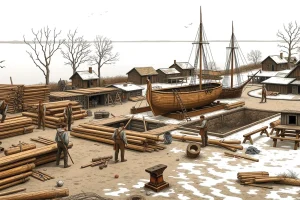
Barney received the first letter of marque issued during the war in July 1812 and commanded the privateer Rossie, capturing numerous British merchant vessels. In July 1813 he wrote to Jones proposing a “flying squadron” of barges or row-galleys. The Navy built and manned a flotilla of shallow-draft boats, each carrying oars, light sails, and a heavy long gun. Barney’s flotillamen fought British forces at St. Leonard’s Creek in June 1814 and later at Pig Point on the Patuxent River. In August 1814, trapped by a superior British force, Barney ordered his boats destroyed to prevent their capture. He then led his men overland toward Washington.
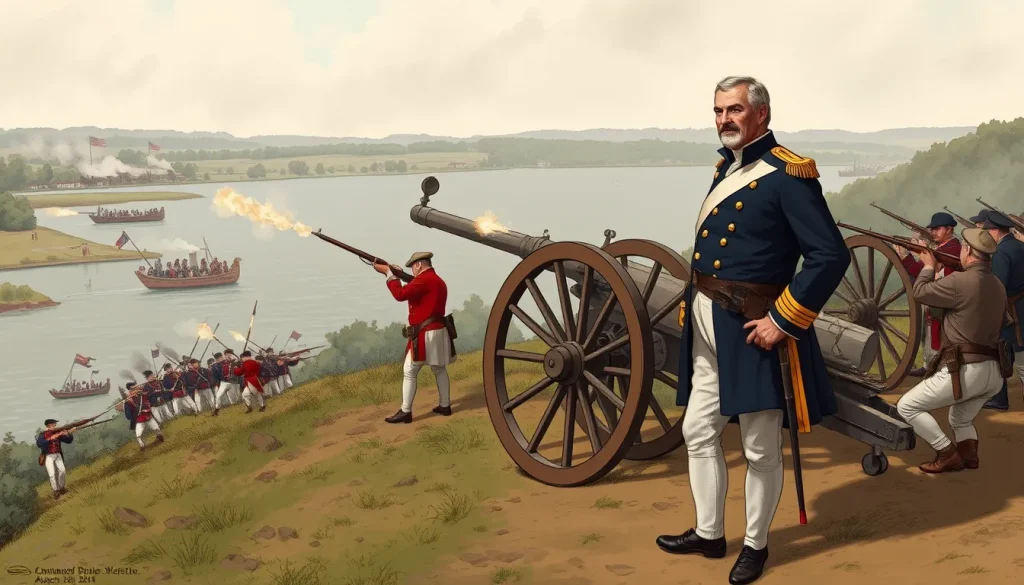
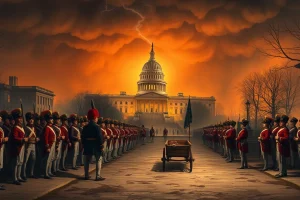
On August 24, 1814, American forces under Brigadier General William Winder met the British army of Major General Robert Ross and the naval force of Rear Admiral Cockburn at Bladensburg, Maryland, on the Eastern Branch of the Potomac (now the Anacostia River). The American line included militia, regulars, and Barney’s flotillamen with artillery. When the militia units broke under British attack, Barney’s command on a nearby rise fired into the advancing British columns, causing significant casualties. The British flanked and overran the position. Barney was wounded in the thigh and captured; many of his men were killed, wounded, or taken. The British then marched into Washington and burned the Capitol, the White House, and other public buildings.

Why It Matters
The Battle of Bladensburg exposed the weakness of American militia-based defense and led directly to the burning of Washington. Barney’s flotillamen did not save the capital, but their stand delayed the British advance and inflicted casualties at a moment when most of the American line had collapsed. For Barney personally, Bladensburg restored a reputation that had been damaged by earlier charges of disloyalty and by his service in the French navy. For later historians, the battle illustrates both the limits of American preparedness and the value of small, mobile naval forces in coastal defense. Barney’s later memory is also complicated by his participation in the international slave trade and his ownership of enslaved people, facts that have become more prominent in public interpretation.
Early Life
Joshua Barney was born on July 6, 1759, near Baltimore, Maryland, and raised on a farm along the Patapsco River. One of fourteen children, he was expected to pursue a mercantile career but was drawn to the sea. At age twelve he was apprenticed to his brother-in-law, Captain Drysdale, a merchant captain. During a 1775 voyage to France, Drysdale died, and the fifteen-year-old Barney took command of the damaged vessel and crew. He completed the voyage, but the ship and crew were seized and Barney was briefly imprisoned and impressed before returning to the Chesapeake in 1776.
Role Before the War
Barney joined the Continental Navy during the American Revolution, first serving as a master’s mate on the Hornet and later commanding the frigate Hyder-Ally. In 1782 he captured the larger British warship General Monk in the Battle of Delaware Bay, one of the few American naval victories of the Revolution. After the war he declined a captain’s commission in the new U.S. Navy because he disputed his seniority. He then served as a commodore in the French navy in the Caribbean and later engaged in privateering and the slave trade. He owned enslaved workers and transported enslaved people from Baltimore to South America, a venture that later damaged his political reputation. He married Anne Bedford in 1780 and, after her death, Harriet Coale Tunis. By 1812 he had settled near Elkridge, Maryland.
Role During the War
When the United States declared war on Britain in June 1812, Barney returned to sea as a privateer. He commanded the Rossie and captured eighteen prizes in roughly three months. In 1813, as Cockburn’s raids intensified, Barney sent Secretary Jones a detailed proposal for a flotilla of shallow-draft barges. Jones accepted, and Barney was appointed acting master commandant, later captain in the Flotilla Service of the United States. The flotilla was not part of the regular Navy but answered to the president. Its boats were designed to hide in creeks, strike at British supply vessels, and avoid capture by larger warships.
Major Actions
Barney’s flotilla first fought the British at St. Leonard’s Creek in June 1814, where it used the creek’s narrow waters to avoid destruction. In August 1814, after being trapped at Pig Point on the Patuxent River, Barney ordered the boats blown up or scuttled to keep them from British hands. He then marched his flotillamen to Washington. At Bladensburg on August 24, his approximately 400 to 500 sailors and marines were placed with artillery on a hill behind the American main line. When the American militia fled, Barney’s men fired on the British 85th and 44th Regiments, inflicting heavy losses. The British outflanked the position, and Barney, wounded in the thigh, was captured. He was later paroled. The British went on to burn Washington.
Contemporary Accounts
Barney’s July 4, 1813, letter to Secretary Jones is a central document. In it he argued that the only defense available was “a Kind of Barge or Row-galley, so constructed, as to draw a small draft of water, to carry Oars, light sails, and One heavy long gun.” British despatches by Major General Ross and Rear Admiral Cockburn describe the American resistance at Bladensburg, though from the victors’ perspective. British officer George Robert Gleig’s later memoir, A Narrative of the Campaigns of the British Army at Washington and New Orleans (1821), gives an eyewitness account that is vivid but retrospective and literary. American newspapers such as Niles’ Weekly Register reported the battle with partisan emphasis. These sources must be read critically: Barney’s letter is self-interested, British reports minimize American successes, and newspaper accounts often exaggerated or simplified events.
Later Life
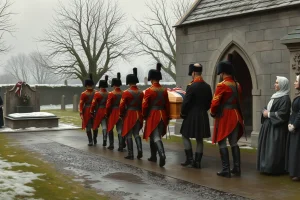
After his exchange, Barney returned to Baltimore. His wound troubled him for the rest of his life, and he held no further major naval command. He died on December 1, 1818, in Pittsburgh, Pennsylvania. His early biographer, Mary Barney, published a sympathetic memoir in 1832 that shaped much of his later reputation.
Historical Legacy
Barney is often remembered as “Commodore Barney,” although his War of 1812 rank was acting master commandant and captain in the Flotilla Service. His stand at Bladensburg has been cited as one of the few American successes of an otherwise disastrous battle. Historian Steven Eden argues that the Chesapeake command restored Barney’s earlier luster after a period of public disfavor. Modern interpretation also notes his slaveholding and slave-trading past, which complicates celebratory accounts. Several U.S. Navy ships have been named USS Barney, and the Star-Spangled Banner National Historic Trail interprets sites associated with his flotilla and the Chesapeake campaign.
Primary Sources
- Joshua Barney to William Jones, July 4, 1813. This letter outlines the flotilla plan and is quoted in National Park Service and U.S. Naval Institute accounts. It reflects Barney’s strategic thinking and his desire for a command.
- Barney’s official correspondence with the Navy Department, 1814. These letters and reports document flotilla operations and the Bladensburg campaign. They are essential but often self-justifying.
- British despatches and reports by Major General Robert Ross and Rear Admiral George Cockburn, 1814. They describe the British advance and American resistance. They reflect a British military perspective and may understate American effectiveness.
- George Robert Gleig, A Narrative of the Campaigns of the British Army at Washington and New Orleans (1821). A British officer’s eyewitness memoir. It is detailed but written years later and shaped by literary conventions.
- Mary Barney, A Biographical Memoir of the Late Commodore Joshua Barney (1832). A sympathetic family memoir that is selective and protective of its subject.
Further Reading
- Louis Arthur Norton, Joshua Barney: Hero of the Revolution and 1812 (Annapolis: Naval Institute Press, 2000).
- Donald R. Hickey, The War of 1812: A Forgotten Conflict (Urbana: University of Illinois Press, 1989; rev. ed. 2012).
- Anthony S. Pitch, The Burning of Washington: The British Invasion of 1814 (Annapolis: Naval Institute Press, 1998).
- William S. Dudley, ed., The Naval War of 1812: A Documentary History, 3 vols. (Washington, DC: Naval Historical Center, 1985–2002).
- National Park Service, “Joshua Barney,” Star-Spangled Banner National Historic Trail.
- Steven Eden, “Commodore Barney at the Bladensburg Races,” Naval History 24, no. 5 (October 2010).
References
- National Park Service, “Joshua Barney,” Star-Spangled Banner National Historic Trail, https://www.nps.gov/stsp/learn/historyculture/joshua-barney.htm.
- Steven Eden, “Commodore Barney at the Bladensburg Races,” Naval History 24, no. 5 (October 2010), https://www.usni.org/magazines/naval-history-magazine/2010/october/commodore-barney-bladensburg-races.
- Donald R. Hickey, The War of 1812: A Forgotten Conflict (Urbana: University of Illinois Press, 1989; rev. ed. 2012).
- Anthony S. Pitch, The Burning of Washington: The British Invasion of 1814 (Annapolis: Naval Institute Press, 1998).
- Mary Barney, A Biographical Memoir of the Late Commodore Joshua Barney (Boston: Gray and Bowen, 1832).
- William S. Dudley, ed., The Naval War of 1812: A Documentary History, 3 vols. (Washington, DC: Naval Historical Center, 1985–2002).
FAQ
Who was Joshua Barney?
Joshua Barney (1759–1818) was an American naval officer, privateer, and merchant captain. He served in the American Revolution, later commanded a French naval squadron, and during the War of 1812 led the U.S. Chesapeake Bay Flotilla. He is best known for his stand at the Battle of Bladensburg in 1814.
What did Joshua Barney do at the Battle of Bladensburg?
At Bladensburg on August 24, 1814, Barney commanded roughly 400 to 500 flotillamen and artillery. When American militia units broke, his men fired on advancing British regiments and inflicted significant casualties before being flanked. Barney was wounded in the thigh and captured, then later paroled.
Was Joshua Barney a controversial figure?
Yes. Barney was celebrated for his naval skill and his stand at Bladensburg, but he also served in the French navy, engaged in privateering, and participated in the international slave trade and owned enslaved people. These facts have complicated his historical reputation.
Leave a Reply