
Short Answer
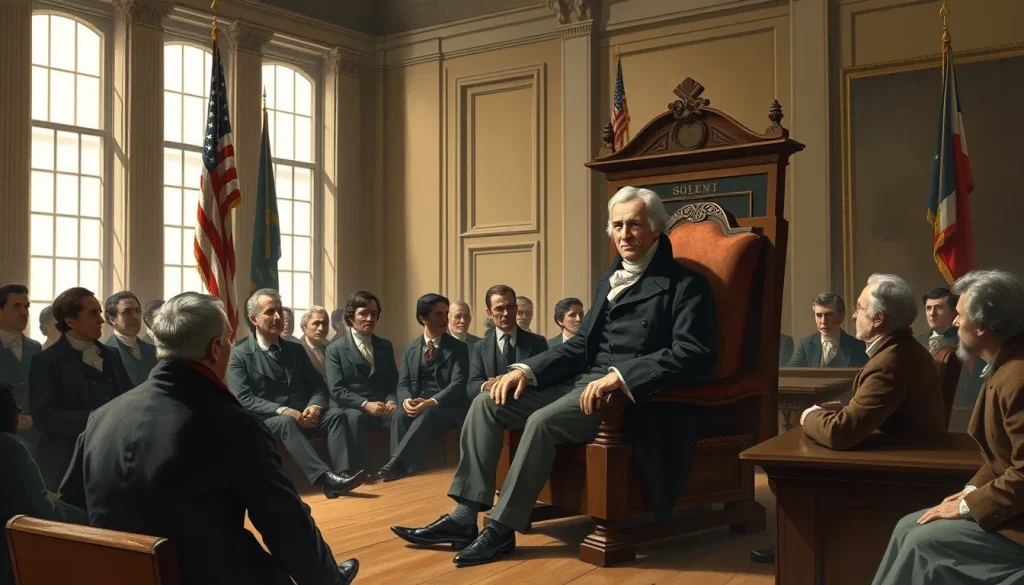
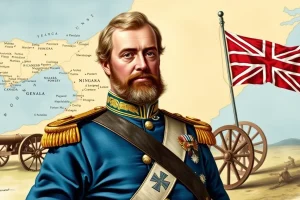
Henry Clay (April 12, 1777 – June 29, 1852), a Kentucky lawyer and congressman, was the most conspicuous congressional advocate of war with Great Britain in 1811–1812. Elected Speaker of the U.S. House of Representatives on the first day of his first House term, he used that office to press for war preparation and then to sustain the war effort until he resigned in January 1814 to help negotiate peace. He served as an American commissioner at Ghent, where the treaty ending the War of 1812 was signed on December 24, 1814. His identification with the “War Hawks” shaped both his later reputation and historians’ debates over why the United States declared war.
Historical Context
A decade of Anglo-American conflict preceded the declaration of war. Britain’s Orders in Council restricted neutral trade with France and its allies, while the Royal Navy impressed seamen it claimed as British subjects from American vessels, a practice that produced the 1807 Chesapeake–Leopard affair and repeated diplomatic protests. The United States answered with economic coercion — the Embargo of 1807, the Non-Intercourse Act of 1809, and Macon’s Bill No. 2 of 1810 — but these measures failed to force British concessions and damaged American commerce. When Britain maintained its trade restrictions, many Democratic-Republicans concluded that diplomacy and embargoes had been exhausted.
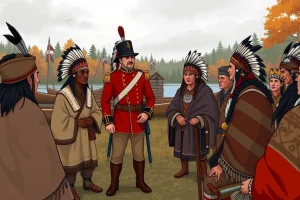
On the western frontier, American settlement pushed into the Ohio, Indiana, and Illinois territories, where a Native confederacy associated with Tenskwatawa and Tecumseh resisted further land cessions. Many westerners believed British officials and traders in Upper Canada encouraged and supplied that resistance, a claim British authorities rejected in part. The Battle of Tippecanoe in November 1811, fought while Congress was in session, intensified demands from Kentucky and other western constituencies for action against Britain.
Politically, the Twelfth Congress that assembled in November 1811 included a bloc of younger Democratic-Republicans from the South and West — Henry Clay of Kentucky, John C. Calhoun of South Carolina, Felix Grundy of Tennessee, and Peter B. Porter of New York among them — whom contemporaries and later historians called War Hawks. They argued that national honor and interest required armed resistance, while many Federalists, especially in New England, opposed war as ruinous to commerce. The Speaker’s office they captured mattered: in that era the Speaker appointed the standing committees, controlled much of the floor, and could shape which measures reached a vote.

What Happened
Clay’s rise was rapid. Born in Virginia and admitted to the Kentucky bar in 1797, he served briefly in the U.S. Senate in 1806–1807 and again in 1810–1811 before winning election to the House of Representatives in 1810. When the Twelfth Congress convened on November 4, 1811, the House elected him Speaker the same day — an unusual choice of a first-term member — and he held the chair through the Thirteenth Congress until his resignation on January 19, 1814.
As Speaker, Clay placed supporters of war preparation on key committees, brought war measures forward, and on occasion left the chair to speak from the floor. In the winter of 1811–1812, Congress debated and passed legislation expanding the regular army, authorizing volunteers and militia, and providing for loans; a House committee report delivered on December 31, 1811 catalogued grievances against Britain and recommended readiness for war. Congress also enacted a ninety-day embargo in April 1812.
President James Madison sent Congress a message on June 1, 1812, listing British violations of American rights. The House approved the war resolution 79–49 on June 4 and the Senate 19–13 on June 17; Madison signed the declaration on June 18, 1812 — the first formal declaration of war made under the U.S. Constitution. Clay presided over the House during these proceedings and supported the measure.
The war went badly for the United States in its first campaigns. The invasion of Upper Canada failed at Detroit in August 1812 and at Queenston Heights in October; operations in 1813 on the Niagara and St. Lawrence frontiers produced mixed results; and in 1814 the British occupied parts of Maine and burned Washington. Clay spent his speakership managing war finance and recruitment and criticizing the War Department’s administration, though the House’s ability to direct strategy was limited. In January 1814 he resigned to join the peace commission.
At Ghent, Clay negotiated alongside John Quincy Adams, James A. Bayard, Albert Gallatin, and Jonathan Russell from August 1814. The British initially demanded territory and an Indigenous buffer state in the Great Lakes region; after setbacks at Plattsburgh and Baltimore they dropped the more sweeping terms. The Treaty of Ghent, signed December 24, 1814, restored prewar boundaries and said nothing about impressment. The Senate ratified it on February 16, 1815. Clay then joined Adams and Gallatin in signing a commercial convention in London on July 3, 1815, and was returned to the House in a special election that October.
Why It Matters
Clay’s push mattered first because it helped produce the war. Whether one member could have prevented or caused the declaration is debatable — Madison’s message and the Republican majority’s decision set the course — but Clay helped convert a large and divided majority into a working war coalition, and he did so from an office that had previously been chiefly procedural. The results he and his allies expected — an end to impressment, security on the frontier, possibly Canada — were not delivered by the treaty, which left the map unchanged.
Longer-term consequences were substantial. The war’s outcome, and especially Andrew Jackson’s victory at New Orleans in January 1815 (fought after the treaty was signed but before news reached America), fed a surge of national self-confidence, weakened the Federalist Party beyond recovery, and reduced British leverage with Indigenous nations in the Old Northwest. Clay returned to Congress determined to promote economic independence; the tariff of 1816, the Second Bank of the United States, and internal improvement proposals became the core of his American System.
Historians disagree about the relative weight of the causes Clay championed. Julius W. Pratt and others argued that western and southern expansionism — Canada and Florida — was central; Bradford Perkins and Reginald Horsman emphasized maritime grievances such as impressment and the Orders in Council; J. C. A. Stagg examined the Madison administration’s management of a weak state; and Alan Taylor, Donald Hickey, and others have stressed sectional politics, the Indigenous war in the borderlands, and the contingency of events. Clay’s role is likewise reinterpreted: he appears in some accounts as an architect of the war, in others as the most articulate spokesman for pressures already building.
Early Life
Clay was born on April 12, 1777, in Hanover County, Virginia, the seventh of nine children of John Clay, a Baptist minister, and Elizabeth Hudson Clay. His father died in 1781, and Clay’s formal schooling was limited. He read law in Richmond while serving as a clerk in the High Court of Chancery and attended the law lectures of George Wythe, and he was admitted to the Virginia bar in 1797. He moved to Lexington, Kentucky, where he built a successful legal practice, married Lucretia Hart in 1799, and established his home at Ashland. He served in the Kentucky legislature in 1803 and was appointed to the U.S. Senate in 1806 and again in 1810; both Senate terms were brief, and on the first appointment he was younger than the constitutional age requirement.
Role Before the War
Clay entered national politics as an assertive Democratic-Republican during a period of intense Anglo-American tension. In the Senate and in the Kentucky legislature he supported economic coercion and criticized accommodation of Britain. When he took his House seat in 1811 he arrived with a reputation for oratory and a settled conviction that the United States had been humiliated both at sea and on the frontier. His election as Speaker gave him leverage: he appointed the standing committees (a power Speakers held until 1910), shaped the order of business, and used the floor to advance a program of war preparation. He and like-minded members argued that only credible military force could change British policy, a position that distinguished them from Republicans who preferred to continue commercial restrictions.
Role During the War
During the war Clay acted as a congressional leader rather than a commander or cabinet officer. He helped carry the measures that financed and manned the conflict: expansions of the regular army, authorizations for volunteers and militia, loans and treasury notes, and embargo legislation. He was also a persistent critic of how the administration conducted the war, particularly the War Department’s confusion and the repeated failures of the Canadian campaigns, and he was among those pressing for changes in the department’s leadership. Because the Speaker appointed committees in that era, Clay’s choices shaped which questions Congress took up and which officers and policies it investigated. His resignation on January 19, 1814, ended his direct role in war legislation; he was then appointed a peace commissioner and sailed for Europe in 1814.
Major Actions
- Elected Speaker of the House on November 4, 1811, as a first-term representative from Kentucky.
- Presided over House consideration of war measures and supported the declaration of war approved in June 1812.
- Managed war finance and manpower legislation through the Twelfth and Thirteenth Congresses.
- Resigned from the House on January 19, 1814, to join the peace commission at Ghent.
- Signed the Treaty of Ghent on December 24, 1814, and the London commercial convention of July 3, 1815.
- Returned to the House and was elected Speaker again in December 1815.
Contemporary Accounts
Contemporary evidence about Clay comes mainly from the congressional record, correspondence, and the observations of political insiders. The Annals of Congress reports the debates of 1811–1814, but speeches of that period were summarized and paraphrased by newspaper reporters rather than transcribed verbatim, so quotations from Clay’s floor remarks should be treated with caution. John Quincy Adams’s diary describes the Ghent negotiations in detail and records sharp disagreements with Clay, though Adams wrote with a self-justifying and often acerbic pen. Washington letter writers such as Margaret Bayard Smith described Clay’s charm and his management of the House, and newspapers of both parties — the administration-friendly National Intelligencer and Hezekiah Niles’s Baltimore-based Niles’ Weekly Register, which reprinted documents — reported his speeches and political maneuvers.
Later Life
After Ghent, Clay resumed the speakership and built the program he called the American System. He was Speaker during the Missouri crisis of 1820 and helped arrange the Missouri Compromise; he ran for president in 1824 and, when the election went to the House, supported John Quincy Adams, who then appointed him secretary of state — an appointment opponents denounced as a corrupt bargain. He lost the presidency as the National Republican candidate in 1832 and as the Whig candidate in 1844, helped defuse the nullification crisis with the compromise tariff of 1833, and served in the Senate from 1831 to 1842 and again from 1849. In 1850 he was a principal architect of the Compromise of 1850, which postponed sectional conflict over slavery in the territories. He died in Washington, D.C., on June 29, 1852, and was buried in Lexington Cemetery.
Historical Legacy
Clay is remembered in two connected ways. As the Great Compromiser, he is associated with the Missouri Compromise, the tariff compromise of 1833, and the Compromise of 1850, and with a conception of the Speaker as a policy leader rather than a neutral presiding officer. As a War Hawk, he is associated with the decision for war in 1812 — a decision whose wisdom historians still debate and which ended without achieving the maritime goals he had emphasized. His legacy is also contested: he enslaved people throughout his life and advocated gradual emancipation and colonization rather than immediate abolition, and his compromises deferred rather than resolved the sectional conflict over slavery. His papers are dispersed among many repositories, and much of his correspondence has been published in The Papers of Henry Clay.
Primary Sources
- Annals of Congress (The Debates and Proceedings in the Congress of the United States), 12th and 13th Congresses. Printed debates of the House and Senate, including the House committee report of December 31, 1811 and the June 1812 war debate; digitized by the Library of Congress in A Century of Lawmaking for a New Nation. Limitation: speeches were paraphrased, often from partisan newspapers, and the record is incomplete.
- James Madison’s message to Congress, June 1, 1812. It listed American grievances and invited Congress to consider war, and was printed in the Annals of Congress and in A Compilation of the Messages and Papers of the Presidents. Limitation: an executive argument, not a neutral summary.
- The Papers of Henry Clay, edited by James F. Hopkins and others, 11 volumes (University Press of Kentucky, 1959–1992). Letters and documents by and to Clay; the essential edition for his own words. Limitation: a selected edition, and much of his reported oratory survives only in paraphrase.
- Treaty of Ghent, December 24, 1814. The signed text is held by the U.S. National Archives and Records Administration, with the British counterpart in The National Archives (United Kingdom). It restored prewar boundaries and did not mention impressment. Limitation: a formal diplomatic instrument that reveals nothing of the bargaining behind it.
- Memoirs of John Quincy Adams, his diary, which describes the Ghent negotiations and the commissioners’ disagreements. Limitation: written for private use and strongly colored by Adams’s judgments of colleagues.
- Niles’ Weekly Register (Baltimore) and the National Intelligencer (Washington), which printed speeches, committee reports, and official correspondence. Limitation: party-press framing and unverified claims. Margaret Bayard Smith’s Washington letters, published as The First Forty Years of Washington Society (1906), offer a further insider view.
Further Reading
- Robert V. Remini, Henry Clay: Statesman for the Union (W. W. Norton, 1991).
- David S. Heidler and Jeanne T. Heidler, Henry Clay: The Essential American (Random House, 2010).
- James F. Hopkins et al., eds., The Papers of Henry Clay, 11 vols. (University Press of Kentucky, 1959–1992).
- Donald R. Hickey, The War of 1812: A Forgotten Conflict, bicentennial ed. (University of Illinois Press, 2012).
- J. C. A. Stagg, Mr. Madison’s War: Politics, Diplomacy, and Warfare in the Early American Republic (Princeton University Press, 1983).
- Bradford Perkins, Prologue to War: England and the United States, 1805–1812 (University of California Press, 1961).
- Reginald Horsman, The Causes of the War of 1812 (University of Pennsylvania Press, 1962).
- Julius W. Pratt, Expansionists of 1812 (Macmillan, 1925).
- Alan Taylor, The Civil War of 1812: American Citizens, British Subjects, Irish Rebels, and Indian Allies (Alfred A. Knopf, 2010).
- U.S. House of Representatives, History, Art & Archives, “Clay, Henry”; Library of Congress, A Century of Lawmaking for a New Nation; Ashland: The Henry Clay Estate, Lexington, Kentucky.
References
- U.S. House of Representatives, History, Art & Archives, “Clay, Henry.” https://history.house.gov/People/Detail/11051
- “Henry Clay,” Wikipedia. https://en.wikipedia.org/wiki/Henry_Clay
- Annals of Congress, 12th and 13th Congresses, Library of Congress, A Century of Lawmaking for a New Nation.
- James F. Hopkins et al., eds., The Papers of Henry Clay, 11 vols. (University Press of Kentucky, 1959–1992).
- Robert V. Remini, Henry Clay: Statesman for the Union (W. W. Norton, 1991).
- Donald R. Hickey, The War of 1812: A Forgotten Conflict, bicentennial ed. (University of Illinois Press, 2012).
- J. C. A. Stagg, Mr. Madison’s War (Princeton University Press, 1983).
- Alan Taylor, The Civil War of 1812 (Alfred A. Knopf, 2010).
- Treaty of Ghent, December 24, 1814, National Archives and Records Administration, Washington, D.C.
FAQ
Was Henry Clay responsible for the War of 1812?
Clay did not decide the war alone. President Madison's June 1, 1812 message and the Democratic-Republican majority set the course, but Clay's election as Speaker on November 4, 1811, his committee appointments, and his support for war measures helped turn a large but divided majority into a working war coalition. Historians debate how much of the decision should be credited to congressional leaders such as Clay and how much to Madison's administration, maritime grievances, frontier pressures, and the war with Britain's Indigenous allies.
What did Henry Clay do during the War of 1812?
Clay served as Speaker of the House from 1811 until his resignation on January 19, 1814, managing war finance and manpower legislation and criticizing the War Department's conduct of the campaigns. He then served as a commissioner at Ghent, where the Treaty of Ghent was signed on December 24, 1814.
Why was Clay called a War Hawk?
The label described a bloc of younger Democratic-Republicans from the South and West who argued in 1811–1812 that diplomacy and economic coercion had failed and that the United States must use force against Britain. Clay, as Speaker of the House and a persistent advocate of war preparation, was the most prominent of them.
Did Henry Clay achieve his aims at Ghent?
Partly. The treaty restored prewar boundaries and ended the fighting, but it said nothing about impressment or neutral trading rights, the maritime grievances Clay had emphasized before the war. He defended the settlement as the best available while expressing disappointment that key issues were left unresolved.
Leave a Reply