
Short Answer
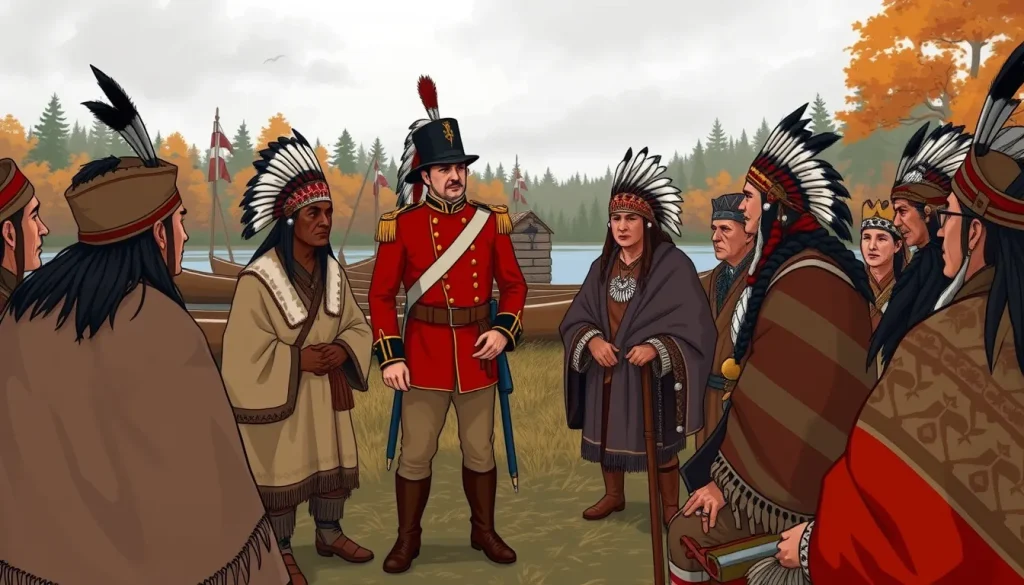
After the War of 1812: How Britain Abandoned Its Native American Allies refers to the postwar collapse of the British-Indigenous military alliance that had helped defend Upper Canada and the Great Lakes during the War of 1812. The Treaty of Ghent, signed on December 24, 1814, ended the war and included Article IX, which promised Indigenous nations restoration of rights and possessions as of 1811, but Britain did not enforce it. The result was a decisive shift in the Great Lakes and Ohio Valley, where the United States expanded while many Indigenous nations were dispossessed or forced to migrate. The subject is central to understanding the War of 1812 as both an Anglo-American conflict and an Indigenous war.
Historical Context
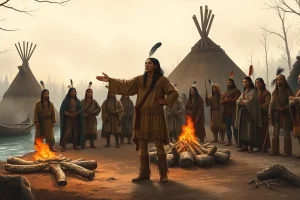
British-Indigenous alliances in the Great Lakes and Ohio Valley dated to the Covenant Chain and the Royal Proclamation of 1763. After the Treaty of Paris in 1783, Britain transferred vast interior lands to the United States without consulting the Indigenous nations who lived there. American settlement pushed north and west, while Britain retained forts and trading influence in the region. By the early 1800s, the Shawnee leader Tecumseh and his brother Tenskwatawa built an intertribal confederacy at Prophetstown, arguing that land belonged to all Indigenous peoples and could not be sold by any single nation. The 1811 Battle of Tippecanoe drove Tecumseh closer to Britain.
Britain was fighting Napoleon in Europe and could spare few regular troops for Canada. British officials therefore valued Indigenous warriors as essential allies. London and its governors in Canada intermittently supported the idea of an Indigenous buffer state between the Ohio River and the Great Lakes. Many Indigenous nations, including Odawa, Ojibwe, Potawatomi, Shawnee, Kickapoo, and others, allied with Britain not out of trust but because they saw the British as the lesser of two colonial powers. They hoped to protect their lands, trade, and political autonomy.
What Happened
When the War of 1812 began, the alliance produced early British-Indigenous victories. On July 17, 1812, a force of Indigenous warriors, voyageurs, and British regulars captured Fort Michilimackinac. On August 16, 1812, Tecumseh and Major General Isaac Brock forced the surrender of Detroit. Indigenous warriors also fought at Queenston Heights in October 1812 and in later actions along the Niagara and Detroit frontiers.

The turning point came in 1813. On September 10, Oliver Hazard Perry’s naval victory on Lake Erie cut British supply lines, forcing British and Indigenous forces to retreat eastward. On October 5, 1813, at the Battle of the Thames in Upper Canada, the British were defeated and Tecumseh was killed. His confederacy disintegrated. British negotiators at Ghent, facing pressure to end the war and restore peace with the United States, dropped demands for an Indigenous buffer state or guaranteed territory. The treaty, signed December 24, 1814, restored the status quo ante bellum and included Article IX, which promised that Indigenous tribes would be restored to the rights and possessions they had enjoyed in 1811. The treaty provided no enforcement mechanism, and Britain did not insist on Indigenous representation at the negotiations.
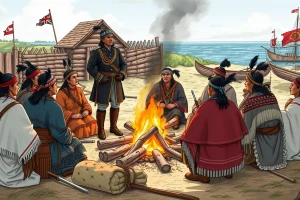
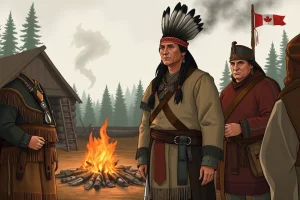
After ratification in 1815, Britain reduced its military support for Indigenous allies, withdrew from contested posts, and avoided new hostilities with the United States. British officials continued to hold councils with Indigenous leaders, including at Drummond Island, but they advised them not to fight the Americans. The United States, meanwhile, negotiated separate treaties with Indigenous nations and pressed for land cessions across the Old Northwest and the South. The 1817 Rush-Bagot Agreement demilitarized the Great Lakes, and the 1818 Convention of 1818 settled the northern boundary. By the 1820s, Britain’s Indian Department had less money and influence, and the alliance had effectively ended.
Why It Matters
The abandonment had immediate and long-term consequences. For Indigenous nations, it meant the loss of a powerful diplomatic and military patron. Tecumseh’s confederacy was shattered, and many nations were forced to sign treaties ceding land or to migrate. Some Indigenous communities moved north across the border into Upper Canada, where their descendants live on reserves and in communities in southern Ontario and along the upper Great Lakes. In the United States, the postwar period accelerated Indian Removal, culminating in the Indian Removal Act of 1830 and the Trail of Tears in 1838.
Historians disagree about how deliberate the abandonment was. Some see Britain as always treating Indigenous allies as instruments of imperial policy. Others argue that British officials had genuine obligations and moral qualms but were constrained by peace with the United States, European priorities, and the cost of another war. Colin G. Calloway calls the Treaty of Ghent the death knell of the British-Indian alliance. The Canadian Encyclopedia argues that Britain and the United States found it more advantageous to ignore Aboriginal title. American officials feared a revived British-backed confederacy, but British records show that the alliance was already fading.
Definition
In this context, ‘abandonment’ means the gradual ending of British military, diplomatic, and financial support for Indigenous allies after the War of 1812. It was not a single proclamation or formal betrayal. Britain continued some presents, trade, and councils, but it stopped backing Indigenous sovereignty or territorial guarantees against the United States. The term also refers to Britain’s failure to enforce Article IX of the Treaty of Ghent.
Background
British-Indigenous relations had long combined trade, diplomacy, and military alliance. The Royal Proclamation of 1763 recognized Indigenous lands west of the Appalachians, but the Treaty of Paris of 1783 ignored Indigenous title. Britain retained posts such as Detroit, Mackinac, and Niagara until the Jay Treaty of 1794, and it continued to cultivate Indigenous alliances through the Indian Department. During the Napoleonic Wars, Britain needed allies who could help defend Canada. Tecumseh’s confederacy offered the British a ready-made military force and a vision of an Indigenous buffer state. That partnership was strategic on both sides, but it rested on different goals: Britain wanted a secure Canada, while Indigenous nations wanted survival and land.
How It Worked
The abandonment operated through several mechanisms. First, at Ghent, British negotiators did not secure a separate Indigenous territory or a binding guarantee of land rights. Article IX was a general promise, not a territorial settlement. Second, after 1815 Britain refused to support Indigenous resistance to American expansion. British officials told Indigenous councils that they could not help them fight the United States. Third, Britain reduced military spending and the Indian Department after Napoleon’s defeat. Fourth, the Rush-Bagot Agreement of 1817 removed warships from the Great Lakes and reduced the military frontier. Fifth, the United States dealt with Indigenous nations one by one, using treaties, pressure, and military force. Without British backing, Indigenous nations had to choose between removal, relocation, or adaptation.
Competing Viewpoints
British officials often claimed that Article IX protected Indigenous rights and that Britain had done what it could. Critics, then and later, argued that Britain sacrificed its allies for peace and trade. American officials saw the British-Indian connection as a dangerous threat and demanded its end; they feared a new Tecumseh. Indigenous leaders expressed anger and despair, but their responses varied. Some nations had already made separate peace with the United States; others migrated north; others tried to adapt. Historians such as Calloway emphasize the end of British power in the Great Lakes, while scholars of Indigenous history stress Indigenous agency and survival strategies. The Canadian Encyclopedia notes that both Britain and the United States ignored Aboriginal title when it suited them.
Role in the War of 1812
Indigenous allies were essential to Britain’s defense of Canada. They helped capture Michilimackinac and Detroit, scouted for British forces, and fought in major engagements. Without them, British and Canadian forces might not have held Upper Canada in 1812 and 1813. This reliance created obligations that Britain could not or would not meet after the war. The War of 1812 was therefore not only an Anglo-American conflict; it was also an Indigenous war with its own goals and consequences. The postwar abandonment was a direct result of the war’s outcome and the peace that followed.
Consequences and Historical Interpretation
After 1815, the United States secured control of the Old Northwest and began a series of land cessions. Indigenous nations lost enormous areas north of the Ohio River and east of the Mississippi. The removal policy of the 1830s forced many southeastern nations west. In Canada, many Indigenous refugees and migrants settled on reserves, and their descendants maintained distinct communities. The British alliance became a memory, though the Crown continued to sign treaties in Canada. Historical memory in Canada often celebrates the British-Indigenous alliance in the War of 1812, but the postwar abandonment is less prominent. In the United States, the war boosted Andrew Jackson and westward expansion. Scholars continue to debate whether Britain’s abandonment was inevitable, whether it was a betrayal of trust, and how Indigenous nations navigated the new realities.
Primary Sources
The most important contemporary document is Article IX of the Treaty of Ghent, signed December 24, 1814, by British and American commissioners. It promised restoration of Indigenous rights and possessions as of 1811, but it did not create an enforcement mechanism or secure Indigenous participation in the negotiations. The treaty text is a diplomatic source and does not record Indigenous voices.
British Indian Department correspondence, council proceedings, and reports from 1815 to the 1820s, held in Library and Archives Canada, show British officials explaining to Indigenous leaders why they could not support new wars. These records reflect British perspectives and are often mediated by interpreters and clerks. American Indian agent reports and territorial correspondence from Michigan Territory and elsewhere reveal American fears of British influence and justifications for land seizures. Indigenous speeches and petitions, recorded by British or American officials, provide glimpses of Indigenous diplomacy, but they are filtered through colonial record-keeping. No verified verbatim transcript of a single council can represent all Indigenous views.
Further Reading
- Colin G. Calloway, ‘The End of an Era: British-Indian Relations in the Great Lakes Region after the War of 1812,’ Michigan Historical Review (1986).
- Alan Taylor, The Civil War of 1812: American Citizens, British Subjects, Irish Rebels, and Indian Allies (2010).
- Donald R. Hickey, The War of 1812: A Forgotten Conflict (rev. ed. 2012).
- Carl Benn, The Iroquois in the War of 1812 (1998).
- Robert S. Allen, His Majesty’s Indian Allies: British Indian Policy in the Defence of Canada, 1774-1815 (1992).
- The Canadian Encyclopedia, ‘First Nations and Métis Peoples in the War of 1812’ and ‘Indigenous Title and the War of 1812.’
- U.S. National Park Service, ‘Courting Victory: British, Native and American Alliances.’
- Treaty of Ghent, Article IX, U.S. National Archives and Records Administration.
References
- Hall, Anthony J., updated by Gretchen Albers. ‘Indigenous Title and the War of 1812.’ The Canadian Encyclopedia. https://thecanadianencyclopedia.ca/en/article/aboriginal-title-and-the-war-of-1812
- Calloway, Colin G. ‘The End of an Era: British-Indian Relations in the Great Lakes Region after the War of 1812.’ Michigan Historical Review (1986). https://doi.org/10.2307/20173078
- ‘First Nations and Métis Peoples in the War of 1812.’ The Canadian Encyclopedia. https://prod-front.thecanadianencyclopedia.ca/en/article/first-nations-in-the-war-of-1812
- Heidler, David, and Jeanne T. Heidler. ‘Courting Victory: British, Native and American Alliances.’ U.S. National Park Service. https://www.nps.gov/articles/courting-victory.htm
- Treaty of Ghent, December 24, 1814, Article IX. U.S. National Archives and Records Administration.
FAQ
Did Britain formally abandon its Native American allies after the War of 1812?
There was no single formal declaration. Britain ended military and diplomatic support, failed to enforce Article IX of the Treaty of Ghent, and did not back Indigenous sovereignty or land claims against the United States. It continued some councils and presents but abandoned the wartime alliance.
Why did Britain abandon them?
Britain wanted peace and trade with the United States, faced postwar debt, and prioritized the security of Canada and European affairs. It could not or would not fight another war for Indigenous territory, especially after Napoleon's defeat.
What happened to Indigenous nations afterward?
Many lost land through U.S. treaties, were subjected to Indian Removal, or migrated north to Canada. Tecumseh's confederacy collapsed after his death in 1813, and Britain's withdrawal left Indigenous nations to face American expansion largely alone.
Leave a Reply