
Short Answer
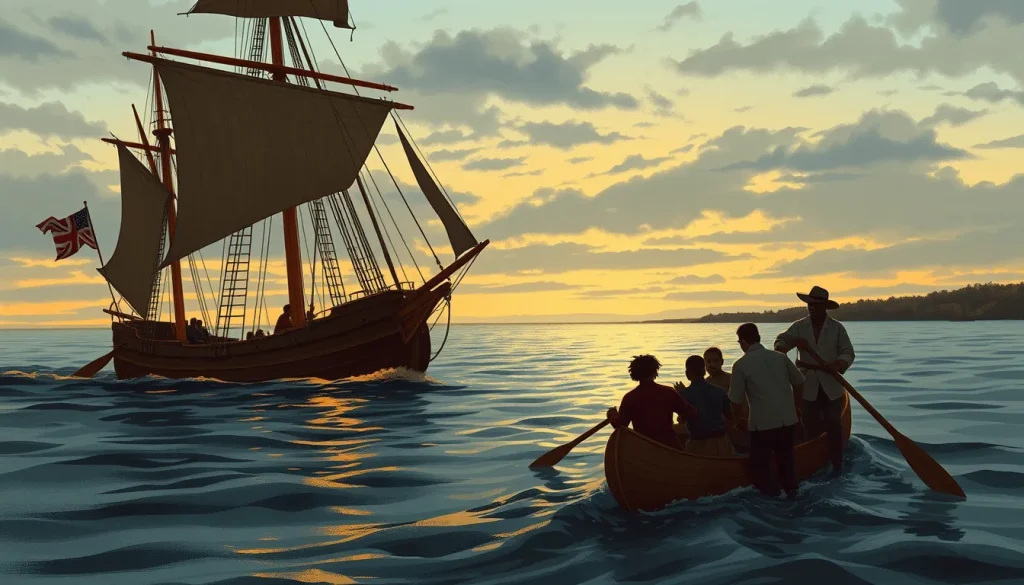
The War of 1812 (1812–1815) in the southern United States was profoundly shaped by enslaved people, who contributed in diverse and consequential ways. Thousands of enslaved men, women, and children escaped to British lines, where many served as guides, spies, laborers, and soldiers in the Colonial Marines. Others aided American forces, digging fortifications or serving as sailors. This article focuses on the southern theater, from the Chesapeake to the Gulf Coast, and explains how enslaved people’s actions affected the conflict and its aftermath.
Historical Context
The War of 1812 began amid disputes over maritime rights, trade restrictions, and American expansion into Indigenous lands. In the South, slavery was firmly entrenched, with large enslaved populations in Maryland, Virginia, Georgia, and the Gulf territories. When British naval forces began operating in the Chesapeake Bay in 1813, they offered freedom to enslaved people who escaped from American owners, a policy aimed at disrupting the American economy and gaining local knowledge. The British presence created unprecedented opportunities for enslaved people to seek freedom, and their decisions to flee, enlist, or assist either side became a key part of the southern campaign.
What Happened
In the Chesapeake Bay, British squadrons under Admiral Sir John Borlase Warren and later Rear Admiral George Cockburn conducted numerous raids along the coasts of Virginia and Maryland. As early as April 1813, enslaved people began escaping to British ships. The British initially restricted their offers, permitting only those who aided military operations to be freed, but the scale of escape soon overwhelmed these limits. By 1814, the British established a fortified base on Tangier Island in the Chesapeake, which became a major destination for freedom seekers. Over 3,600 enslaved people from the Chesapeake area escaped to British lines during the war.
The British organized many of these escapees into the Colonial Marines, a segregated regiment of Black soldiers. These men were armed, uniformed, and trained, and they participated in raids, including attacks on Washington, D.C., and Baltimore. They also served as guides and spies, leading British forces through local waterways and identifying American positions. In addition, many escaped women and children provided labor for British camps, cooking, laundering, and building fortifications.

In the Gulf South, particularly around New Orleans, enslaved people faced different choices. Some joined British forces when they arrived in late 1814, while others sided with the Americans. Andrew Jackson, commanding American forces, promised freedom and pay to enslaved and free Black volunteers who helped defend New Orleans. Notable individuals like Jordan Noble and Peter Denison served with Jackson’s forces. The Battle of New Orleans in January 1815 included Black soldiers on both sides.
After the war ended, the Treaty of Ghent (ratified February 1815) required Britain to return captured American property, including enslaved people. However, British commanders interpreted the treaty narrowly and evacuated over 3,000 ex-slaves from locations like Cumberland Island, Georgia, to Bermuda, Trinidad, and Nova Scotia. A diplomatic dispute over compensation for these refugees continued until the 1820s.
Why It Matters
The contributions of enslaved people during the War of 1812 had immediate and long-lasting effects. Their escapes weakened the slave economy of the Chesapeake and challenged assumptions about slave loyalty. Their service with the British demonstrated the willingness of enslaved people to fight for freedom, intensifying white southerners’ fears of insurrection. The postwar evacuation created communities of Black refugees in British territories, though their conditions were often poor. For African Americans, the war did not bring emancipation or equality; instead, it reinforced racial hierarchies and delayed progress toward freedom, as historian Gene Allen Smith has argued.
Definition
In this context, “contribution” refers to the various ways enslaved people influenced the course and outcome of the War of 1812 in the southern United States. This includes both active military and support roles, as well as the broader impact of their escapes and resistance.
Background
The southern theater of the war was shaped by geography and slavery. The Chesapeake Bay’s rivers and inlets provided access to plantation districts, while British naval superiority allowed raids. Enslaved people were familiar with the landscape, making them valuable guides. In the Gulf region, control of New Orleans was a strategic prize, and both British and American commanders recognized the potential of mobilizing the enslaved population.
How It Worked
Enslaved people contributed through three main avenues: escape to British lines, military service, and support to American forces. Escape often occurred during British raids or by paddling to anchored ships. Once aboard British vessels, male refugees could enlist in the Colonial Marines, which offered wages, clothing, and freedom. Others served as pilots, scouts, and laborers. On the American side, some enslaved people were permitted to serve as armed soldiers, particularly in Louisiana, where Jackson’s promise of freedom attracted volunteers. Enslaved laborers also built fortifications in cities like Baltimore and New Orleans.
Competing Viewpoints
Historians disagree on the extent to which enslaved people’s actions were primarily self-directed or encouraged by the British. Frank Cassell emphasized the agency of enslaved people in seeking freedom and challenging the “Sambo” stereotype. Thomas Malcomson’s research highlights the British military’s intentional use of runaways, suggesting a reciprocal relationship. Other scholars note that British policy was inconsistent and sometimes discriminatory, as not all escapees were treated equally. The outcome of the war also left mixed legacies: while some enslaved people gained freedom in British colonies, the institution of slavery remained strong in the American South.
Role in the War of 1812
Enslaved people’s contributions were strategically significant. In the Chesapeake, ex-slaves in the Colonial Marines participated in raids that diverted American troops and resources. Their knowledge of local geography aided British movements, contributing to the capture and burning of Washington in August 1814. At the Battle of Baltimore, Black British soldiers were present, although the attack was repulsed. In the Gulf, Black soldiers on the American side at the Battle of New Orleans helped secure a decisive victory that enhanced American morale. Overall, the participation of enslaved people influenced military operations and exposed the vulnerabilities of the southern slave system.
Consequences and Historical Interpretation
The immediate consequence was the largest mass escape of enslaved people in the United States before the Civil War. The British evacuation of Black refugees led to protracted diplomacy, resulting in the British government paying compensation to American enslavers under the Treaty of Ghent. For the refugees who settled in Nova Scotia, Trinidad, or Bermuda, freedom came at the cost of poverty and discrimination. Historians interpret these events as a sign of enslaved people’s deep desire for liberty and their willingness to seize war-time opportunities. The war also intensified racial fears among white southerners, leading to stricter slave codes and a reinforcement of the institution. As Gene Allen Smith notes, the “forgotten war” delayed the quest for equality for African Americans.
Primary Sources
Key primary sources include the correspondence of Rear Admiral George Cockburn with American officials in 1815, which documents the dispute over the return of enslaved people after the Treaty of Ghent. The Halifax List, a British register of evacuated Black refugees, records the names and origins of those who settled in Nova Scotia. The diary and reports of Lieutenant Colonel Thomas Sydney Beckwith and other British officers describe the recruitment and use of Colonial Marines. On the American side, Andrew Jackson’s proclamations and letters to Louisiana officials show his willingness to arm enslaved men. The National Intelligencer newspaper reported on slave desertions, and contemporary legal records from Maryland and Virginia detail compensation claims.
Further Reading
- Cassell, Frank A. “Slaves of the Chesapeake Bay Area and the War of 1812.” Journal of Negro History 57, no. 2 (1972): 144–155.
- Malcomson, Thomas. “Freedom by Reaching the Wooden World: American Slaves and the British Navy during the War of 1812.” The Northern Mariner 22, no. 3 (2012): 233–247.
- Smith, Gene Allen. “Wedged Between Slavery and Freedom: African American Equality Deferred.” National Park Service, n.d.
- Whitfield, Harvey Amani. From American Slaves to Nova Scotian Subjects: The Case of the Black Refugees, 1813–1840. Pearson Prentice Hall, 2005.
References
- Kelly, William. “Black Freedom Seeking During the War of 1812: From the Chesapeake, Cumberland Island, and Beyond Part 2.” National Park Service. Accessed 2023. https://www.nps.gov/articles/000/black-freedom-seeking-during-the-war-of-1812-from-the-chesapeake-cumberland-island-and-beyond.htm
- Kelly, William F. “Black Freedom during the War of 1812: From the Chesapeake, Cumberland Island, and Beyond Part 1.” National Park Service. Accessed 2023. https://nps.gov/articles/000/black-freedom-seeking-during-the-war-of-1812-from-the-chesapeake-cumberland-island-and-beyond-part-1.htm
- Cassell, Frank A. “Slaves of the Chesapeake Bay Area and the War of 1812.” The Journal of Negro History 57, no. 2 (Apr., 1972): 144–155. JSTOR 2717218.
- Smith, Gene Allen. “Wedged Between Slavery and Freedom: African American Equality Deferred.” National Park Service. Accessed 2023. http://nps.gov/articles/wedged-between-slavery-and-freedom.htm
- Malcomson, Thomas. “Freedom by Reaching the Wooden World: American Slaves and the British Navy during the War of 1812.” The Northern Mariner / Le marin du nord 22, no. 3 (2012). doi:10.25071/2561-5467.294.
FAQ
How many enslaved people escaped to the British in the South during the War of 1812?
Over 3,600 enslaved people escaped to British lines in the Chesapeake Bay region alone, with additional escapes in Georgia and the Gulf Coast.
Did enslaved people fight on both sides?
Yes. Some joined the British Colonial Marines, while others served with American forces, particularly under Andrew Jackson at the Battle of New Orleans, where they were promised freedom.
What happened to the enslaved people who escaped after the war?
Many were evacuated by the British to Bermuda, Trinidad, or Nova Scotia. The British refused to return them under the Treaty of Ghent, leading to a diplomatic dispute and eventual compensation paid to American enslavers.
Leave a Reply