
Short Answer
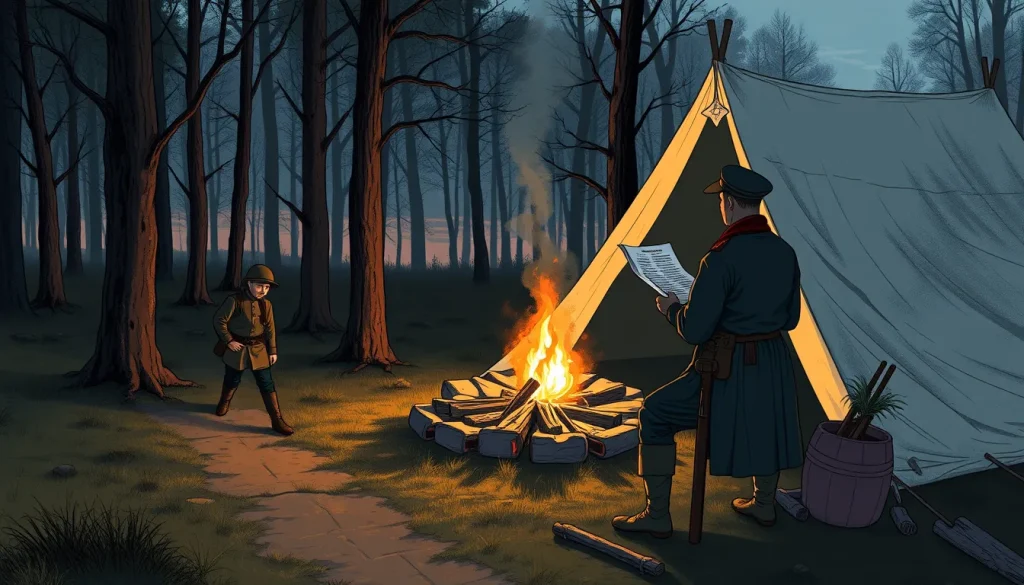
Desertion during the War of 1812 (1812–1815) was a pervasive problem that eroded the fighting strength of both the American and British armies. From fraudulent enlistment schemes to soldiers fleeing hardship and opportunity, desertion undermined military discipline and strained already limited manpower. This article examines the causes, scale, and consequences of desertion on both sides of the conflict.
Historical Context
The War of 1812 pitted the young United States against Great Britain, then embroiled in the Napoleonic Wars. The U.S. Regular Army began the war with roughly 10,000 men, later authorized to expand to 36,700, but recruiting consistently lagged. Militia and volunteers supplemented regulars but were often unreliable and limited by short enlistments. Britain, fighting a global war, fielded experienced troops but faced its own recruitment challenges and a chronic desertion problem across its forces. Both armies struggled to maintain adequate numbers in a vast, sparsely settled theater stretching from the Great Lakes to the Gulf Coast. Economic hardship, low pay, and the promise of land bounties made enlistment tempting, but the harsh realities of military life soon tested soldiers’ commitment.
What Happened
Desertion occurred throughout the war, intensifying as conditions worsened. In the American army, desertion rates climbed dramatically in 1814, when nearly half of all desertions took place. A statistical study cited by historian Donald Hickey found that 12.7 percent of American troops deserted during the conflict. Bounty jumping—enlisting to collect the cash bounty and then absconding—became so common that Major General George Izard complained in July 1814 that “Desertion prevails to an allarming Extent among the Recruits before they join the Army.” Newspapers frequently ran advertisements offering rewards for deserters alongside recruiting entreaties. The British army also suffered desertion, though exact numbers are harder to pin down. During the Plattsburgh campaign of September 1814, claims that hundreds of British veterans deserted during the retreat have been debunked by historian Donald Graves, who found that the withdrawal was orderly and desertion minimal. Punishments escalated as the war progressed: American military executions rose from three in 1812 to 32 in 1813 and 146 in 1814, most for desertion or mutiny. President James Madison issued proclamations in 1812 and 1814 pardoning deserters who returned within three months, but the problem persisted.
Why It Matters
Desertion directly affected military operations. American manpower shortages contributed to the failure of offensives into Canada, while British commanders had to allocate resources to pursue and punish deserters. The phenomenon also reveals deeper social and economic strains: low pay (five to eight dollars a month, often months in arrears), harsh discipline, and the lure of land or civilian work all pulled men from the ranks. Historians study desertion to understand soldiers’ motivations, the limits of patriotic enthusiasm, and the challenges of building a professional army. The war’s high desertion rate—higher than in any subsequent American conflict until the Civil War—left a lasting impact on military policy and veterans’ care.
Definition
Desertion is the unauthorized absence from military service with the intent never to return, as opposed to absence without leave (AWOL), which is temporary. During the War of 1812, desertion was a capital offense in both the American and British armies, though many offenders were pardoned or given lesser punishments. The term also covers fraudulent enlistment practices like bounty jumping, where a recruit accepted an enlistment payment and then disappeared.
Background
Military desertion has ancient roots, but in the early 19th century it was a chronic problem for all European-style armies. Both the United States and Britain relied on voluntary enlistment, often sweetened by cash bounties and land grants. For American soldiers, the initial bounty was $31 and 160 acres; by 1814 it had risen to $124 and 320 acres. For British soldiers, pay was similarly low, and the army’s harsh code of discipline—including flogging and hanging—made service unattractive. The War of 1812’s remote frontier posts, dense forests, and proximity to the U.S.–Canada border provided both opportunities and temptations for men to slip away.
How It Worked
Enlistment procedures varied. American regulars typically signed up for five years, while later recruits could enlist for the duration of the war. Bounties were paid in installments, with the first portion given upon enlistment, creating an easy opportunity for fraud. Pay was often delayed by months, and soldiers complained of poor rations and medical care. Court-martial records show that desertion cases were prosecuted selectively, often to make examples of repeat offenders. The U.S. War Department offered $50 rewards for capturing deserters, while British authorities similarly advertised in newspapers. Pardons were common for first-time deserters, but executions increased as the problem worsened, reflecting both desperation and a desire to deter others.
Competing Viewpoints
Historians offer differing explanations for why soldiers deserted. One school emphasizes economic hardship: soldiers were paid far less than civilian laborers and often received their wages months late. Another stresses the brutal conditions—disease, inadequate clothing, and harsh discipline—as the primary motivator. Others argue that desertion reflected the war’s unpopularity, especially in New England and among militia who opposed the conflict. For British soldiers, the opportunity to defect to the enemy or settle in the United States also played a role. Some scholars question the reliability of military records, which often exaggerate desertion to excuse failures or underreport it to conceal weaknesses. The debate continues over whether desertion was a rational response to poor conditions or a sign of low morale and weak patriotism.
Role in the War of 1812
Desertion shaped the war’s course. In 1814, American recruitment was so hampered by bounty jumping and desertion that the army struggled to reach its authorized strength, contributing to the failure of campaigns on the Niagara frontier and in the Northwest. British desertion, while less frequent, still depleted veteran units and forced commanders to rely on Canadian militia and Native allies. During the Plattsburgh campaign, Graves’s research shows that British desertion was minimal, contradicting earlier accounts of mass defections. On both sides, desertion strained civil-military relations, as local communities sometimes sheltered runaways or profited from their labor.
Consequences and Historical Interpretation
The immediate consequence was a drain on manpower that could not be easily replaced. Executions became more common as a deterrent, but they also damaged recruiting, as families and communities resented the killing of young men over what many saw as a trivial offense. Presidential pardons and increased bounties failed to stem the tide. In the longer term, the war’s desertion problem prompted reforms in military administration, including better record-keeping, more reliable pay, and a shift toward shorter enlistments. Historians today view desertion as a lens through which to examine soldiers’ lives and the broader social tensions of the era. The high desertion rate of the War of 1812 remains a key statistic in understanding why the conflict was so unpopular and why the American military professionalized in its aftermath.
Primary Sources
Key primary sources include military discharge certificates, such as those described in the National Archives article “Leaving the Army During Mr. Madison’s War.” These documents detail a soldier’s service and reason for discharge, sometimes including desertion. Contemporary newspapers are also valuable; for example, the Raleigh Minerva of February 10, 1815, printed a list of deserters from the 3rd Regiment of Riflemen, with physical descriptions and rewards offered. Military court-martial records and weekly strength returns, like those from the Plattsburgh campaign held in the Colonial Office records, provide official data. However, these sources reflect the military’s perspective and may undercount or bias the reasons for desertion. Discharge certificates, being personal property, were rarely preserved in official files, making them scarce for modern researchers.
Further Reading
- Hickey, Donald R. The War of 1812: A Forgotten Conflict. University of Illinois Press, 1989.
- Graves, Donald E. “The Finest Army Ever to Campaign on American Soil? The Organization, Strength, Composition, and Losses of British Land Forces during the Plattsburgh Campaign, September 1814.” The War of 1812 Magazine, Issue 24, November 2015.
- Linch, Kevin. “Desertion from the British Army during the Napoleonic Wars.” Journal of Social History 49, no. 4 (2016): 808–828.
- Deeben, John P., and Claire Prechtel-Kluskens. “Leaving the Army During Mr. Madison’s War.” Prologue 43, no. 3 (Fall 2011).
References
- Deeben, John P., and Claire Prechtel-Kluskens. “Leaving the Army During Mr. Madison’s War.” National Archives. https://www.archives.gov/publications/prologue/2011/fall/discharge-certs.html
- Graves, Donald E. “The Finest Army Ever to Campaign on American Soil? The Organization, Strength, Composition, and Losses of British Land Forces during the Plattsburgh Campaign, September 1814.” The War of 1812 Magazine, Issue 24, November 2015. https://www.napoleon-series.org/military-info/Warof1812/2015/Issue24/FinestArmy.pdf
- Linch, Kevin. “Desertion from the British Army during the Napoleonic Wars.” Journal of Social History 49, no. 4 (2016): 808–828. https://eprints.whiterose.ac.uk/id/eprint/93692/
- Hickey, Donald R. The War of 1812: A Forgotten Conflict. University of Illinois Press, 1989 (excerpt from Chapter on problems in 1814).
- “Deserters” from the Raleigh Minerva, February 10, 1815. Transcribed at USGenWeb Archives. http://files.usgwarchives.net/nc/robeson/military/warof1812/other/henderso627gmt.txt
FAQ
What was the punishment for desertion during the War of 1812?
Desertion was a capital offense in both the American and British armies. Sentences could be death by firing squad or hanging, though many first-time offenders were pardoned. Executions increased sharply in 1814, with 146 American soldiers executed that year.
How did bounty jumping work?
Bounty jumping involved enlisting to collect the cash bounty offered as a recruitment incentive, then deserting before actually serving. This was often repeated under different names, and it became a major problem in 1814 as bounties rose to $124 and 320 acres of land.
Why did soldiers desert during the War of 1812?
Reasons included low and delayed pay, harsh discipline, poor living conditions, homesickness, lack of enthusiasm for the war, and opportunities for civilian employment. For British soldiers, the chance to settle in America or escape the hardships of military life also played a role.




Leave a Reply