Short Answer
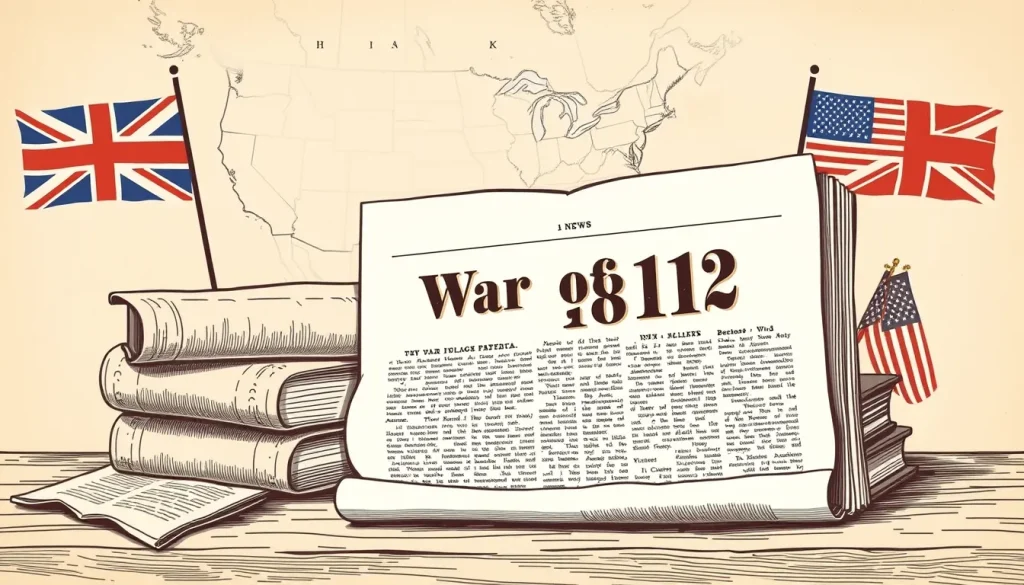
The War of 1812 was a military conflict fought between the United States and Great Britain from June 1812 to February 1815. Despite its name, the war extended well beyond the year 1812, beginning with the U.S. declaration of war on June 18, 1812, and ending with the ratification of the Treaty of Ghent on February 16, 1815. The name derives from the year the conflict began, but it only became the standard label for the war many decades later, after a period of varied and often descriptive alternative names.
Historical Context
The War of 1812 grew out of long-standing tensions between the United States and Great Britain during the Napoleonic Wars (1803–1815). Britain and France had been locked in a global struggle for power, and each attempted to restrict neutral trade with the other. The Royal Navy enforced a blockade of the European continent and also impressed (forcibly recruited) sailors from American ships, claiming many were British deserters. American merchants suffered heavy losses as French and British authorities seized hundreds of U.S. vessels. In addition, British officials in Canada maintained alliances with Indigenous nations in the Old Northwest, which American settlers and politicians saw as a threat to westward expansion.
These grievances culminated in the U.S. declaration of war on June 18, 1812, after President James Madison asked Congress for a declaration. The vote was narrowly divided, with Federalists from New England generally opposing the war. The conflict was fought primarily in North America, along the Canadian border, the Great Lakes, the Atlantic coast, and the Gulf Coast.
What Happened
The war lasted about 32 months, significantly longer than the single year its name suggests. It included U.S. invasions of Canada (which were largely unsuccessful), a series of naval engagements on the lakes and oceans, the British capture and burning of Washington, D.C., in August 1814, and a final major American victory at the Battle of New Orleans in January 1815—two weeks after the Treaty of Ghent had been signed on December 24, 1814, but before the treaty was ratified. The treaty restored the prewar boundaries (status quo ante bellum) and did not address the issues of impressment or neutral rights. The U.S. Senate ratified the treaty on February 16, 1815, officially ending the war.
Why It Matters
The name “War of 1812” is a misnomer in that it suggests a conflict that began and ended in the same year. This misleading label has contributed to the war’s reputation as a “forgotten conflict” and shaped how the public recalls its scope and significance. The naming also reflects the fact that the war arose from disputes over neutral rights and impressment, issues that no longer resonate in modern times, making the conflict less intuitive to later generations.
Definition
“War of 1812” is the standard American and, eventually, international name for the armed conflict between the United States and Great Britain that began in 1812 and concluded in 1815. It is the only U.S. war named after a year, a practice that may have originated because the war lacked a single defining battle or campaign that could serve as an eponym.
Background
During the conflict itself and for several decades afterward, contemporaries used various names: “the war,” “the present war,” “the war with Great Britain,” “the late war,” and “Madison’s War.” The first known printed use of the exact phrase “War of 1812” appeared in the New York Statesman on September 8, 1812, in an essay titled “Epitome of the History of the War of 1812,” signed by “Polybius.” However, that reference was isolated, and the phrase only appeared a handful of times during the conflict, often referring to Napoleon’s invasion of Russia that same year.
How the Name Came into Use
The adoption of “War of 1812” as the primary label can be traced through published book titles and newspaper usage. The first book to include the phrase in its title was William McCarty’s History of the American War, of Eighteen Hundred and Twelve, published in 1816. The book was popular and went through several editions, some appearing under the title History of the American War of 1812. Yet, the name did not become fixed for more than thirty years. After the war, Americans typically referred to it as “the late war” or “the late war with Great Britain.” This remained the most common usage until the Mexican-American War (1846–1848) required a distinction between the two conflicts. During that period, book titles increasingly used “War of 1812,” and by the 1850s it was the overwhelming standard in the United States. In Canada, the label was slower to catch on; Canadians continued to use “the late American war” or similar phrases until the 1890s, when historian Ernest A. Cruikshank popularized “War of 1812.” British usage varied even longer, with terms such as “the Second American War” or “the Anglo-American War of 1812–15” used well into the twentieth century. Only in the 1990s did “War of 1812” become the common designation in Britain as well.
Competing Viewpoints
There are several reasons why the name was slow to become standard and why it remains problematic. Critics point out that the war lasted into 1815, so the name obscures the full duration. Others note that the war was fought not only in 1812 but also in the Great Lakes region, Canada, and the Atlantic, and it had multiple theaters. Some historians, like Donald R. Hickey, have argued that the name might be a misnomer but is now so deeply entrenched that changing it would be impractical. British and Canadian naming conventions differed because they prioritized distinguishing this conflict from the larger Napoleonic Wars, which they saw as the more important struggle. Canadian historians often refer to the war as the “War of 1812” but also emphasize its significance in shaping Canadian nationhood.
Role in the War of 1812
The name itself did not play a direct role in the conduct of the war, but the choice of the year 1812 underscores the American focus on the declaration of war as the defining moment. The U.S. declaration in June 1812 was the result of a specific set of grievances, and the decision to name the conflict after that date reflects the American perspective of a war for neutral rights and honor. In contrast, British historians often dated the war by its duration to acknowledge the broader European context.
Consequences and Historical Interpretation
The name “War of 1812” has had lasting consequences for how the conflict is remembered. It contributes to the perception that the war was a short and relatively minor event, despite its significant impacts on the United States, Canada, and the United Kingdom. For the United States, the war produced national symbols like “The Star-Spangled Banner,” Uncle Sam, and the phrase “the war of 1812” itself. For Canadians, the war is often seen as a defensive struggle that helped forge a national identity. Historians have debated whether the name should be revised, but it remains the standard, and it serves as a convenient shorthand for a complex conflict that straddled the Napoleonic era.
Primary Sources
Key primary sources for understanding the naming of the war include:
- The U.S. Declaration of War, June 18, 1812, which uses the wording “An Act declaring War between the United Kingdom of Great Britain and Ireland and the Dependencies thereof, and the United States of America and their Territories.”
- The Treaty of Ghent, signed December 24, 1814, which ended the war, and its ratification on February 16, 1815.
- Contemporary newspapers, such as the New York Statesman of September 8, 1812, which contained the first known use of the phrase “War of 1812” in reference to the Anglo-American conflict.
- Early book titles, such as William McCarty’s History of the American War, of Eighteen Hundred and Twelve (1816), which helped popularize the name.
These sources reveal that the name was not an official designation but a gradually adopted label.
Further Reading
- Hickey, Donald R. The War of 1812: A Forgotten Conflict. University of Illinois Press, 1989.
- Hickey, Donald R. “1812: Newspapers and the Name of the War.” War of 1812 Magazine Issue 20, May 2013.
- Smithsonian Magazine. “The 10 Things You Didn’t Know About the War of 1812.” Smithsonian.com, 2013.
- Office of the Historian, U.S. Department of State. “War of 1812–1815.” Milestones in the History of U.S. Foreign Relations.
References
- Hickey, Donald R. “1812: Newspapers and the Name of the War.” War of 1812 Magazine Issue 20, May 2013. URL: https://www.napoleon-series.org/military-info/Warof1812/2013/Issue20/HickeyNameoftheWar.pdf
- Hickey, Donald R. “The Legacy of 1812: How a Little War Shaped the Transatlantic World.” London Journal of Canadian Studies 28 (2013). doi:10.14324/111.444.ljcs.2013v28.002.
- Smithsonian Magazine. “The 10 Things You Didn’t Know About the War of 1812.” Accessed 2023. https://www.smithsonianmag.com/history/the-10-things-you-didnt-know-about-the-war-of-1812-102320130/
- Office of the Historian, U.S. Department of State. “War of 1812–1815.” Milestones in the History of U.S. Foreign Relations. https://history.state.gov/milestones/1801-1829/war-of-1812/causes
- Portnoff, Jacob. “The War of 1812 and Resource Naming.” Info 202 Fall 2011, UC Berkeley School of Information. https://courses.ischool.berkeley.edu/i202/f11/node/423.html
FAQ
Why is the War of 1812 called that if it lasted into 1815?
The name comes from the year the United States declared war on Great Britain (June 18, 1812). It became the standard label only decades later, even though the conflict actually ended in February 1815 with treaty ratification.
What other names have been used for the War of 1812?
Americans originally called it 'the war,' 'the war with Great Britain,' or 'the late war.' British often called it 'the Second American War' or 'the Anglo-American War of 1812–15.' Canadians used 'the late American war' until the 1890s.
Did the British call it the War of 1812?
Not until the 1990s. British historians preferred labels like 'the Second American War' or 'the Anglo-American War of 1812–15' to emphasize its connection to the Napoleonic Wars.



Leave a Reply