
Short Answer
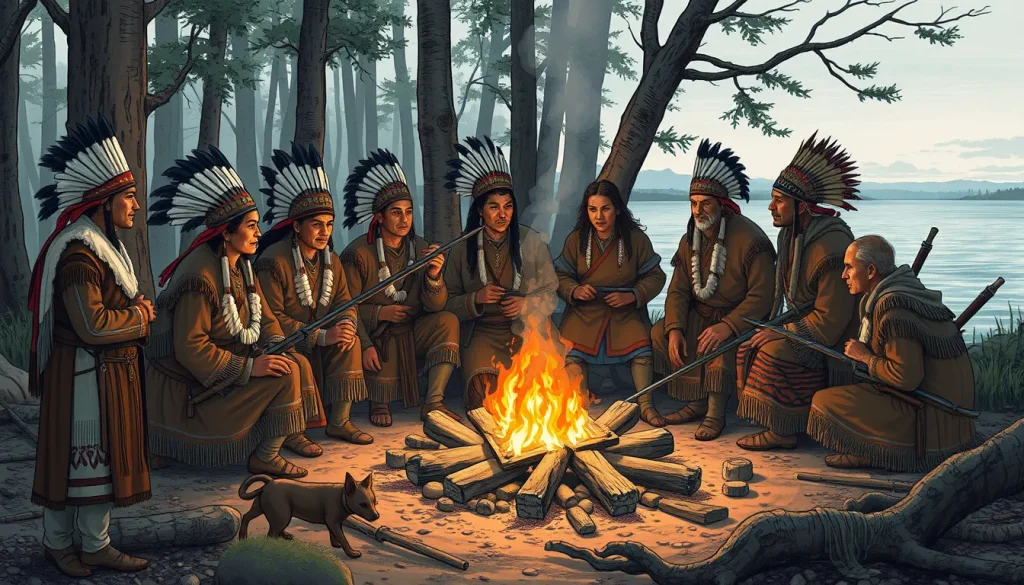
Indigenous memory of the War of 1812 encompasses the ways in which First Nations, Métis, and Native American peoples recalled, recorded, and interpreted their participation in the conflict of 1812–1815. This memory, preserved through oral traditions and written autobiographies, offers critical perspectives on the war’s causes, events, and consequences that often diverge from mainstream Euro-American narratives. It is historically significant because it reveals the deep impact of the war on Indigenous communities and their long-term struggles for land and sovereignty.
Historical Context
The War of 1812 occurred during a period of intense American westward expansion and Indigenous resistance. The Treaty of Paris (1783) had transferred lands west of the Ohio River to the United States, disregarding Indigenous claims. In response, leaders like Joseph Brant and later Tecumseh sought to unite Indigenous nations to resist American encroachment. When war broke out between the United States and Great Britain, many Indigenous peoples allied with the British, viewing them as a lesser threat to their lands and trade than the expansionist Americans. The conflict offered a last opportunity to halt American settlement and preserve Indigenous territories.
The war spanned the Great Lakes region, the Niagara frontier, the Mississippi Valley, and the Gulf Coast, drawing in diverse Indigenous nations. For many, the British alliance was a strategic calculation, not an expression of loyalty. As the war progressed, Indigenous warriors played pivotal roles in key battles, but the war ended with the Treaty of Ghent in 1814, which nominally promised to restore Indigenous nations to their pre-war status but was never enforced. This betrayal profoundly shaped Indigenous memory of the war.
What Happened
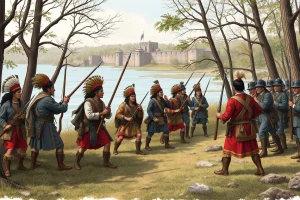
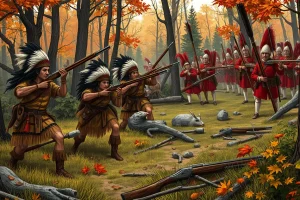
Indigenous peoples participated in nearly every major theatre of the war. At Fort Michilimackinac (July 1812), Odawa, Ojibwe, and other warriors joined British forces to capture the American post. At Detroit (August 1812), Tecumseh’s 600 warriors helped compel American General William Hull to surrender, a victory that encouraged more Indigenous nations to join the British. At Queenston Heights (October 1812), Mohawk warriors under John Norton played a crucial role in defeating an American invasion. The Battle of the Thames (October 1813) saw Tecumseh’s death and the collapse of his confederacy, a turning point that shattered Indigenous military resistance east of the Mississippi.
Indigenous memory of these events is preserved in several firsthand accounts. Black Hawk, a Sauk war chief allied with the British, dictated his autobiography in 1833, recounting his experiences in the Mississippi Valley and his continued resistance. William Apess, a Pequot who served with American forces, wrote about his wartime service in his 1829 memoir, providing a rare Native American perspective from the American side. John Norton, a Mohawk chief of mixed Cherokee and Scottish heritage, wrote a detailed memoir of his leadership during the Niagara campaigns. These sources, along with oral traditions, form the core of Indigenous memory of the war.
Why It Matters
Indigenous memory matters because it challenges the triumphant national narratives that emerged in both Canada and the United States. While mainstream accounts often celebrate the war as a victory or a formative event, Indigenous memory emphasizes loss, broken promises, and betrayal. The Treaty of Ghent’s guarantee of territorial restoration was ignored, leading to continued American expansion and the removal of Indigenous peoples in the 1830s. For Canada, Indigenous contributions were later marginalized in national memory. These memories are essential for understanding the war’s true costs and for contemporary Indigenous claims to land and sovereignty.
Definition
Indigenous memory of the War of 1812 refers to the collective and individual recollections, narratives, and interpretations of the conflict as preserved by Indigenous peoples. These memories are transmitted through oral histories, storytelling, ceremonies, and written autobiographies, offering perspectives that prioritize Indigenous agency, loss, and the unfulfilled promises of allies.
Background
Before the war, Indigenous peoples had rich oral traditions that preserved historical knowledge. The war itself became part of these traditions, but the rise of written memoirs in the early 19th century provided a new medium. Figures like Black Hawk, William Apess, and John Norton were among the first Indigenous authors to record their wartime experiences, motivated by a desire to correct misrepresentations and defend Indigenous rights.
How It Worked
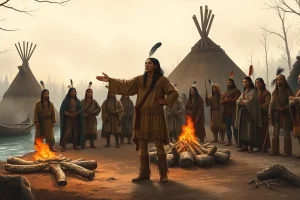
Oral tradition served as the primary mode of memory transmission for most Indigenous communities. Stories of battles, leaders, and treaties were passed down through generations, often incorporating spiritual and moral lessons. For those who adopted writing, memoirs served a similar purpose. Black Hawk’s autobiography, dictated to a translator, was intended to explain his actions and the injustices faced by his people. Apess wrote to assert his identity as both a Christian and a Pequot. Norton’s memoir, written in the 1820s, detailed his military career and his efforts to secure recognition of the Grand River land claim. These texts, while filtered through editors and translators, provide invaluable firsthand accounts of Indigenous perspectives.
Competing Viewpoints
Indigenous memory often conflicts with national narratives. In the United States, the war is frequently portrayed as a successful defense of sovereignty, with Indigenous peoples as obstacles to progress. In Canada, the war is celebrated as a British victory, sometimes downplaying Indigenous participation. Indigenous memory, by contrast, emphasizes the war as a catastrophic defeat—the loss of Tecumseh, the fragmentation of confederacies, and the abandonment by British allies. Historians like Alan Taylor have highlighted these divergent perspectives, noting that for Indigenous peoples, the war was an unmitigated catastrophe that sealed their fate.
Role in the War of 1812
Memory played a role in shaping Indigenous wartime actions and post-war identities. During the war, Indigenous leaders like Tecumseh drew on historical memories of past treaties and betrayals to rally support for the cause. After the war, memories of British promises informed Indigenous diplomatic appeals to both Britain and the United States. The failure to honor these promises became a central theme in Indigenous memory, fueling resentment and shaping subsequent resistance movements, such as Black Hawk’s War in 1832.
Consequences and Historical Interpretation
The consequences of Indigenous memory are profound. It provides a corrective to national myths, ensuring that the war’s true costs are acknowledged. Historians increasingly rely on Indigenous memoirs and oral histories to reconstruct events from a non-European perspective. In the present day, Indigenous memory informs land claims and treaty rights discussions, as communities point to the unfulfilled promises of 1814. The historiography of the war has evolved to incorporate these perspectives, thanks to scholars like Carl Benn, who has edited and annotated Indigenous memoirs, and Alan Taylor, whose work highlights the war as a civil conflict with devastating Indigenous consequences.
Primary Sources
Key primary sources include Black Hawk’s Life of Black Hawk (1833), William Apess’s A Son of the Forest (1829), and John Norton’s The Journal of Major John Norton (written circa 1815–1816, published in 1970). These memoirs provide firsthand accounts of wartime experiences, though they were often mediated by editors or translators. Oral traditions, recorded by anthropologists in the late 19th and early 20th centuries, also preserve Indigenous memory. Official documents such as the Treaty of Ghent, with its Article IX, are essential for understanding the promises made to Indigenous peoples.
Further Reading
- Benn, Carl, ed. Native Memoirs from the War of 1812: Black Hawk and William Apess. Johns Hopkins University Press, 2014.
- Benn, Carl. A Mohawk Memoir from the War of 1812: John Norton—Teyoninhokarawen. University of Toronto Press, 2019.
- Taylor, Alan. The Civil War of 1812: American Citizens, British Subjects, Irish Rebels, & Indian Warriors. Knopf, 2010.
- Dowd, Gregory Evans. A Spirited Resistance: The North American Indian Struggle for Unity, 1745–1815. Johns Hopkins University Press, 1992.
- Historica-Dominion Institute. “Aboriginal Peoples and the War of 1812” education guide.
References
- Canadian Encyclopedia. “First Nations and Métis Peoples in the War of 1812.” The Canadian Encyclopedia, 2011. Accessed via thecanadianencyclopedia.ca.
- Benn, Carl, ed. Native Memoirs from the War of 1812: Black Hawk and William Apess. Johns Hopkins University Press, 2014.
- Tesdahl, Eugene R. H. Review of Native Memoirs from the War of 1812, in Journal of the Early Americas. Included in source material.
- Pennsylvania History, “A Mohawk Memoir from the War of 1812: John Norton—Teyoninhokarawen,” Review, 2024. DOI:10.5325/pennhistory.91.2.0217.
- Historica-Dominion Institute. “Aboriginal Guide: The War of 1812.” education.historicacanada.ca.
FAQ
What is Indigenous memory of the War of 1812?
It is the collective recollection of the war by Indigenous peoples, preserved through oral traditions and written memoirs, which often emphasize loss, betrayal, and the failure to honor treaty promises.
Which Indigenous memoirs provide firsthand accounts of the War of 1812?
Notable memoirs include Black Hawk's autobiography, William Apess's 'A Son of the Forest,' and John Norton's journal, all of which describe wartime experiences from Indigenous perspectives.
Why is Indigenous memory of the War of 1812 important?
It challenges mainstream national narratives, reveals the war's devastating impact on Indigenous communities, and supports contemporary claims for land and sovereignty.
Leave a Reply