Short Answer
Horses were indispensable to the logistics of the War of 1812 (1812–1815), serving as the primary means of land transport for armies operating across the rugged terrain of the Canadian–American border. The availability, condition, and feeding of horses often determined whether troops, artillery, and supplies could reach the front in time to influence combat. Chronic shortages of forage, inadequate roads, and the competing demands of cavalry, artillery, and wagon trains made animal management a central—and often decisive—challenge for both the United States and Great Britain.
Historical Context
The War of 1812 was fought along multiple fronts, but the heaviest and most sustained campaigning occurred in the region between the Great Lakes and the St. Lawrence River. This frontier stretched from Michilimackinac in the west to the Niagara Peninsula and eastward to Montreal, encompassing dense forests, lakes, and rudimentary trails. The region lacked the improved roads and canals that existed in more settled parts of North America; as Christopher D. Dishman notes, the high ground of the Allegheny range separated the American population centers from the Great Lakes basin, while British supply lines from the Atlantic coast faced a seasonally frozen St. Lawrence and vulnerable river corridors (Dishman, 1–5). Both armies relied on horses and oxen to move wagons, pull artillery, and carry dispatches, but these animals required constant forage, which was never abundant near the front.
The American population was far larger than that of British North America, but its military forces depended on a poorly organized quartermaster system that struggled to procure and distribute supplies. The British, by contrast, had a more experienced commissariat, yet they had to import nearly all military stores from the United Kingdom and then move them up the St. Lawrence by bateau and portage, often needing oxen or horses to haul cargo around rapids (Passfield, 1981). The war’s geography made animal transport a bottleneck for both sides.
What Happened
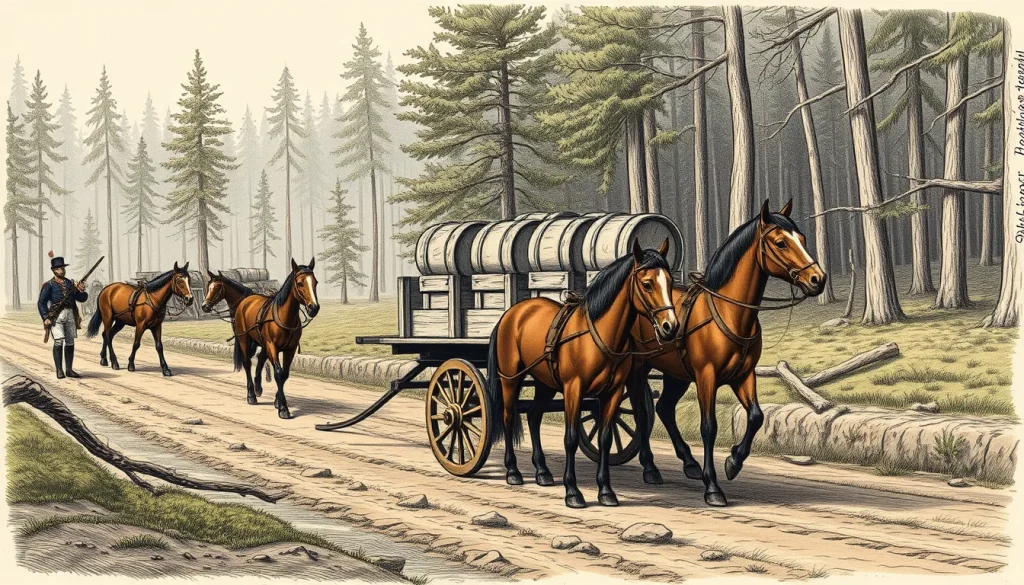
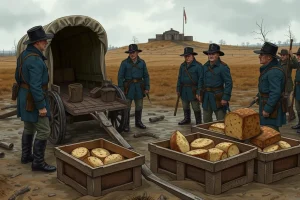
From 1812 to 1814, horses played multiple roles in the logistics of the war. First, they were used as cavalry mounts, though mounted troops were relatively few and rarely decisive. More critical were draft horses and oxen that pulled supply wagons, ambulances, and artillery pieces. On the American side, the Quartermaster’s Department contracted with civilians for teams and wagons, but corrupt contractors and insufficient funds often left soldiers without necessary transport (Steppler, 1974). On the British side, the Commissariat arranged for wagons and horses through local magistrates, but the Upper Canadian militia’s reluctance to supply teams worsened shortages.
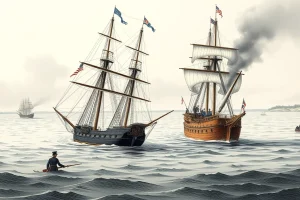
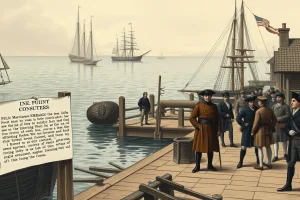
In campaigns such as the American invasion of Upper Canada in 1812–1813, the lack of horses prevented the rapid movement of supplies, contributing to the failure of offensives like William Hull’s march on Detroit. Conversely, the British defense of the Niagara Peninsula in 1814 relied on teams of horses to move artillery and provisions along the Lake Ontario shoreline, though these movements were often delayed by wet conditions and exhausted animals. In the naval shipbuilding race on Lake Ontario, horses transported cannon, cables, and iron from depots to dockyards, and the absence of adequate forage slowed construction at both Sackets Harbor and Kingston (Dishman, 2021).
Horses also suffered from the same logistical failures they were meant to solve. By 1814, both sides reported high mortality among horses due to poor pasturage, overwork, and disease. The American army’s shortage of veterinary care and feed was chronic; one cavalry officer complained that horses died “from sheer starvation.” British forces were only slightly better, but they also faced constant difficulties. As Lieutenant-General Sir Gordon Drummond wrote in 1814, he dreaded failing to supply provisions to his divisions “from the inability of the Commissariat to supply Provisions” (quoted in Steppler, 1974, 6). This often meant forage for horses was the first item cut.
Why It Matters
The availability and health of horses directly influenced the pace and outcome of campaigns. In a war where movement of troops and supplies was slow and unreliable, the side that could keep its animals fed and moving gained a significant operational advantage. The failure of American logistics—rooted partly in poor horse transport—was a key reason why the conquest of Canada failed. After the war, American military reformers including Quartermaster General Thomas S. Jesup used the lessons of these shortages to professionalize the army’s logistics, creating a more permanent and efficient supply system that recognized the centrality of animal transport.
Historians disagree over the relative weight of horses versus broader organizational problems. Some emphasize that no amount of good horsemanship could overcome the terrain and lack of roads; others argue that better procurement and management of horses could have shortened the war. Regardless, horses were the “engines” of land logistics, and their neglect had strategic consequences.
Definition
In the context of the War of 1812, “horses and logistics” refers to the procurement, maintenance, and employment of horses (and to a lesser extent oxen and mules) as draught and pack animals to transport military personnel, weapons, food, and other supplies. It also includes the provision of forage, veterinary care, and the organization of wagon teams and train systems.
Background
Before the war, both the United States and British colonies in North America had limited military transport infrastructures. The U.S. Army depended on contract wagoners and civilian teamsters, while the British relied on the Commissariat Department, which hired civilian transport or used local magistrates to impress teams. Horses were abundant in settled areas, but the frontier lacked sufficient forage to sustain large numbers. The war therefore amplified existing deficiencies.
How It Worked
Horses were used for cavalry, artillery (pulling caissons and guns), supply wagons, and dispatch riders. Each role required different animals—cavalry needed fast, sturdy mounts; artillery required heavy draught horses; supply trains needed steady teams that could work long hours. Horses consumed about 20 pounds of hay and 12 pounds of grain per day, so a brigade of 1,000 horses required enormous quantities of forage. Armies attempted to move with their own forage or rely on local resources, but the latter were soon exhausted. The typical solution was to establish forward depots and move supplies by water when possible, with horses filling the final gaps. In practice, the constant demand for forage meant that horses had to be moved frequently, which was difficult in the forested wilderness.
Competing Viewpoints
Historians have debated the efficiency of American versus British animal logistics. Some argue that the British Commissariat, under experienced officers like Commissary-General W.H. Robinson, succeeded despite enormous odds, while the American supply system was corrupt and amateurish. Others contend that both sides suffered equally, and that the deciding factor was geography, not administrative skill. A third view emphasizes the role of Indigenous allies and local settlers, whose knowledge of trails and forage greatly assisted British logistics but was underused by Americans.
Role in the War of 1812
Horses figured prominently in every campaign. In the Niagara theater, the 1814 American army moved its artillery along the lake road using teams of horses, enabling the capture of Fort Erie. In the St. Lawrence valley, the British used horses to haul bateaux around rapids and to move winter sledges carrying supplies. In the Michigan–Indiana region, pack horses carried provisions through the wilderness. The naval war also depended on horses to transport ship timbers, cannons, and anchors from distant foundries to shipyards, as seen in the construction of the fleet that fought the Battle of Lake Erie in 1813. Where horses were unavailable, operations stagnated; where they were well supplied, armies gained a temporary advantage.
Consequences and Historical Interpretation
The war demonstrated that animal power was the limiting factor in North American military operations until railroads transformed transport. Post-war, the United States invested in better roads and reformed its quartermaster system, partly to ensure adequate horses and wagons in future conflicts. The British, too, improved the St. Lawrence communication route, although they soon focused on canal and railway alternatives. Historians now see the logistical struggles of 1812–1815, including horse management, as a critical lesson that shaped subsequent military professionalism.
Primary Sources
Key contemporary documents include British Commissariat records, which detail the procurement and distribution of forage and horses, and U.S. Quartermaster General’s correspondence, such as letters from Thomas S. Jesup. The diary and letters of American officers like Winfield Scott and British officers like Sir Gordon Drummond contain first-hand observations on horse shortages. The report by the British Ordnance Department on the St. Lawrence transport system (Passfield, 1981) provides valuable detail on animal use. These sources are housed in national archives, including Library and Archives Canada and the U.S. National Archives, and are analyzed in works cited below.
Further Reading
- Dishman, Christopher D. Warfare and Logistics along the US-Canadian Border during the War of 1812. Lawrence: University Press of Kansas, 2021.
- Steppler, Glenn A. “A Duty Troublesome Beyond Measure: Logistical Considerations in the Canadian War of 1812.” MA thesis, McGill University, 1974.
- Passfield, Robert W. “Ordnance Supply Problems in the Canadas: The Quest for an Improved Military Transport System, 1814–1828.” HSTC Bulletin 5, no. 3 (1981).
- U.S. Army Logistics, 1812–1821: The Origins of Professionalism. Temple University dissertation, 2018.
References
- Dishman, Christopher D. Warfare and Logistics along the US-Canadian Border during the War of 1812. Lawrence: University Press of Kansas, 2021. https://kansaspress.ku.edu/9780700632701/
- Steppler, Glenn A. “A Duty Troublesome Beyond Measure: Logistical Considerations in the Canadian War of 1812.” MA thesis, McGill University, 1974. https://doi.org/10.82308/21260
- Passfield, Robert W. “Ordnance Supply Problems in the Canadas: The Quest for an Improved Military Transport System, 1814–1828.” HSTC Bulletin 5, no. 3 (1981). https://doi.org/10.7202/800114ar
- “The Logistics of the United States Army, 1812–1821.” PhD diss., Temple University, 2018. https://doi.org/10.34944/dspace/770
FAQ
Why were horses so important to logistics in the War of 1812?
Horses were the primary means of moving artillery, supplies, and ammunition overland because roads were poor and mechanized transport did not exist. Their speed and strength made them essential, but they also required large quantities of forage, which was often scarce near the front.
What problems did armies face in supplying horses?
Both armies struggled to provide enough hay and grain, especially in winter. Horses died from overwork, disease, and malnutrition. The American system of contracting civilian teamsters was often corrupt, while the British relied on local farmers who resisted demands.
How did horse logistics affect the outcome of campaigns?
Failures in horse transport delayed troop movements and led to shortages of food and ammunition, forcing retreats or abandonment of offensives. For example, the American invasion of Canada in 1812 stalled partly because supply wagons could not keep pace, while British victories often depended on quicker mobile supply.

Leave a Reply