American–Indigenous Relations During the War of 1812

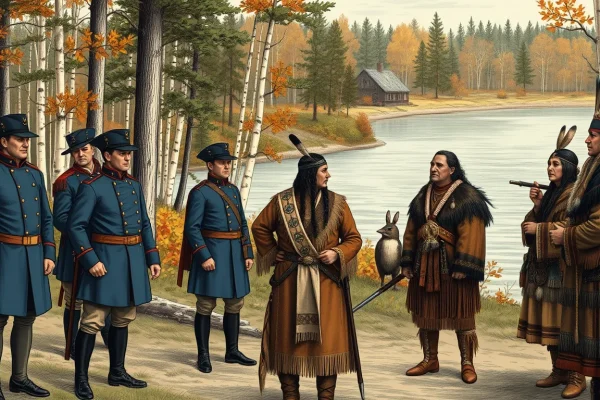
During the War of 1812, the relationship between the United States and the Indigenous nations of the Great Lakes, Ohio Valley, and the South was transformed by military alliance, warfare, and treaty. Tecumseh’s confederacy sided with the British to resist American expansion, while the collapse of the confederacy and the Creek War’s aftermath opened vast territories to American settlement and set the stage for Indian removal.

Read More →

Francis Scott Key and the War of 1812

Francis Scott Key (1779–1843) was an American lawyer and poet whose poem ‘Defence of Fort M’Henry,’ written after witnessing the British bombardment of Fort McHenry in 1814, became the lyrics of the U.S. national anthem, ‘The Star-Spangled Banner.’ His role as a negotiator for prisoner release placed him directly in the War of 1812’s pivotal Battle of Baltimore.

Read More →

Robert Heriot Barclay at Lake Erie

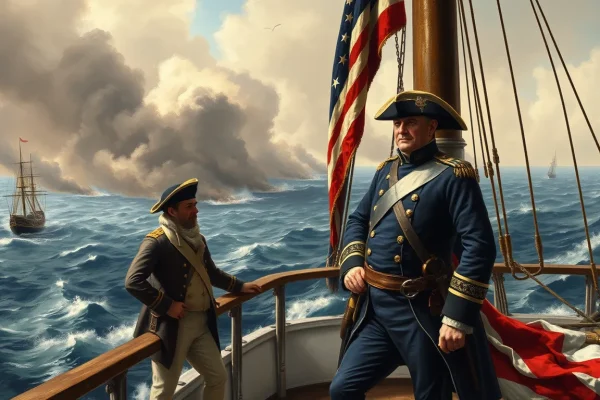
Robert Heriot Barclay commanded the British naval squadron on Lake Erie during the War of 1812 and was defeated by Oliver Hazard Perry at the Battle of Lake Erie on September 10, 1813. His surrender marked the first time a British naval squadron had been captured in battle, shifting control of the lake to the United States.

Read More →

James Monroe During the War of 1812

James Monroe, as Secretary of State and later Secretary of War under President James Madison, shaped American diplomacy and defense during the War of 1812. He led prisoner exchanges, advised on military strategy, and helped defend Washington, D.C., before becoming the fifth president.

Read More →

How the War of 1812 Shaped Canadian Identity

The War of 1812 between the United States and Great Britain played a pivotal role in shaping a distinct Canadian identity. By repelling American invasions, British North America fostered a sense of unity, loyalty to the Crown, and anti-American sentiment that would evolve into a national consciousness. This article examines the war’s impact on Canadian identity, considering historical evidence and competing interpretations.

Read More →

John Norton and the War of 1812

John Norton (Teyoninhokarawen), a Cherokee-Scottish Mohawk leader, played a pivotal role in the War of 1812 by commanding Indigenous warriors for the British on the Niagara frontier, notably at Queenston Heights. His memoir remains a rare Indigenous perspective on the conflict.

Read More →