
Short Answer
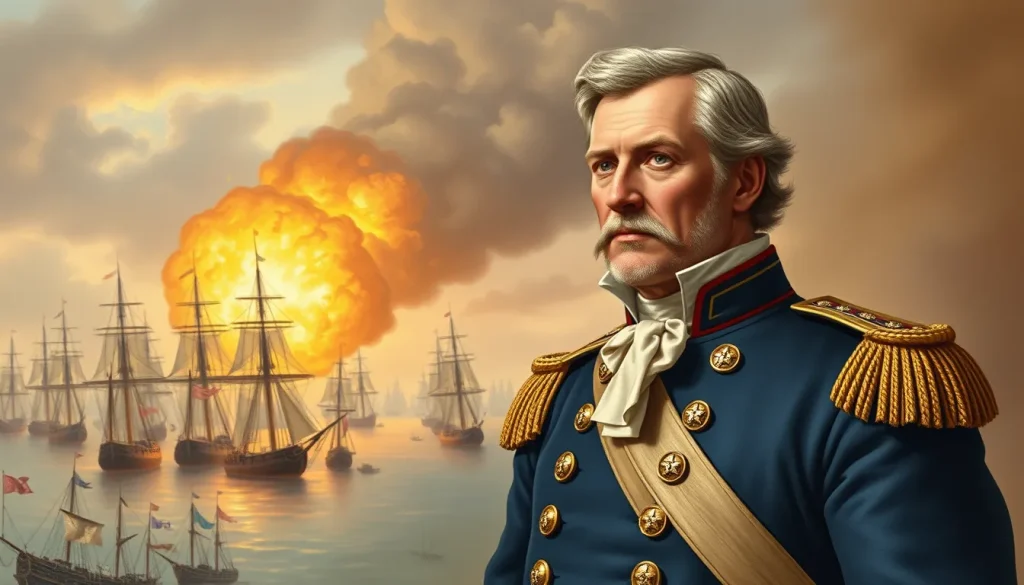
Zebulon Montgomery Pike (January 5, 1779 – April 27, 1813) was an American explorer and army officer who led two expeditions into the Louisiana Purchase territory, and later served as a brigadier general in the War of 1812. He is best known for the mountain peak named in his honor (Pikes Peak) and for his death at the Battle of York (modern Toronto) when the retreating British blew up a powder magazine. Pike’s explorations and military career made him a notable figure in the early expansion of the United States.
Historical Context
In the early 1800s, the United States was expanding westward after the Louisiana Purchase of 1803. President Thomas Jefferson sponsored expeditions to map and understand the new territory. The U.S. Army was a small professional force, and its officers often combined military duty with exploration. At the same time, tensions with Great Britain over trade, impressment, and territorial disputes in North America were rising, eventually leading to the War of 1812. Pike’s career bridged these two national projects: exploration of the West and the defense of the northern frontier.
What Happened
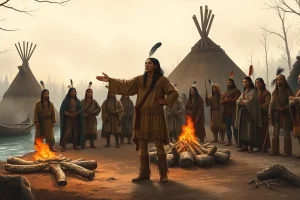
Zebulon Pike grew up in frontier posts and entered the army as a cadet in 1794. He received his commission as a second lieutenant in 1799. Under the mentorship of General James Wilkinson, Pike led an expedition in 1805–1806 to locate the source of the Mississippi River. He traveled up the Mississippi into present-day Minnesota, purchased land from the Dakota for a military post, and confronted British fur traders at Leech Lake. In 1806–1807, Pike led a second expedition to the southwest, crossing the Great Plains and into the Rocky Mountains in what is now Colorado. He failed to climb the peak later named for him, but reached the upper Rio Grande in Spanish territory. He was captured by Spanish authorities and taken to Santa Fe and Chihuahua before being escorted back to the United States.
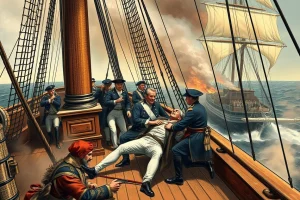
Pike published his journals in 1810 as An Account of Expeditions to the Sources of the Mississippi and through the Western Parts of Louisiana. He then returned to regular army duties. With the approach of war with Britain, he was promoted to colonel of the 15th Infantry in July 1812. In March 1813 he was brevetted brigadier general. He commanded the American forces that landed at York (Toronto), Upper Canada, on April 27, 1813. After the British withdrew from the town, a retreating soldier ignited the garrison’s powder magazine, causing a huge explosion that killed or wounded many. Pike was struck by debris and died aboard the flagship Madison later that day.
Why It Matters
Pike’s explorations gave the American public its first detailed accounts of the upper Mississippi and the southern Rocky Mountains. His published journals remained a standard reference until the Lewis and Clark accounts appeared. His death at York became a rallying point in the War of 1812, with his last words reputedly asking for a treaty of peace, though his exact last words are disputed. Historians have debated the extent of his involvement in the Aaron Burr conspiracy and the wisdom of his exploratory decisions, but his contributions to the American understanding of the West are beyond dispute. His legacy is commemorated in Pikes Peak and many places named after him.
Early Life
Zebulon Montgomery Pike was born on January 5, 1779, in Lamberton (now Lamington), New Jersey. He was the son of Isabella Brown and Zebulon Pike, a Revolutionary War veteran who remained in the U.S. Army. Young Pike received only a basic education but grew up at various frontier posts in Ohio and Illinois. At fifteen, he became a cadet in his father’s regiment. He was commissioned a second lieutenant in 1799 and promoted to first lieutenant later that year. In 1801, he married Clarissa Harlow Brown; only one of their five children survived to adulthood.
Role Before the War
Before the War of 1812, Pike’s career was defined by exploration. As a lieutenant, his duties included logistics and payroll at frontier posts. He came to the attention of General James Wilkinson, who appointed him to lead the Mississippi expedition in 1805. Pike’s successful though arduous exploration of the upper Mississippi and his negotiations with the Dakota and Ojibwe established his reputation. After his second expedition and capture by the Spanish, Pike returned in 1807. He was promoted to major in 1808 and lieutenant colonel in 1809. He continued to serve in the army, and in 1810 published his journals, which were widely translated. He was appointed deputy quartermaster general in 1812 but soon sought more active command.
Role During the War
With the outbreak of the War of 1812, Pike sought frontline duty. He was promoted to colonel of the 15th Infantry on July 6, 1812. He participated in the failed attack on Lacolle Mills in November 1812, though his unit performed well. In March 1813, he was promoted to brigadier general and inspector general. His most important assignment came in April 1813 when Major General Henry Dearborn placed him in command of a 1,600-man force to attack York, the capital of Upper Canada. Pike led the amphibious assault on April 27, 1813, which successfully captured the town after a sharp skirmish. The explosion that killed him occurred just as the victory was secured.
Major Actions
Pike’s major actions include his two pre-war explorations and his command at York. The first expedition (1805-1806) covered over 2,000 miles up the Mississippi, reaching Leech Lake and Cass Lake. He mistakenly believed Cass Lake was the source of the Mississippi. He also negotiated the Treaty of St. Peters, purchasing land for future military posts. The second expedition (1806-1807) crossed the Great Plains to the Rocky Mountains, sighted the mountain now named Pikes Peak, and entered Spanish territory, leading to his capture. In the War of 1812, his command at York was a decisive American victory, but he died at the moment of success.
Contemporary Accounts
Pike’s own journals and letters provide contemporary accounts of his expeditions. He wrote candidly about his men, calling them “a set of dam’d rascals” while also praising their resilience. His published journals were intended for public consumption and emphasize the opportunities of the West. After his death, fellow officers and the public lauded his bravery. An early biographer, Warren Upham, in a 1905 address, described his death, quoting Elliott Coues: “Each led to the assault; each conquered; each fell in the arms of victory.” Accounts from the Battle of York indicate that Pike was carried to the flagship Madison, where he allegedly asked for the captured British flag to be placed under his head, and his last words, as reported, were “I die content.”
Later Life
Pike’s later life is almost entirely absorbed by his death. He was killed in action on April 27, 1813, the same day he won the Battle of York. His body was returned to Sackets Harbor, New York, where he was buried. His death at age 34 made him a national hero. He never saw the end of the war or the later expansion of the United States. His death was widely mourned and commemorated in poetry and public ceremonies.
Historical Legacy
Pike’s legacy is twofold. As an explorer, he provided valuable geographic information about the Louisiana Purchase. His published journals were the first widely read American account of the Southwest. Pikes Peak in Colorado, discovered by him, bears his name. As a soldier, his death at York became an emblem of patriotic sacrifice. However, his association with James Wilkinson and the Burr conspiracy allegations have shadowed his reputation. Modern historians note that while Pike was a diligent and brave officer, his explorations were less comprehensive than those of Lewis and Clark, and he made errors in geographic identification. Nevertheless, he remains a significant figure in American expansion and the War of 1812.
Primary Sources
The most important primary sources are Pike’s own journals and letters, published in 1810 and edited by Donald Jackson in 1966. The military reports from the Battle of York, including Dearborn’s official report, document the events of April 27, 1813. Pike’s original field notes from the southwest expedition, which were taken by the Spanish, were later recovered from Mexican archives and published in 1908 by Herbert Eugene Bolton. Additionally, contemporary newspaper accounts celebrated his death and funeral. These sources must be read with attention to Pike’s promotional motives and wartime propaganda.
Further Reading
- Jackson, Donald, ed. The Journals of Zebulon Montgomery Pike, with Letters and Related Documents. Norman: University of Oklahoma Press, 1966.
- Hollon, W. Eugene. The Lost Pathfinder: Zebulon Montgomery Pike. Norman: University of Oklahoma Press, 1949.
- Coues, Elliott, ed. The Expeditions of Zebulon Montgomery Pike. New York: F.P. Harper, 1895.
- Cutrer, Thomas W. “Pike, Zebulon Montgomery,” Handbook of Texas Online. Texas State Historical Association.
- American Battlefield Trust. “Zebulon Pike” biography.
References
- Wikipedia, “Zebulon Pike,” accessed August 2026, https://en.wikipedia.org/wiki/Zebulon_Pike.
- American Battlefield Trust, “Zebulon Pike,” https://www.battlefields.org/learn/biographies/zebulon-pike.
- Thomas W. Cutrer, “Pike, Zebulon Montgomery,” Handbook of Texas Online, https://www.tshaonline.org/handbook/entries/pike-zebulon-montgomery.
- Pike National Historic Trail Association, “Pike’s Expeditions Overview,” https://www.zebulonpike.org/education/pike-expedition-overview/.
- Warren Upham, “The life and military services of Zebulon M. Pike,” address at Pike Centennial Celebrations, 1905, Library of Congress, https://tile.loc.gov/storage-services/service/gdc/lhbum/0866g/0866g_0346_0349.pdf.
FAQ
What did Zebulon Pike explore?
Pike led two expeditions: one to the upper Mississippi River (1805-06) and one to the southwest, reaching present-day Colorado and Spanish New Mexico (1806-07).
How did Zebulon Pike die?
He was killed on April 27, 1813, during the Battle of York, when the British ignited a powder magazine; debris struck him.
Why is Pike important to the War of 1812?
He was the senior American commander in the successful capture of York, which was a strategic victory, and his death became a rallying point. His earlier explorations helped map the West.

Leave a Reply