Short Answer
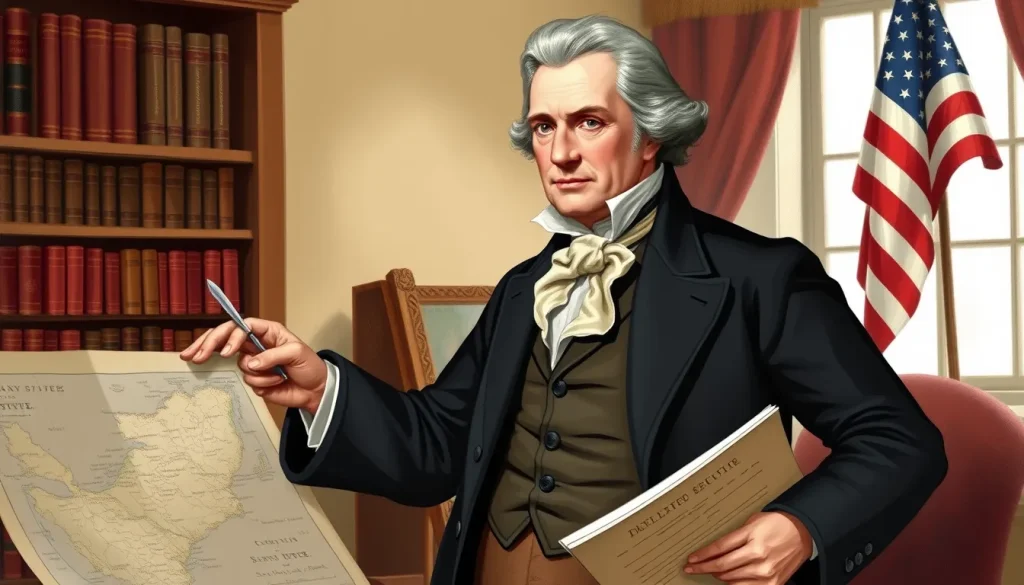
James Monroe, a Virginian who served as Secretary of State (1811–1817) and briefly as Secretary of War (1814–1815) in the administration of President James Madison, was a key figure in the United States’ conduct of the War of 1812. Although remembered primarily as a diplomat, Monroe also sought military command and directly contributed to the defense of Washington, D.C., during the British invasion. His wartime actions shaped American foreign policy, military organization, and his own path to the presidency.
Historical Context
The War of 1812 (1812–1815) was fought between the United States and Great Britain, rooted in British impressment of American sailors, trade restrictions under the Orders in Council, and American ambitions to expand into Canada. Monroe entered the war with extensive diplomatic experience: he had negotiated the Louisiana Purchase, served as minister to France and Britain, and co-negotiated the Monroe–Pinkney Treaty (1806), which failed to resolve Anglo-American disputes. By 1811, as tensions escalated, President Madison appointed Monroe Secretary of State, a position that made him the principal architect of American diplomacy during the conflict. Monroe’s views on the war were shaped by Republican ideology, a belief in neutral rights, and a personal ambition to play a decisive role in the conflict.
What Happened
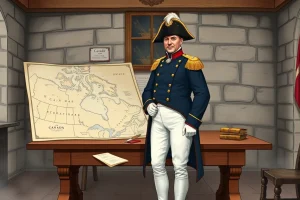
When the United States declared war on Great Britain on June 18, 1812, Monroe delivered the declaration to the British minister, Augustus J. Foster. Throughout the war, he managed diplomatic correspondence, attempted to negotiate peace terms, and advised Madison on military appointments and strategy. After General William Hull’s surrender at Detroit in August 1812, Madison seriously considered sending Monroe to the western frontier as a volunteer commander, but nothing came of it. In November 1812, Monroe helped negotiate a prisoner-exchange cartel with British officials, an early and rare diplomatic success.
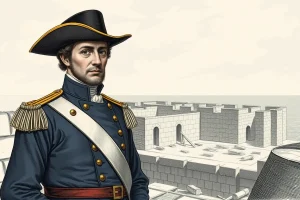
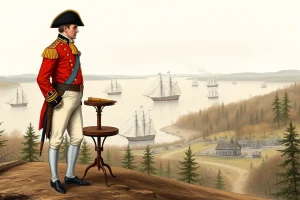
In 1813, Monroe remained in Washington while American forces failed to invade Canada. He advocated for a second-front strategy and supported the peace initiative offered by Tsar Alexander I of Russia, though it ultimately bore little fruit. As British naval forces intensified raids on the Chesapeake Bay in 1813–1814, Monroe grew alarmed and pushed for improvements to Washington’s defenses. He personally reconnoitered British movements and, during the British advance on Washington in August 1814, rode out to observe the enemy’s approach and reported to Madison. He also ordered the removal of important state papers from the capital before the British entered and burned Washington on August 24, 1814.
In the wake of that disaster, Madison appointed Monroe Secretary of War, combining both cabinet posts. Monroe reorganized the War Department, improved the militia system, and planned a more vigorous coast defense. He also supported the peace commissioners at Ghent, who signed the Treaty of Ghent on December 24, 1814, ending the war. Monroe remained active through the final months, including the defense of Baltimore and the planning of a possible new campaign. The war ended with the ratification of the treaty in February 1815, and Monroe returned fully to the State Department.
Why It Matters
Monroe’s wartime leadership had immediate and longer-term consequences. His diplomatic efforts, especially the prisoner cartel and his advocacy of peace negotiations, helped stabilize the conflict. His tenure as Secretary of War, though brief, contributed to the reform of American military administration and set the stage for his election to the presidency in 1816. Historians often portray Monroe as a competent if not brilliant administrator who balanced ambition with loyalty to Madison. His willingness to consider military command reflected his Revolutionary War experience and his desire for glory, but he ultimately served the nation better as a diplomat and organizer.
Early Life
James Monroe was born on April 28, 1758, in Westmoreland County, Virginia. He attended the College of William and Mary but left in 1776 to join the Continental Army, serving with distinction and being wounded at Trenton. After the Revolutionary War, he studied law under Thomas Jefferson and entered politics, serving in the Virginia legislature, the Continental Congress, and the U.S. Senate. He gained diplomatic experience as minister to France (1794–1796) and later as governor of Virginia.
Role Before the War
Between 1803 and 1807, Monroe served as minister to Great Britain and helped negotiate the Louisiana Purchase. His 1806 treaty with Britain, the Monroe–Pinkney Treaty, was rejected by President Jefferson because it did not address impressment or neutral rights. Monroe returned to Virginia and became governor again in 1811, but Madison persuaded him to become Secretary of State, where he inherited the deteriorating relations that led to war.
Role During the War
As Secretary of State, Monroe managed the war’s diplomacy, including the delivery of war messages, negotiations with foreign powers, and correspondence with American envoys. He also acted as a key military adviser, particularly after the early failures on the northern frontier. He proposed a volunteer commission and later served as Secretary of War, where he took charge of defending the capital and organizing the army.
Major Actions
Monroe’s major wartime actions included: negotiating the prisoner-exchange cartel (November 1812); advising Madison on western command (September 1812); conducting reconnaissance during the British invasion of Washington (August 1814); ordering the evacuation of government records; and as Secretary of War, reorganizing the department and preparing Baltimore’s defense.
Contemporary Accounts
President Madison’s letter of September 6, 1812, reveals the high regard he held for Monroe: he suggested Monroe might join the army as a volunteer to “give impulse & direction to the only force now applicable to the object.” Monroe’s own letters to Jefferson show his frustration with the war’s progress and his eagerness to take the field. British and American observers alike acknowledged Monroe’s energy during the Washington crisis, though some criticized his lack of military experience.
Later Life
After the war, Monroe returned to his duties as Secretary of State. He was elected president in 1816, serving two terms (1817–1825), during which he oversaw the Era of Good Feelings and issued the Monroe Doctrine. He died on July 4, 1831.
Historical Legacy
Monroe’s wartime service enhanced his reputation for integrity and diligence. Historians generally credit him with steady leadership in the cabinet and note that his brief tenure as Secretary of War helped modernize the American military establishment. While not a battlefield commander, his role in defending Washington and his administrative reforms left a lasting mark.
Primary Sources
The most relevant primary sources include:
- James Madison to James Monroe, September 6, 1812 (Founders Online, National Archives) – an intimate letter showing Madison’s trust in Monroe and his suggestion of a military role.
- Monroe’s official correspondence as Secretary of State, such as letters to Joel Barlow and Thomas Jefferson, printed in The Papers of James Monroe.
- The prisoner cartel of November 1812, a contemporary diplomatic agreement.
- Monroe’s recollections and subsequent writings about the burning of Washington.
Further Reading
- Ammon, Harry. James Monroe: The Quest for National Identity. University of Virginia Press, 1990.
- Hickey, Donald R. The War of 1812: A Forgotten Conflict. University of Illinois Press, 1989.
- Unger, Harlow Giles. The Last Founding Father: James Monroe and a Nation’s Call to Greatness. Da Capo Press, 2009.
- Heidler, David S., and Jeanne T. Heidler, eds. Encyclopedia of the War of 1812. ABC-CLIO, 1997.
References
- Sanderson Beck, “Secretary of State Monroe & War 1812-13,” san.beck.org, https://san.beck.org/PresidentsUS5bMonroe1.html.
- “James Madison to James Monroe, 6 September 1812,” Founders Online, National Archives, https://founders.archives.gov/documents/Madison/03-05-02-0203.
- “MONROE, James,” U.S. House of Representatives: History, Art & Archives, https://history.house.gov/People/Detail/18410.
- “James Monroe,” Monticello (Thomas Jefferson Foundation), https://www.monticello.org/encyclopedia/james-monroe.
- “James Monroe during the War of 1812,” DocsLib, https://docslib.org/doc/472252/james-monroe-during-the-war-of-1812.
FAQ
Was James Monroe ever a military commander during the War of 1812?
No, Monroe did not hold a field command. He briefly considered joining the army as a volunteer in 1812 but remained in the cabinet. As Secretary of War, however, he directed military organization and defense planning.
What was James Monroe's greatest diplomatic achievement during the war?
His negotiation of the prisoner-exchange cartel in November 1812 and his support for the peace negotiations at Ghent are often highlighted. He also managed relations with France and Russia.
How did Monroe's wartime service affect his presidency?
His competent handling of wartime responsibilities, especially as Secretary of War, bolstered his political reputation and helped him win the presidency in 1816. It also shaped his views on military preparedness.
Leave a Reply