Why Did General William Hull Surrender Detroit?

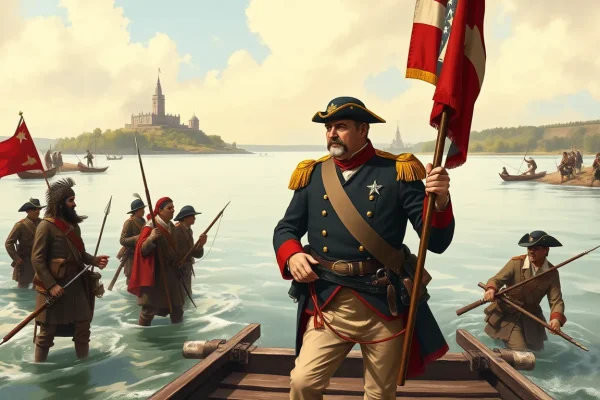
On August 16, 1812, American Brigadier General William Hull surrendered Fort Detroit and its 2,500-man garrison to a smaller British and Indigenous force led by Major General Isaac Brock and Tecumseh. The surrender resulted from a combination of British psychological warfare, Hull’s fears of an Indigenous massacre, his isolation and supply problems, and his own wavering confidence.

Read More →

The Northwest Campaign of 1812

The Northwest Campaign of 1812–1813 was the series of operations along the Detroit frontier, Lake Erie, and the Ohio Country that opened the War of 1812. It saw the American surrender of Detroit, the River Raisin massacre, the siege of Fort Meigs, and ended with the Battle of the Thames and the death of Tecumseh.

Read More →

Siege of Fort Erie

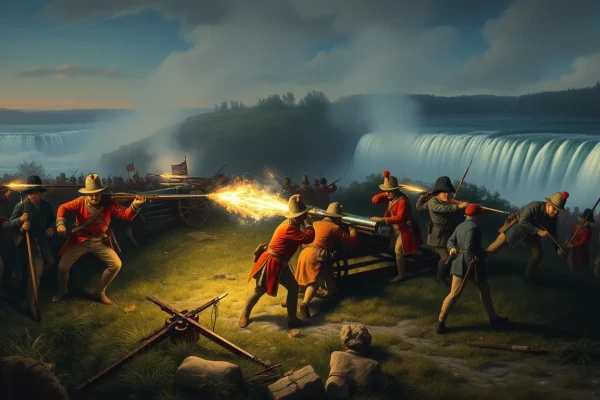
The Siege of Fort Erie (4 August–21 September 1814) was a British attempt to recapture the American-held fort at the entrance to the Niagara River during the War of 1812. The siege ended in an American defensive victory after a failed British assault and a successful American sortie, leading to the British withdrawal and the eventual demolition of the fort.

Read More →

Battle of Sackett’s Harbor

The Battle of Sackett’s Harbor (29 May 1813) was a British amphibious raid against the principal American naval base on Lake Ontario during the War of 1812. Although the attackers were repulsed, they destroyed naval stores and briefly impaired American shipbuilding, shaping the naval balance on the lake.

Read More →

Why Did Britain Lose the Battle of New Orleans?

The British defeat at the Battle of New Orleans on January 8, 1815, resulted from a combination of failed tactical coordination, insufficient preparation, strong American fortifications, and effective artillery fire, rather than a lack of veteran soldiers. The victory, though occurring after the Treaty of Ghent was signed, restored American morale and made Andrew Jackson a national hero.

Read More →

Creek Civil War Explained

The Creek Civil War (1813–1814) was a conflict between factions of the Muscogee (Creek) Nation, which escalated into a war with the United States during the War of 1812. It ended with the Treaty of Fort Jackson, forcing the Creeks to cede millions of acres and reshaping the American South.

Read More →

Battle of Lake Champlain

The Battle of Lake Champlain, also known as the Battle of Plattsburgh, was a decisive American naval and land victory on September 11, 1814, that stopped the final British invasion of the northern United States during the War of 1812 and influenced the Treaty of Ghent negotiations.

Read More →

River Raisin Massacre: What Happened?

The River Raisin Massacre refers to the killing of wounded American prisoners by Native American warriors after the Battle of Frenchtown in January 1813. This event, part of the War of 1812 in the Michigan Territory, outraged Americans and gave rise to the rallying cry ‘Remember the Raisin.’

Read More →

British Invasion of Louisiana

The British invasion of Louisiana (1814–1815) was the final major campaign of the War of 1812, culminating in the Battle of New Orleans on January 8, 1815. A British expeditionary force sought to seize New Orleans and control the Mississippi River but was decisively repulsed by American forces under Andrew Jackson, a victory that secured the Gulf Coast and elevated Jackson to national fame.

Read More →