Battle of Cook’s Mills

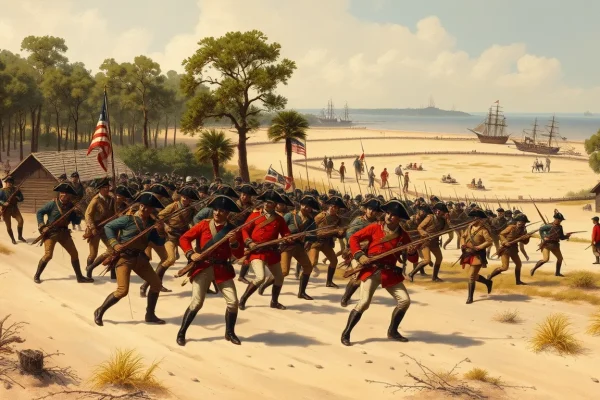
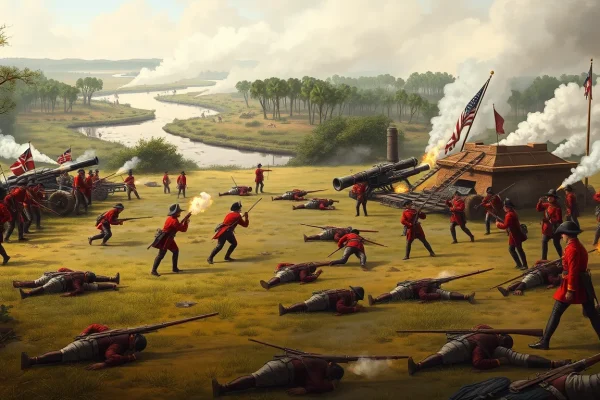
The Battle of Cook’s Mills (19 October 1814) was the last engagement between American and British regular forces on the Niagara frontier during the War of 1812. Near present-day Welland, Ontario, American foraging troops clashed with a British reconnaissance force; both sides withdrew, and the Americans soon abandoned Fort Erie.

Read More →

The American Invasion of Canada in 1812

In 1812, the United States launched a three-pronged invasion of British Canada, expecting quick victory, but suffered major defeats at Detroit and Queenston Heights. The failed campaign shaped the early War of 1812, bolstered Canadian defense efforts, and highlighted American military unpreparedness.

Read More →

Naval War on the Great Lakes

The naval war on the Great Lakes determined control of vital supply routes and shaped the outcome of the War of 1812 in the Anglo-American borderlands. American and British squadrons fought for supremacy on Lake Ontario, Lake Erie, and Lake Huron, culminating in battles such as Lake Erie in 1813 and the launch of HMS St. Lawrence in 1814. The eventual demilitarization of the lakes after the war paved the way for a lasting peace.

Read More →

USS Hornet vs HMS Peacock

On 24 February 1813, the American sloop-of-war USS Hornet, commanded by James Lawrence, defeated and sank the British brig-sloop HMS Peacock off the Demerara River in present-day Guyana, in a brief but decisive single-ship action of the War of 1812.

Read More →

Battle of Villéré’s Plantation

The Battle of Villéré’s Plantation (December 23–24, 1814) was a night engagement between American forces under Maj. Gen. Andrew Jackson and a British brigade that had occupied the Villeré plantation near New Orleans. Jackson’s attack surprised the British, delayed their advance, and gave the Americans time to fortify the approach to the city.

Read More →

Why Was the White House Burned?

British forces burned the White House on August 24, 1814, during the War of 1812, as retaliation for American destruction of public buildings in Upper Canada, including the capital at York and the town of Newark. The burning was a deliberate act of military retaliation and a psychological blow to the United States.

Read More →