
Short Answer
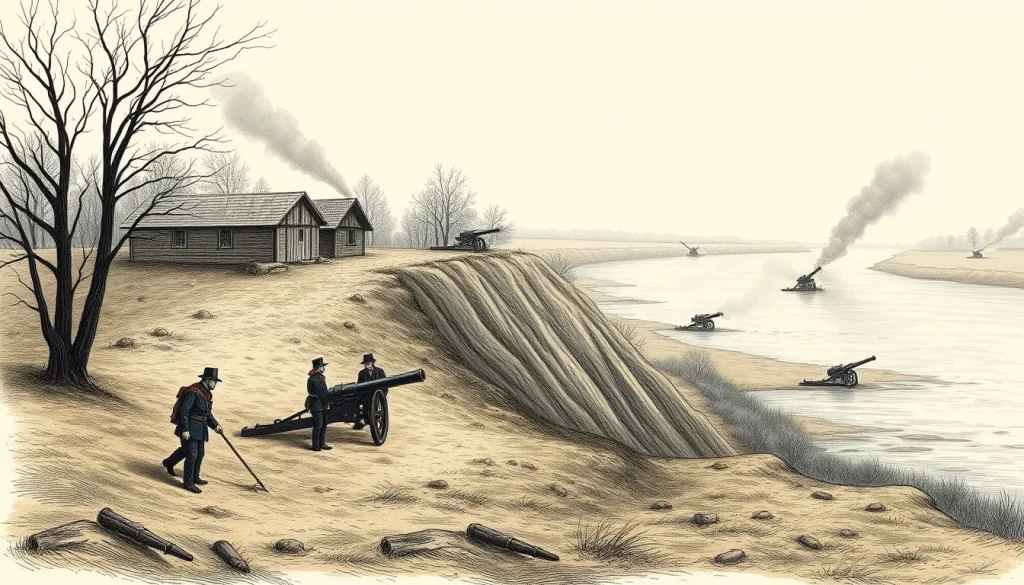
Fort Meigs was a large earthen and wooden fortification built by the United States Army in early 1813 on a bluff overlooking the Maumee River near present-day Perrysburg, Ohio. Constructed under the direction of Major General William Henry Harrison, the fort protected American supply lines and served as a staging point for a planned invasion of British Upper Canada. It was the site of two sieges in 1813, both successfully defended by the Americans, and it played a crucial role in preventing British control of the Ohio frontier while the United States built its Lake Erie fleet.
Historical Context
After the American surrender of Detroit in August 1812, the British and their Indigenous allies controlled much of the Michigan Territory and threatened the American frontier in Ohio and the Northwest Territory. The Maumee River rapids offered a strategic water route connecting Lake Erie to the interior, and both sides recognized its value. In early 1813, Major General William Henry Harrison, commander of the American Army of the Northwest, sought to establish a fortified base on the Maumee to regain lost ground, protect American settlers, and support an eventual advance toward Detroit and Upper Canada. The fort was named after Ohio Governor Return Jonathan Meigs Jr., and its construction reflected the American determination to maintain a presence in the contested region despite the harsh winter and previous defeats.
What Happened
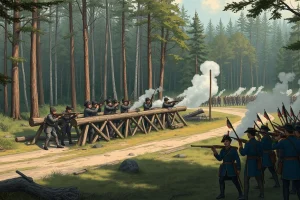
Ground was broken for Fort Meigs on February 2, 1813, under Harrison’s orders. The fort was constructed on a bluff overlooking the Maumee River rapids, with walls fifteen feet thick and a series of traverses to protect against artillery fire. The work continued through cold weather and deep mud, and the fort was completed by the end of April, just as a British force approached.
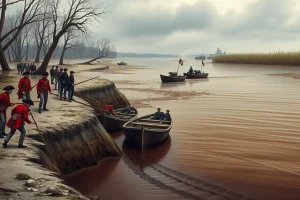
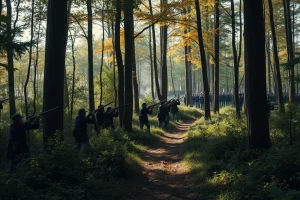
The first siege began on April 28, 1813, when British Major General Henry Procter led a mixed force of British regulars, Canadian militia, and Indigenous warriors, including Shawnee leader Tecumseh, down from Fort Malden (Upper Canada) and encamped near the ruins of the old Fort Miamis on the north bank of the Maumee. On May 1, British artillery opened fire on the fort, bombarding it for five days. Inside, the American garrison, numbering around 1,100, held firm. On May 5, a relief column of about 1,200 Kentucky militia approached along the Maumee. After fighting their way to the fort, part of the relief force, led by Colonel William Dudley, left their boats and pursued a body of British and Indigenous troops into the woods. The attackers were ambushed and routed; more than 600 Kentuckians were killed, wounded, or captured in what became known as Dudley’s Massacre. Despite this heavy loss, the fort itself remained intact, and the British—their Indigenous allies growing discouraged—withdrew on May 9.
In late July 1813, Procter and Tecumseh attempted a second siege. This time, they tried a ruse, staging a mock battle in the woods outside the fort to lure the defenders out. The Americans, now commanded by General Green Clay, recognized the deception and stayed inside. A thunderstorm then broke, and the British and Indigenous force withdrew. After these two sieges, Fort Meigs was largely dismantled and rebuilt on a smaller scale as a supply depot, which remained in use until the end of the war.
Why It Matters
Fort Meigs was a strategic success for the United States. It blocked British attempts to advance into Ohio and protected American supply lines, and it bought crucial time for the construction of a U.S. naval squadron on Lake Erie under Oliver Hazard Perry. That fleet defeated the British at the Battle of Lake Erie in September 1813, a victory that allowed the Americans to recapture Detroit and move the war into Upper Canada. Historians agree that the successful defense of Fort Meigs was a turning point in the Northwest front, although they differ in emphasis: some stress its tactical significance, while others highlight its political and psychological impact on the American frontier population. The fort was later abandoned and fell into ruin, but it remains a key site for understanding the War of 1812 in the West.
Historical Map Context
Fort Meigs was located on the southern bank of the Maumee River, at the first rapids about fifteen miles from its mouth at Lake Erie. The river and its rapids made it a natural choke point on the water route between the lake and the interior. The fort overlooked the river and controlled the land approaches via the old Indian trails that converged there. This position lay roughly halfway between the American outpost at Fort Defiance to the southwest and the British base at Fort Malden to the north, making it a critical link in the frontier logistics network.
Modern Location
The site of Fort Meigs is in present-day Perrysburg, Ohio, at 29100 West River Road. It sits on a bluff above the Maumee River, and the surrounding area has retained much of its 19th-century appearance, though the riverbed has changed somewhat over time. The Fort Meigs Historical Site is managed by the Ohio History Connection and the Fort Meigs Association, and it is open to the public, with a museum and reconstructed earthworks.
Events at the Site
The fort was the scene of the construction, both sieges, and, later, its use as a supply depot. It was abandoned after the war and gradually decayed. In the 20th century, the site was excavated and reconstructed, beginning in the 1970s with a major rebuilding effort that restored the earthen traverses and wooden stockade. Today, it offers living history demonstrations and educational programs on the War of 1812.
Associated People
Many notable figures were associated with Fort Meigs. Major General William Henry Harrison ordered its construction and commanded the defense during the first siege. British Major General Henry Procter led both sieges. Tecumseh, the Shawnee leader, played a prominent role in the sieges, especially in the mock battle ruse. Colonel William Dudley, commander of the Kentucky militia, was killed during the disastrous sortie on May 5. Other figures include General Green Clay, who took command after Harrison left, and Governor Return Jonathan Meigs Jr., for whom the fort was named.
Surviving Monuments and Site
Fort Meigs is a National Historic Landmark and one of the best-preserved War of 1812 earthworks in the United States. The reconstructed fort includes blockhouses, artillery batteries, and a quartermaster’s store. The adjacent museum houses artifacts, soldier letters, and interactive exhibits. The site hosts annual reenactments and commemorations, particularly on the anniversaries of the sieges, and serves as a major educational resource for the history of the war in the Northwest Territory.
Primary Sources
Contemporary records of Fort Meigs include official correspondence and reports from William Henry Harrison, which are held in the William Henry Harrison Papers at the Library of Congress. These letters detail the construction, the threats, and the sieges. Also valuable are the diaries and letters of soldiers who served at the fort, many of which have been transcribed in published collections. One notable example is Harrison’s address to the garrison before the first siege, in which he exhorted them to remember the eyes of the country were upon them. These sources must be used critically, as they reflect the biases and limited perspective of their authors.
Further Reading
- Gilpin, Alec R. The War of 1812 in the Old Northwest. East Lansing: Michigan State University Press, 1958.
- Fort Meigs Historical Site official website: fortmeigs.org
- American Battlefield Trust, “Fort Meigs”: battlefields.org
References
- American Battlefield Trust, “Fort Meigs” (https://www.battlefields.org/learn/war-1812/battles/fort-meigs)
- Fort Meigs, “A History of Fort Meigs” (https://fortmeigs.org/a-history-of-fort-meigs/)
- Ohio History Connection, “Fort Meigs” (https://www.ohiohistory.org/visit/browse-historical-sites/fort-meigs/)
FAQ
What was the purpose of Fort Meigs?
Fort Meigs was built to protect American supply lines, control the Maumee River route, and serve as a staging point for an invasion of British Upper Canada.
Why did the British fail to capture Fort Meigs?
The fort was well fortified and defended, and the British lacked the artillery and manpower to storm it. The first siege was lifted after a relief column reinforced the garrison, and the second was abandoned when their ruse failed.
How did Fort Meigs affect the outcome of the War of 1812?
Fort Meigs' successful defense prevented a British advance into Ohio and allowed the U.S. time to build the Lake Erie fleet, leading to the decisive American victory at the Battle of Lake Erie.
Leave a Reply