
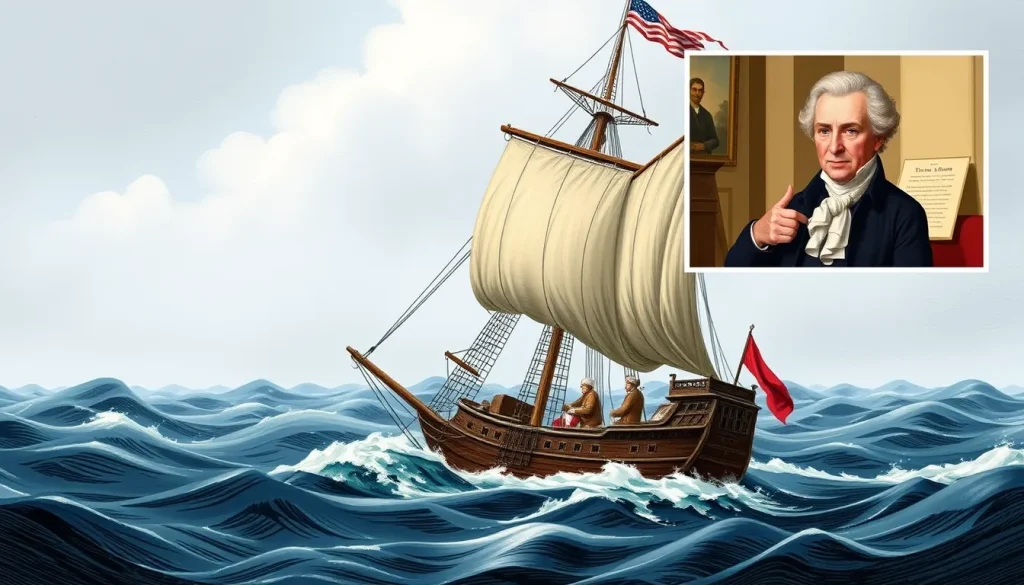
Short Answer
The Treaty of Ghent, signed on December 24, 1814, in Ghent (now Belgium), ended the War of 1812 between the United States and Great Britain. News of the peace did not reach America until mid-February 1815, carried by a British packet ship. This delay meant that the Battle of New Orleans was fought after the treaty had been signed, and the war officially ended only after the U.S. Senate ratified the treaty on February 16, 1815.
Historical Context
The War of 1812 was fought over British impressment of American sailors, trade restrictions, and territorial ambitions. By late 1814, both sides were war-weary. The end of the Napoleonic Wars in Europe allowed Britain to shift more forces to North America, but also removed the primary cause of impressment. The American economy was strained, and the British public was tired of prolonged conflict. Peace negotiations opened in Ghent in August 1814, with American commissioners John Quincy Adams, James A. Bayard, Henry Clay, Jonathan Russell, and Albert Gallatin facing British negotiators Admiral James Gambier, Henry Goulburn, and William Adams. The British initially demanded territorial concessions and an Indigenous buffer state, but American resistance and military setbacks for Britain, including the defeat at Lake Champlain, led to a softening of these terms. The final treaty restored the status quo ante bellum—all territories captured during the war were returned to their prewar owners.
What Happened
After months of negotiation, the Treaty of Ghent was signed on December 24, 1814. The British government ratified it on December 27, 1814. A copy of the treaty was entrusted to a British packet ship, the Favorite, which departed for America on January 2, 1815. The voyage was delayed by severe weather, and the ship did not arrive in New York City until February 11, 1815. From there, the document was transported to Washington, D.C., reaching Secretary of State James Monroe a few days later. President James Madison presented the treaty to the Senate on February 16, 1815. The Senate approved it unanimously that same day, and Madison signed it on February 17. Ratifications were exchanged that day, officially bringing the war to an end. Meanwhile, unaware of the treaty, American forces under Major General Andrew Jackson had defeated the British at the Battle of New Orleans on January 8, 1815.
Why It Matters
The delay in news had significant consequences. The Battle of New Orleans, fought after the treaty was signed but before its ratification, became a powerful symbol of American military prowess, even though it had no bearing on the war’s outcome. The battle’s heroics boosted American morale and national pride, influencing the perception of the war as a victory. The treaty itself restored prewar boundaries and did not address impressment or maritime rights, which had been key causes of the conflict. For Indigenous peoples, the treaty’s Article IX promised to restore lands and rights held in 1811, but these promises were largely ignored by the United States, leading to further displacement and erosion of sovereignty. The war’s end also marked the beginning of a long-lasting peace between the United States and Britain, eventually leading to close diplomatic and economic relations.

Definition
The news of the Treaty of Ghent reached America through a transatlantic maritime voyage. A British government packet ship, the Favorite, carried the ratified treaty from Europe to New York City. The term “packet ship” refers to a vessel designed for carrying mail and passengers on a regular schedule, though the Favorite’s crossing was delayed by weather.
Background
In the early 1800s, communication between Europe and North America relied entirely on sailing ships. A typical crossing could take three to six weeks, depending on winds and weather. After the treaty was signed, both governments needed to exchange ratifications to make the peace effective. The British, having ratified first, dispatched the treaty on a fast packet ship. The American commissioners also sent copies, but the British ship was the first to arrive.
How It Worked
The Favorite sailed from Ghent or possibly from London, carrying the official copy of the treaty. The voyage was stormy, and the ship did not make landfall until February 11, 1815, when it anchored at New York. The captain or a messenger delivered the document to Washington, where Secretary of State James Monroe received it. He presented it to President Madison, who then formally submitted it to the Senate on February 16. The Senate, meeting in executive session, approved the treaty unanimously. President Madison signed the ratification on February 17, and the British minister in Washington, Charles Bagot, exchanged ratification documents with Secretary of State Monroe that same day, officially ending the war.
Competing Viewpoints
Historians debate the significance of the delay. Some argue that the Battle of New Orleans, though fought after the treaty was signed, was decisive in convincing the British to abide by the treaty and in shaping American national identity. Others emphasize that the treaty’s terms were already fixed, and the battle had no legal effect on the outcome. A related debate concerns the speed of news: why did the Favorite take so long? Some accounts attribute delays to winter storms, while others suggest the ship may have been sent later than the American copy. Nevertheless, the sequence of events is well-documented: the treaty was signed on December 24, 1814; the Battle of New Orleans occurred on January 8, 1815; and the treaty reached Washington in February 1815.
Role in the War of 1812
The arrival of the Treaty of Ghent in February 1815 directly ended the War of 1812. The official cessation of hostilities took effect upon the exchange of ratifications, as stipulated in Article II. The war had already effectively ended on the battlefield, but the political process of ratification was necessary to formalize peace. The news reached America at a time of heightened patriotism following the Battle of New Orleans, which contributed to a sense of victory and validated the Madison administration.
Consequences and Historical Interpretation
The delayed arrival of the treaty had a lasting impact on American memory. The juxtaposition of a post-treaty military victory and the subsequent peace allowed Americans to interpret the war as a success, obscuring the fact that the conflict had not achieved its primary war aims. For European and American diplomats, the episode highlighted the challenges of communication in the early 19th century. The treaty itself, often seen as a draw, established a pattern of Anglo-American cooperation that would endure. Historians such as Donald Hickey and J.C.A. Stagg have noted that the war and its conclusion shaped American national identity and relations with Britain, but also had devastating consequences for Indigenous nations who lost a powerful ally.
Primary Sources
The original Treaty of Ghent is held at the National Archives in Washington, D.C., as part of Record Group 11 (General Records of the U.S. Government). The U.S. Senate’s executive journal for February 16, 1815, records the unanimous approval. The correspondence between the American peace commissioners and the Secretary of State, available in the State Department records, provides insight into the negotiations and the transmission of news. The NPS account of “War’s End” and the American Battlefield Trust article summarize the key dates and events. These sources agree on the major timeline, though minor discrepancies exist regarding the exact departure date of the Favorite and its route.
Further Reading
- American Battlefield Trust. “The Treaty of Ghent: Ending the War of 1812.” https://www.battlefields.org/learn/articles/treaty-ghent-ending-war-1812
- U.S. Senate. “The Senate Approves for Ratification the Treaty of Ghent.” https://www.senate.gov/about/powers-procedures/treaties/senate-approves-treaty-of-ghent.htm
- National Park Service. “War’s End – Star-Spangled Banner National Historic Trail.” https://www.nps.gov/stsp/learn/historyculture/war-s-end.htm
- National Archives. “Treaty of Ghent (1814).” https://www.archives.gov/milestone-documents/treaty-of-ghent
References
- American Battlefield Trust, “The Treaty of Ghent: Ending the War of 1812,” accessed 2025, https://www.battlefields.org/learn/articles/treaty-ghent-ending-war-1812.
- U.S. Senate Historical Office, “The Senate Approves for Ratification the Treaty of Ghent,” https://www.senate.gov/about/powers-procedures/treaties/senate-approves-treaty-of-ghent.htm.
- National Park Service, “War’s End – Star-Spangled Banner National Historic Trail,” https://www.nps.gov/stsp/learn/historyculture/war-s-end.htm.
- National Archives, “Treaty of Ghent (1814),” https://www.archives.gov/milestone-documents/treaty-of-ghent.
FAQ
How long did it take for news of the Treaty of Ghent to reach America?
The treaty was signed on December 24, 1814, but the news arrived in New York on February 11, 1815, taking about six weeks due to the transatlantic voyage and weather delays.
Which ship carried the Treaty of Ghent?
The British packet ship Favorite carried the ratified treaty from Europe to New York City, arriving on February 11, 1815.
Did the Battle of New Orleans happen before or after the treaty was signed?
The battle took place on January 8, 1815, after the treaty was signed on December 24, 1814, but before the treaty was ratified by the United States. Thus, the battle was fought after the peace had been agreed to, but before it was legally in effect.


Leave a Reply