
Short Answer
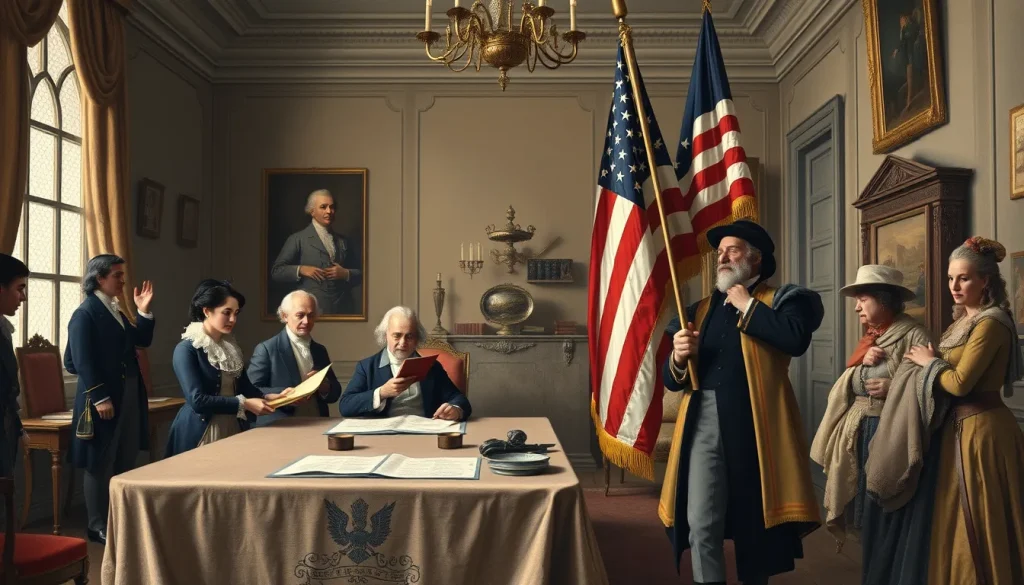
The War of 1812 (1812–1815) pitted the United States against Great Britain and its North American colonies. While the Treaty of Ghent restored pre-war boundaries, the conflict yielded significant political, cultural, and diplomatic outcomes that shaped North America and the Atlantic world.
Historical Context
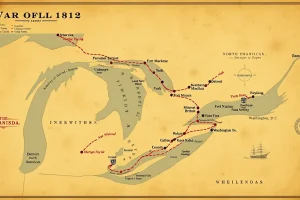
The War of 1812 arose from long-standing tensions between the United States and Great Britain. Britain’s naval blockade and Orders in Council restricted American trade with France, while the Royal Navy’s impressment of American sailors violated U.S. sovereignty. Additionally, British support for Indigenous peoples resisting American expansion fueled frontier conflicts. The United States declared war on June 18, 1812, aiming to secure “Free Trade and Sailors’ Rights” and to end British influence over Native tribes. The war unfolded against the broader backdrop of the Napoleonic Wars, with Britain preoccupied in Europe. Key battlegrounds ranged from the Great Lakes and the Niagara frontier to the Gulf Coast and the Atlantic seaboard.
What Happened
The war saw early American invasions of Canada, which were repulsed by British and Canadian forces aided by Indigenous allies. The U.S. Navy scored notable victories, particularly the USS Constitution’s successes, while American forces under Oliver Hazard Perry won control of Lake Erie in 1813. After Napoleon’s defeat in 1814, Britain shifted troops to America, launching offensives that burned Washington, D.C., but failed at Baltimore and Plattsburgh. Meanwhile, peace negotiations began in Ghent in August 1814. The Treaty of Ghent, signed on December 24, 1814, stipulated a return to the status quo antebellum, with boundaries restored and territories returned. News of the treaty reached America after the Battle of New Orleans (January 8, 1815), an American victory that boosted national pride. The treaty was ratified by the U.S. Congress, and peace formally began on February 17, 1815.
Why It Matters
The war’s immediate results were largely a draw, yet its long-term consequences were profound. The Federalist Party, which opposed the conflict and flirted with secession at the Hartford Convention, collapsed, ushering in the “Era of Good Feelings” and the dominance of the Democratic-Republicans. The conflict also marked a turning point for Indigenous peoples, as Britain withdrew direct military support, leaving them more vulnerable to American expansion. For Canadians, the war became a touchstone of national identity, particularly after successful defenses against American invasions. For the United States, it fostered a new sense of nationhood, symbolized by the national anthem and a generation of military heroes, including Andrew Jackson. Diplomatically, the war improved Anglo-American relations, leading to peaceful coexistence and eventual alliance in the twentieth century.
Definition
To ask “What did the War of 1812 accomplish?” is to examine the tangible and intangible results of the conflict beyond the territorial status quo. It involves analyzing political, military, cultural, diplomatic, and social outcomes for the United States, Great Britain, Canada, and Indigenous nations.
Background
The war originated from American grievances over maritime restrictions and impressment, as well as British support for Indigenous resistance in the Ohio Valley. The United States was young, militarily unprepared, and divided. Britain, engaged in a global struggle against Napoleonic France, viewed America as a disruptive neutral power. The Indigenous peoples of the Northwest sought to defend their homelands against American encroachment, forming alliances with Britain.
How It Worked
The war unfolded across multiple theaters, characterized by a mix of American defeats and unexpected victories. The Treaty of Ghent, negotiated by American commissioners including John Quincy Adams and Henry Clay, ended hostilities without addressing the original causes. Both sides returned to pre-war boundaries and abandoned territorial ambitions. The agreement’s silence on impressment and neutral rights reflected the fading of those issues with the end of the Napoleonic Wars. The war’s conclusion demonstrated the limits of military force in achieving stated objectives, but it also created new political realities.
Competing Viewpoints
Historians disagree on the war’s significance. Traditional American narratives once depicted it as a “second war of independence” that secured national sovereignty and respect. British historians have often dismissed it as a side-show to the Napoleonic Wars, with minimal impact. Canadian historians emphasize the war’s role in fostering Canadian identity and preventing absorption into the United States. Indigenous perspectives highlight the loss of British support and the acceleration of land dispossession. These divergent interpretations reflect the war’s complex legacy.
Role in the War of 1812
Direct accomplishments of the war include: the preservation of American territorial integrity; the decline of the Federalist Party; the emergence of new military and political leadership; the confirmation of the Great Lakes as a U.S. strategic space; and the effective end of British hopes to establish an Indigenous buffer state. The war also demonstrated the resilience of British North America and set the stage for improved Anglo-American relations after 1815.
Consequences and Historical Interpretation
Long-term consequences included the United States’ westward expansion, unhindered by British-backed Indigenous resistance, and the adoption of expansionist policies like the Monroe Doctrine. The war helped shape American cultural identity, with symbols like “The Star-Spangled Banner” and the figure of Uncle Sam. For Canada, the war became a founding narrative, reinforcing colonial loyalty and later national unity. In scholarship, the war is now viewed as a transformative event that, despite its inconclusive outcome, had profound effects on all parties. The “forgotten war” label is increasingly challenged as historians recognize its enduring impact.
Primary Sources
Key primary sources include the Treaty of Ghent (1814), U.S. presidential messages and congressional debates, naval and military reports, diaries, and letters from participants. The treaty text is available at the U.S. National Archives. British official dispatches from North America are held in the UK National Archives. Indigenous voices are preserved in council records and treaty negotiations, though often filtered through colonial records. These sources illuminate the expectations and experiences of the belligerents, though each carries biases reflecting its author’s perspective.
Further Reading
- Donald R. Hickey, The War of 1812: A Forgotten Conflict (1989).
- Alan Taylor, The Civil War of 1812: American Citizens, British Subjects, Irish Rebels, & Indian Allies (2010).
- J.C.A. Stagg, The War of 1812: Conflict for a Continent (2012).
- American Battlefield Trust, “Outcomes of the War of 1812” (article).
- Britannica, “War of 1812 – Final stages of the war and the aftermath” (online).
References
- American Battlefield Trust, “Outcomes of the War of 1812,” https://www.battlefields.org/learn/articles/outcomes-war-1812.
- Britannica, “War of 1812 – Final stages of the war and the aftermath,” https://www.britannica.com/event/War-of-1812/Final-stages-of-the-war-and-the-aftermath.
- HISTORY, “War of 1812 – Winner, Summary & Causes,” https://www.history.com/articles/war-of-1812.
FAQ
Did the War of 1812 resolve the issue of impressment?
No, the Treaty of Ghent did not address impressment. With the end of the Napoleonic Wars, the practice was no longer needed, so it effectively ended without formal agreement.
How did the War of 1812 affect Indigenous peoples?
The war removed Britain as a direct ally for Indigenous nations, leaving them more vulnerable to American expansion and land seizures, accelerating their dispossession.
Why is the War of 1812 sometimes called a second war of independence?
Americans viewed the war as vindicating U.S. sovereignty against British interference, securing recognition as an independent nation and fostering national pride.


Leave a Reply