Short Answer
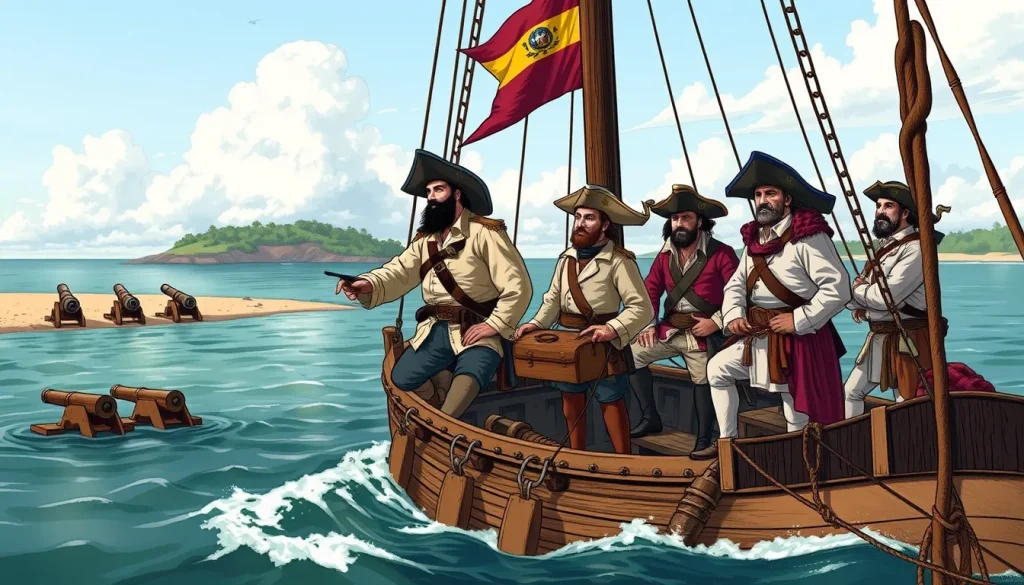
The Baratarian pirates of the War of 1812 were a coalition of privateers and smugglers based in Barataria Bay, Louisiana, led principally by Jean Lafitte and his brother Pierre. Operating on the margins of American law, they became unexpectedly central to the defense of New Orleans in late 1814, when they supplied experienced cannoneers, ammunition, and local knowledge to Andrew Jackson’s army. Their story illuminates the fluid loyalties and local priorities that shaped the Gulf Coast theater of the war.
Historical Context
By 1812, the United States was embroiled in a conflict with Great Britain over maritime trade restrictions and impressment. The war had expanded to the Gulf Coast by 1814, as British planners sought to capture New Orleans and control the Mississippi River, hoping to split the United States. New Orleans was a vital port but poorly defended, with only about 1,100 regular soldiers and untrained militia. In this vulnerable atmosphere, the Baratarians emerged as a potential asset or threat. They had built a profitable smuggling and privateering enterprise on Grand Terre Island, about forty miles south of New Orleans, taking advantage of the shallow bays and swamps to evade customs officials. Their operations were tolerated by many local merchants and planters, who relied on their goods, especially slaves, despite federal embargoes and the 1807 slave-trade prohibition.
What Happened
In September 1814, British officers from the royal navy approached the Baratarian base with an offer. Captain Nicholas Lockyer of HMS Sophie and Captain McWilliams of the Royal Marines met Jean Lafitte at his headquarters on Grand Terre. They offered him land in British North America, $30,000, and a captain’s commission if he would assist the British campaign against New Orleans. Lafitte asked for time to consider and immediately wrote to Louisiana officials, offering to help the United States in exchange for a pardon. Governor William C. C. Claiborne initially declined, but the letter, accompanied by British documents, reached the American authorities. Meanwhile, U.S. forces under Commodore Daniel T. Patterson and Colonel George T. Ross launched a preemptive strike against Barataria. Between September 16 and 20, 1814, they destroyed the Baratarian base and captured several vessels. The pirates, under Jean Lafitte’s orders, avoided engagement with the Americans and fled into the swamps. This restraint, combined with Lafitte’s warning, persuaded American commanders to consider the Baratarians as potential allies. Andrew Jackson, who had called them a “hellish banditti,” eventually accepted Lafitte’s help, recognizing the value of their artillery, gunners, and knowledge of the terrain. In the ensuing New Orleans campaign, Baratarian artillerymen, including Dominique You, played a critical role in the American victory on January 8, 1815. In February 1815, President James Madison issued pardons to the Baratarians for their service.
Why It Matters
The Baratarian pirates’ contribution to the Battle of New Orleans had immediate military consequences: their experienced cannoneers helped repel the British assault, preserving the city and its strategic port. The episode also demonstrated the pragmatic alliances that could emerge in wartime, even with men previously considered outlaws. The pardons granted in 1815 allowed many Baratarians to reintegrate into Louisiana society, and their descendants remain in the region. Historians have debated whether Lafitte acted out of patriotism, pragmatism, or self-preservation, but most agree that his help was decisive. The story also highlights the complexity of the Gulf Coast during the War of 1812, where local interests and loyalties often trumped national allegiances.
Definition
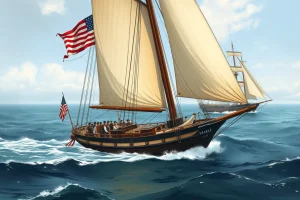
The Baratarian pirates were a group of privateers and smugglers operating out of Barataria Bay, Louisiana, in the early nineteenth century. Although often called pirates, many held letters of marque from the Republic of Colombia or other nations, allowing them to attack enemy ships without being classified as common pirates. In practice, they engaged in smuggling, prize-taking, and slave trading, and their operations were centered on Grand Terre Island.
Background
The origins of the Baratarian community trace to the Napoleonic Wars, when privateers from the Caribbean, especially French and Spanish territories, sought new bases after the British seized key islands. Barataria offered a sheltered anchorage, deep water in Barataria Pass, and access to New Orleans via interconnected bayous. By 1810, Jean and Pierre Lafitte had become its leaders, building warehouses and conducting auctions outside the city. The United States embargo on foreign trade and later the British blockade increased local demand for the Baratarians’ goods. Over time, the Lafittes established a network of informants and safe havens that allowed them to evade capture.
How It Worked
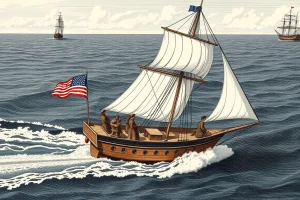
The Baratarians operated as a quasi-legal enterprise. Their privateers flew flags of various nations, such as Colombia, and used letters of marque to legitimize attacks on Spanish and other enemy shipping. They sold captured cargoes, including enslaved people, to New Orleans merchants through auctions held at Barataria and in the city. Smuggling was conducted via shallow-draft boats that navigated the bayous and lakes to the Mississippi River, avoiding customs officials. Lafitte also maintained a public front as a blacksmith in New Orleans, where he gathered intelligence and distributed goods.
Competing Viewpoints
Historians differ on the nature of Lafitte and his men. Some, following contemporary American official accounts, emphasize their piratical lawlessness and the threat they posed to maritime commerce. Others, noting the widespread local support and their later patriotic service, portray them as pragmatic opportunists or quasi-patriots. The terms “privateers” and “pirates” are themselves contested; foreign commissions could be legitimate, but the Baratarians’ conduct often blurred the line. The British approach and Lafitte’s response have been interpreted both as a cynical power play and as a genuine turning point in his loyalty.
Role in the War of 1812
In the War of 1812, the Baratarians first appeared as a potential British asset, then as an American ally. Their most significant contribution came in the Battle of New Orleans, where about 500–1,000 Baratarians, including Dominique You, served as artillerymen and engineers. Their skill with cannon proved decisive in repelling the British assault on January 8, 1815. The pardon issued by President Madison in February 1815 formally acknowledged their service and allowed them to reintegrate into American society.
Consequences and Historical Interpretation
The alliance with the Baratarians was controversial but militarily necessary. It set a precedent for leniency toward former enemies in the context of wartime emergency. The pardons also enabled many Baratarians to settle in New Orleans, where some became respected citizens. Historians have since debated whether Lafitte’s actions were primarily self-interested or patriotic, but the practical result was a critical American victory. The episode remains a notable example of the messy compromises of the War of 1812, showing how local actors could shape the outcome of a larger national conflict.
Primary Sources
Contemporary documents include letters from Jean Lafitte to Governor Claiborne and the Louisiana legislature in September 1814, which conveyed the British offer and requested a pardon. These letters are preserved in the Louisiana State Archive and the National Archives. Commodore Daniel Patterson’s official after-action report of the attack on Barataria, dated September 20, 1814, describes the capture of vessels and the dispersal of the group. Andrew Jackson’s correspondence with Claiborne and later with the War Department discusses the recruitment of the Baratarians. While these sources offer firsthand accounts, they were written with strategic and political motives and should be read accordingly.
Further Reading
- American Battlefield Trust, “Barataria Island Battle Facts and Summary” (accessed online).
- Winston Groom, “Saving New Orleans,” Smithsonian Magazine, August 2006.
- National Park Service, “Jean Lafitte” (people page) and “Chalmette National Historical Park Handbook” (2002).
- William C. Davis, The Pirates Laffite: The Treacherous World of the Corsairs of the Gulf (Harcourt, 2005).
- A. Lacarrière Latour, Historical Memoir of the War in West Florida and Louisiana in 1814–1815 (1816).
References
- American Battlefield Trust, “Barataria Island Battle Facts and Summary,” https://www.battlefields.org/learn/war-1812/battles/barataria-island.
- Winston Groom, “Saving New Orleans,” Smithsonian Magazine, August 2006, https://www.smithsonianmag.com/history/saving-new-orleans-125976623/.
- National Park Service, “Jean Lafitte,” https://www.nps.gov/people/jeanlafitte.htm.
- National Park Service, “Chalmette National Historical Park Handbook,” 2002, https://npshistory.com/handbooks/historical/29/hh29c.htm.
- Truman Wilfred Mauck, “The Lafittes and Their Activities on the Lower Mississippi River and Gulf Coast,” M.A. thesis, Oklahoma A&M College, 1937, https://shareok.org/handle/11244/300198.
FAQ
Why did the British approach the Baratarian pirates in 1814?
The British sought local allies in their campaign to capture New Orleans, offering Jean Lafitte land, money, and a commission in exchange for his cooperation, hoping to use his knowledge of the waterways and his men as auxiliary forces.
How did Jean Lafitte respond to the British offer?
Lafitte stalled and immediately informed American authorities, offering to help the United States in return for a pardon for his men. His letter to Governor Claiborne included documents proving the British offer.
What role did the Baratarians play in the Battle of New Orleans?
Baratarian gunners, many of them experienced artillerymen, operated key batteries during the battle. Their accurate and sustained fire helped repulse the British main assault on January 8, 1815, contributing significantly to the American victory.

Leave a Reply