Short Answer
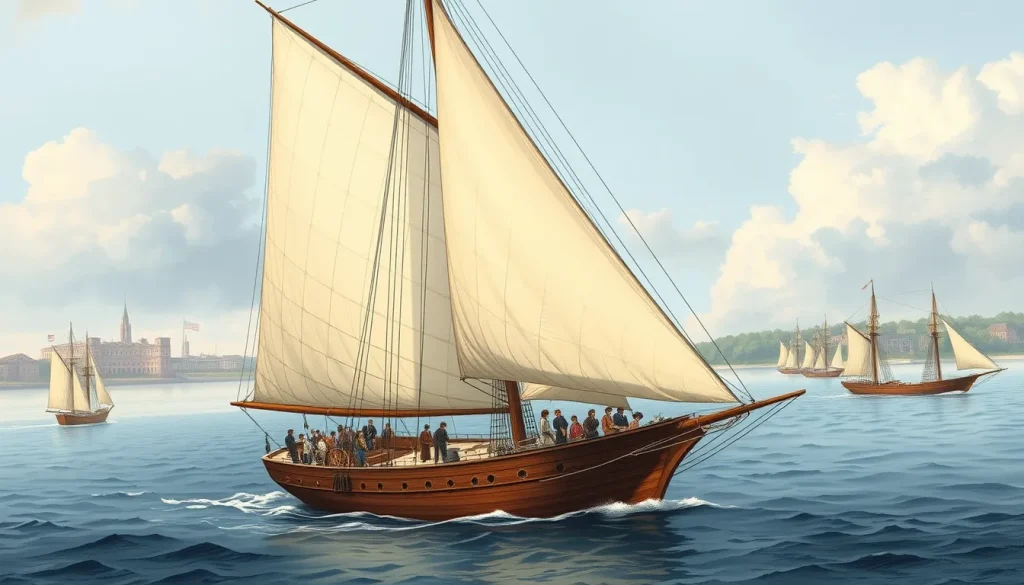
During the War of 1812, the Baltimore clipper—a fast and maneuverable topsail schooner developed in Chesapeake Bay shipyards—became the signature vessel of American privateering. Operating from Baltimore, Maryland, these ships used speed and agility to evade the Royal Navy and capture British merchant vessels, inflicting severe economic damage on British trade. Their successes shaped the naval conflict and made Baltimore a target of British retaliation.
Historical Context
The United States declared war on Great Britain on June 18, 1812, after years of trade restrictions, impressment of American sailors, and perceived violations of neutral rights. The U.S. Navy was tiny, with only sixteen frigates, while the Royal Navy boasted hundreds of warships worldwide. To supplement this force, Congress authorized privateering—licensing privately owned armed vessels to attack enemy commerce. Baltimore, then the third-largest American city with over 47,000 residents, was a natural center for this enterprise. Its deep harbor, thriving shipbuilding industry, and large merchant fleet provided the infrastructure, while local shipwrights had already perfected a vessel uniquely suited for privateering: the Baltimore clipper.
What Happened
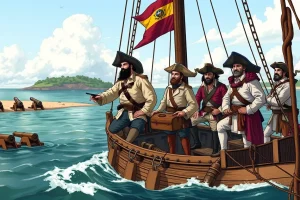
Baltimore privateers rapidly took to sea after war was declared. Early in the conflict, Commodore Joshua Barney commanded the clipper Rossie and captured eighteen British prizes valued at $1.5 million. Thomas Boyle, another Baltimore captain, gained fame first with the Comet, which took twenty ships in five months, and later with the Chasseur. In 1814, Boyle sailed the Chasseur to British waters, posted a notice at Lloyd’s in London proclaiming a blockade of the entire United Kingdom, and subsequently captured dozens of merchant vessels off the British coast. In February 1815, the Chasseur defeated the Royal Navy schooner St. Lawrence near Cuba. Overall, Baltimore privateers received 122 letters of marque—more than any other American port—and captured or destroyed an estimated 500 British vessels, valued at $16 million, roughly one-third of all prize money earned during the war. The British responded by imposing a stricter blockade on the Chesapeake and convoying merchant ships, yet clippers often slipped through due to their speed and shallow draft.
Why It Matters
The successes of Baltimore clippers boosted American morale and inflicted significant economic harm on British trade, but they also provoked British retaliation. The Royal Navy’s Chesapeake campaign in 1813–1814 aimed partly at suppressing the privateers, culminating in the attack on Baltimore in September 1814. Although the British burned Washington, they failed to take Baltimore, thanks to determined defenses and the fortifications around the city. The privateers demonstrated the vulnerability of British commerce and influenced the war’s course, though historians debate their strategic significance. In the long term, the Baltimore clipper became an enduring symbol of American maritime ingenuity and the city’s heritage, commemorated by replicas such as the Pride of Baltimore II.
Definition
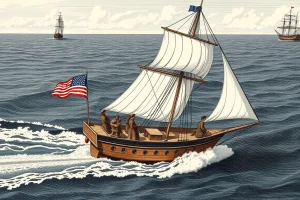
A Baltimore clipper is a type of two-masted topsail schooner, characterized by a sharply raked stem, V-shaped hull, large sail area, and shallow draft. Developed in the Chesapeake Bay in the late eighteenth century, these vessels were renowned for speed, agility, and the ability to sail close to the wind, making them ideal for both legitimate commerce and privateering.
Background
The Baltimore clipper evolved from Virginia pilot boat designs, adapted to the shallow, often light-wind conditions of the Chesapeake. Baltimore’s shipyards, particularly in Fells Point, produced these vessels for trade, smuggling, and even the slave trade. Their speed allowed them to outrun customs officials and British patrols during the Napoleonic Wars, when Britain seized American ships trading with France. When war erupted in 1812, merchants and captains readily converted these clippers into privateers by mounting cannons and acquiring letters of marque.
How It Worked
Privateers operated under legal commissions called letters of marque, which authorized them to attack enemy ships and seize their cargo. Baltimore clippers carried a small crew and a few carriage guns, using speed to close on merchantmen and overwhelm them with intimidation or short broadsides. To escape Royal Navy warships, they relied on superior speed, windward ability, and the ability to navigate shallow waters where larger frigates could not follow. They often sailed in packs, and some taunted pursuers with slogans like “catch me if you can.”
Competing Viewpoints
Historians differ on the overall effectiveness of privateering compared to regular naval operations. Some argue that privateers like the Baltimore clippers were crucial in waging economic warfare, forcing the British to divert warships to convoy duty and raising insurance premiums to crippling levels. Others contend that privateering was less efficient than a conventional fleet, since privateers prioritized profit over strategic goals. Additionally, the treatment of Black privateers has been debated. Sources suggest that African Americans comprised up to 20 percent of many privateer crews and served as gunners and sailors, but they faced racism and segregation even in prisoner-of-war camps, as evidenced by white sailors requesting separate housing at Dartmoor Prison.
Role in the War of 1812
Baltimore clippers were the backbone of American privateering during the war. They operated in the West Indies, the Gulf of St. Lawrence, and off the British Isles, preying on convoys and individual merchant ships. The Chasseur‘s mock blockade of Britain in 1814 epitomized their bravado and effectiveness, as it captured 18 prizes in three months. Combined with other privateers, they captured about 500 British vessels, worth $16 million, and forced insurance rates up by ten to twenty percent. The British dubbed Baltimore a “nest of pirates” and specifically targeted the city, contributing to the 1814 campaign that culminated in the Battle of Baltimore.
Consequences and Historical Interpretation
After the war, the Baltimore clipper declined as economic conditions changed and larger, cargo-oriented vessels became more profitable. However, their wartime deeds left a lasting legacy. They are credited with helping to sustain American morale and economic pressure that influenced the Treaty of Ghent, although their actual strategic impact is debated. Later historians have viewed them as embodying the nation’s maritime enterprise and spirit of resistance. The replica Pride of Baltimore II serves as a living memorial, while modern scholarship continues to assess the privateers’ contributions and the experiences of the diverse crews who sailed them.
Primary Sources
Key contemporary sources include the Niles’ Weekly Register, a Baltimore newspaper that documented privateer activities, and Thomas Boyle’s proclamation of blockade, which was republished in American and British papers. Letters of marque issued to vessels like the Comet and Chasseur are preserved in the National Archives. Records from Dartmoor Prison provide accounts of captured privateers, including Black sailors. The National Park Service and the Pride of Baltimore, Inc. offer accessible summaries based on these primary materials.
Further Reading
- Ralph E. Eshelman and Burton K. Kummerow, In Full Glory Reflected: Discovering the War of 1812 in the Chesapeake
- Donald G. Shomette, Privateers of the Revolution and the War of 1812
- National Park Service, “Privateers Make Their Mark” (Star-Spangled Banner National Historic Trail)
- Pride of Baltimore, Inc., “Baltimore Clippers” educational page
References
- “Privateers Make Their Mark,” National Park Service, https://www.nps.gov/stsp/learn/historyculture/privateers-make-their-mark.htm
- Julia Deros, “Baltimore’s Privateers and the War of 1812,” History Trails 44, no. 4 (2014), http://www.hsobc.org/wp-content/uploads/2017/06/htv044n4.pdf
- A. Powell Harrison, “When the British Just Couldn’t Win,” Naval History 11, no. 5 (1997), https://www.usni.org/magazines/naval-history-magazine/1997/october/when-british-just-couldnt-win
- “Baltimore Clippers,” Pride of Baltimore, Inc., https://pride2.org/education/baltimore-clippers/
- “10 Facts: Baltimore in the War of 1812,” American Battlefield Trust, https://www.battlefields.org/learn/articles/10-facts-baltimore-war-1812
FAQ
What was a Baltimore clipper?
A Baltimore clipper was a fast, two-masted topsail schooner with a V-shaped hull, raked masts, and a large sail area, designed for speed and shallow-water navigation in the Chesapeake Bay.
How did Baltimore clippers contribute to the War of 1812?
They served as highly effective privateers, capturing or destroying a significant number of British merchant ships, causing millions of dollars in losses, and forcing the Royal Navy to divert resources to protect commerce.
Who were notable commanders of Baltimore clippers?
Joshua Barney commanded the Rossie, capturing 18 prizes, while Thomas Boyle commanded the Comet and later the Chasseur, which proclaimed a mock blockade of Britain and defeated the Royal Navy's St. Lawrence in 1815.

Leave a Reply