Short Answer
Letters of marque and reprisal were government-issued commissions that authorized private ship-owners to attack and capture enemy commerce during wartime. In the War of 1812, the United States, lacking a large navy, relied heavily on these privateer vessels to harass British merchant shipping. Issued under an act of Congress in June 1812, letters of marque transformed civilian ships into legal auxiliary warships, blending private profit with national military strategy.
Historical Context
When the United States declared war on Great Britain in June 1812, the Royal Navy was the world’s most powerful, with over 500 warships, while the U.S. Navy had barely a dozen frigates and smaller vessels. To offset this disparity, the U.S. Congress turned to the ancient practice of privateering. The Constitution (Article I, Section 8, Clause 11) gave Congress the power to grant letters of marque and reprisal. Privateering had been a key part of American naval strategy during the Revolution and continued in the Quasi-War with France and against Tripoli. The declaration of war on June 18, 1812, was quickly followed by legislation authorizing the President to issue letters of marque, with the enabling act passed on June 26, 1812. This act specified the requirements for owners applying for commissions, including vessel description, bond posting, and adherence to prize laws.
What Happened
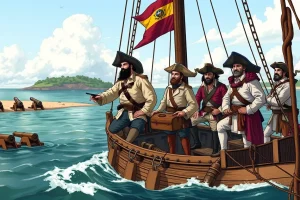
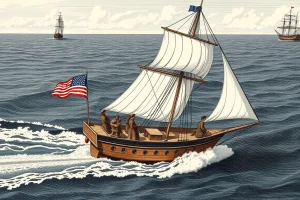
Within days of the act’s passage, American privateers put to sea. Over the war, Congress issued an estimated 1,100 letters of marque. These privateers, ranging from fast Baltimore schooners to larger brigs, captured over 1,200 British merchant vessels, more than three times the number taken by the U.S. Navy. The first letter was granted to Joshua Barney’s Rossie on July 12, 1812; she captured 18 prizes on a three-month cruise. Baltimore alone obtained 122 letters, with shipbuilders like Thomas Kemp producing renowned vessels. Privateers often operated independently, seeking easy targets like merchantmen, and were authorized to carry guns for self-defense as well as offensive action. Prize crews would sail captured ships to American ports where admiralty courts would condemn them, and proceeds were distributed among owners, captain, and crew according to pre-agreed shares. The government took a cut, typically 30-40% as duties and fees. The system proved profitable and helped sustain the war effort, even after the British blockade tightened.
Why It Matters
The privateer fleet had a significant impact on the War of 1812. It disrupted British commerce, raised insurance rates for British merchants, and forced the Royal Navy to divert warships to protect convoys. Privateering also had legal consequences, as prize cases like The Merrimack (1814) shaped American admiralty and international law. However, privateering faced ethical and legal challenges, with accusations of piracy from the British. The practice declined after the War of 1812, and by the mid-19th century, international treaties and the Declaration of Paris (1856) largely ended privateering. Nevertheless, the letters of marque system demonstrated the effectiveness of mobilizing private resources for war and left a legacy in constitutional law regarding war powers.
Definition
A letter of marque and reprisal was a commission from a belligerent government authorizing a private ship (a privateer) to attack and capture enemy vessels and goods. It derived from medieval European practices of self-help against foreign wrongdoers. In the United States, the Constitution granted Congress the power to issue letters of marque, and Congress delegated that authority to the President. A privateer differed from a pirate in that it operated under a valid commission and was subject to prize law. The term “letter of marque” also referred to the ship that carried such a commission, sometimes blurred with “privateer” but often distinct: letter-of-marque traders could combine trade with privateering. In the War of 1812, the two categories were frequently conflated, as many vessels engaged in both activities.
Background
Privateering had a long history before 1812. During the American Revolution, colonial privateers were crucial in preying on British shipping. The U.S. Constitution explicitly granted Congress the power to issue letters of marque, and the first federal privateering law was enacted in 1798 during the Quasi-War with France. Subsequent acts allowed privateering against Tripoli. The War of 1812 saw the most extensive use of privateering in American history. The enabling act of June 26, 1812, “An Act concerning Letters of Marque, Prizes, and Prize Goods” set out detailed procedures. President James Madison also issued instructions to private armed vessels, emphasizing compliance with international law and humane treatment of captives.
How It Worked
The process began with ship-owners applying to the Secretary of State or a designated customs official. They had to provide the vessel’s name, tonnage, armament, number of crew, and the owners’ names and residences. They also had to post a bond to ensure compliance with laws and the letter’s conditions. Once approved, the commission was issued. Privateers were authorized to capture enemy vessels and goods, but they were required to bring captured ships to an admiralty court for adjudication. Prize courts determined if the capture was legitimate; if so, the vessel and cargo were sold, and the proceeds were distributed after court fees and the government’s cut (often 30-40%). The owners and crew shared the remainder according to a signed agreement. The captain was required to keep a journal of activities. Privateers were also subject to naval discipline while on commission. The law specified that officers and crew of privateers could be tried for offenses just as if on a public warship. The instructions from the President further required privateers to respect neutral vessels and treat prisoners well.
Competing Viewpoints
British authorities regarded American privateers as pirates, arguing that the Americans were engaged in an illegal war and that their commissions were invalid. This led to harsh treatment of captured privateersmen, who were often denied prisoner-of-war status. Conversely, American supporters saw privateering as a legitimate and patriotic way to supplement a small navy. Some critics, even within the United States, questioned the morality and effectiveness of privateering, viewing it as organized piracy that could corrupt seafarers. Legal disputes, such as in The Merrimack case, involved complex questions of property ownership during wartime, and the prize courts were often criticized for being generous to privateers at the expense of neutral merchants. Historians have debated the overall economic impact of privateering, with some arguing it was significant and others contending it was overstated.
Role in the War of 1812
Privateering was a central component of America’s naval war. The U.S. had fewer than 20 warships at the war’s start, so privateers provided a substantial force for commerce raiding. From 1812 to 1815, American privateers captured at least 1,200 British vessels, compared to about 250 for the U.S. Navy. They operated from ports like Baltimore, Salem, and New York. Baltimore was particularly notable for its fast schooners, built by designers like Thomas Kemp. The Rossie, commanded by Joshua Barney, was among the first and most celebrated. Her three-month cruise in 1812 took 18 prizes. Other famous privateers included the Comet and Chasseur, also built by Kemp. Privateers often targeted British merchant ships in the Atlantic and Caribbean, and even ventured into British waters. Their success forced the Royal Navy to convoy merchant ships and diverted warships from other tasks. Privateering also provided financial gains for investors and crews, sustaining the war effort when the blockade limited regular trade.
Consequences and Historical Interpretation
The War of 1812 marked the peak of American privateering. After the war, the system declined, partly due to changing international norms. The Declaration of Paris in 1856, which the United States did not sign, prohibited privateering among its signatories. The U.S. used privateers again in the American Civil War, but on a smaller scale. By the late 19th century, the practice had largely died out. Historians have reassessed privateering in the War of 1812, emphasizing both its strategic and economic contributions and its darker aspects, such as the participation of African Americans and the complex motivations of profit and patriotism. The legal legacy persists in U.S. law, as the Congress retains the constitutional authority to grant letters of marque, though it has not been exercised for over a century. The prize system also left an important body of jurisprudence that shaped American admiralty law.
Primary Sources
An Act concerning Letters of Marque, Prizes, and Prize Goods (1812) – This federal statute established the legal framework for privateering in the War of 1812. It outlined owner requirements, bond, and prize procedures. A copy is available at the National Archives and online through the Library of Congress.
President James Madison’s Instructions to Private Armed Vessels – Issued through Secretary of State James Monroe, these instructions supplemented the law, requiring humane treatment of prisoners and respect for neutral rights. They were reprinted in the Supreme Court report of The Thomas Gibbons (1814).
Prize case of The Merrimack (1814) – U.S. Supreme Court case that addressed property rights of cargo seized from a neutral vessel. It illustrates how privateer captures were adjudicated and the legal complexities involved.
George Coggeshall, History of the American Privateers (1861) – A firsthand account by a privateer captain, providing narratives of many cruises.
Further Reading
- Garitee, Jerome R. The Republic’s Private Navy: The American Privateering Business as Practiced by Baltimore during the War of 1812. Middletown, CT: Wesleyan University Press, 1977.
- Maclay, Edgar Stanton. A History of American Privateers. New York: D. Appleton, 1899.
- Cooperstein, Theodore M. “Letters of Marque and Reprisal: The Constitutional Law and Practice of Privateering.” Journal of Maritime Law & Commerce 40, no. 2 (2009).
- Dudley, William S., and Michael J. Crawford, eds. The Naval War of 1812: A Documentary History. 3 vols. Washington: Naval Historical Center, 1985.
- Esperon, Jeremy. “The Merrimack, 12 U.S. 317 (1814): Transatlantic Trade and the Transfer of Property During the War of 1812.” Maryland Law Review (2013).
References
- U.S. Congress, “An Act concerning Letters of Marque, Prizes, and Prize Goods,” 2 Stat. 759 (1812).
- James Madison, “President’s Instructions to Private Armed Vessels,” reprinted in 15 U.S. (2 Wheat.) app. 80–81 (1817).
- The Merrimack, 12 U.S. 317 (1814).
- Cooperstein, Theodore M. “Letters of Marque and Reprisal: The Constitutional Law and Practice of Privateering.” Journal of Maritime Law & Commerce 40, no. 2 (2009).
- American Battlefield Trust, “David and Goliath: Privateers vs. the Mighty British Navy,” June 4, 2024, https://www.battlefields.org/learn/articles/head-tilting-history/david-and-goliath-privateers-vs-mighty-british-navy.
- Constitution Annotated, Congress.gov, “ArtI.S8.C11.3.4 Letters of Marque and Reprisal in United States Practice.”
FAQ
What was the difference between a letter of marque trader and a privateer?
A letter of marque trader was a merchant ship that carried a commission allowing it to take prizes defensively or opportunistically, while a privateer was armed and crewed specifically to hunt enemy commerce. In practice the distinction blurred, as many vessels engaged in both trade and raiding.
How did privateers get paid?
Captured ships and cargo were sold after prize court condemnation. The proceeds, after court costs and government duties (typically 30-40%), were distributed among owners, captain, and crew according to a pre-arranged share agreement.
How many British ships did American privateers capture during the War of 1812?
Estimates range from 1,200 to 1,500. The U.S. Navy captured about 250.

Leave a Reply