
Short Answer
British newspapers during the War of 1812 (1812–1815) provided the British public with their principal means of understanding a distant and secondary conflict against the United States. Initially marked by condescension and confidence in the Royal Navy, press coverage shifted to shock and anxiety after early American naval victories, and later to moral outrage over the burning of Washington. This article examines how British newspapers reported and influenced the war, their political affiliations, and their lasting impact on public opinion and historical memory.
Historical Context
In 1812, Britain was in the midst of the Napoleonic Wars, its primary military and economic struggle against France. The American declaration of war on 18 June 1812 was unwelcome, adding another front to an already exhausting conflict. British newspapers operated in a highly partisan environment; many were closely tied to political factions, with papers such as The Times generally supporting the government and The Morning Chronicle leaning Whig and oppositional. The press relied on official dispatches, letters from naval officers, foreign newspapers, and eyewitness accounts, but editorial interpretation heavily shaped the narrative. Economic concerns were paramount: the United States was a major trading partner, supplying raw materials such as cotton and consuming manufactured goods. The Orders in Council, which restricted neutral trade with France, had damaged American commerce and were a key cause of the war, yet they also hurt British industry. As the war progressed, newspapers reflected the strain on a nation weary of twenty years of conflict, with high taxes and war-weariness fostering opposition.
What Happened
British newspaper coverage of the War of 1812 evolved through several distinct phases. At the outset, many papers dismissed American power. The London Evening Star sneered that Britain was unlikely to be “driven from the proud pre-eminence … by a piece of striped bunting flying at the mastheads of a few fir-built frigates, manned by a handful of bastards and outlaws.” This arrogance was shattered by the loss of HMS Guerrière to the USS Constitution on 19 August 1812. The Times mourned the capture with uncharacteristic alarm: “Never before in the history of the world did an English frigate strike to an American; and though we cannot say that Captain Dacres, under all circumstances, is punishable for this act, yet we do say there are commanders in the English navy who would a thousand times rather have gone down with their colors flying, than have set their fellow sailors so fatal an example.” Further defeats, such as the capture of HMS Macedonian by the USS United States in October 1812, added to the humiliation. By 1814, the war had become more complex. The British burning of Washington in August 1814 provoked a moral backlash in the press; many editors, even those who had supported the war, condemned the destruction of public buildings as excessive and contrary to the norms of warfare. The opposition press, led by The Morning Chronicle, had consistently criticized the conflict on economic and moral grounds, highlighting the loss of trade and the suffering of British families. The eventual Treaty of Ghent in December 1814 was welcomed by most newspapers as relief, though some expressed disappointment that no decisive victory had been won.
Why It Matters
The coverage of British newspapers had immediate effects on public opinion and government policy. The shock of early naval defeats stoked public anxiety and pressure for answers, while the economic arguments of the opposition press contributed to the revocation of the Orders in Council in June 1812, even before the American declaration arrived. The moral outrage over the burning of Washington helped undermine any remaining enthusiasm for the war and strengthened the case for a negotiated peace. Long-term, the British press shaped the historical memory of the conflict. American naval victories were celebrated, while British strategic successes, such as the blockade of the American coast, received less attention. The press also reinforced a sense of British identity, casting the war as a necessary defense of national honor against an ungrateful former colony. Historians have since used these newspaper accounts as primary sources, while acknowledging their biases and the propagandistic role of many editors.
Definition
British newspapers during the War of 1812 were primarily London-based periodicals published daily or weekly, with a readership concentrated among the political and mercantile elite. They served as the main channel for news and opinion, often blurring the line between reporting and editorial commentary. Papers were typically aligned with political factions, and their circulation, while small by modern standards, had disproportionate influence as they were read aloud in coffeehouses and shared among social circles.
Background
By 1812, the British press had evolved into a potent political force. The rise of daily papers like The Times and The Morning Chronicle had established a tradition of independent commentary, though many titles received covert subsidies from political parties. The ongoing war with France had created a patriotic press culture, but also a space for dissent, particularly around economic issues. The American war was an unwelcome addition, and newspapers reflected a divided public: some saw it as a misguided distraction from the struggle against Napoleon, while others welcomed the opportunity to humble a rival with republican pretensions.
How It Worked
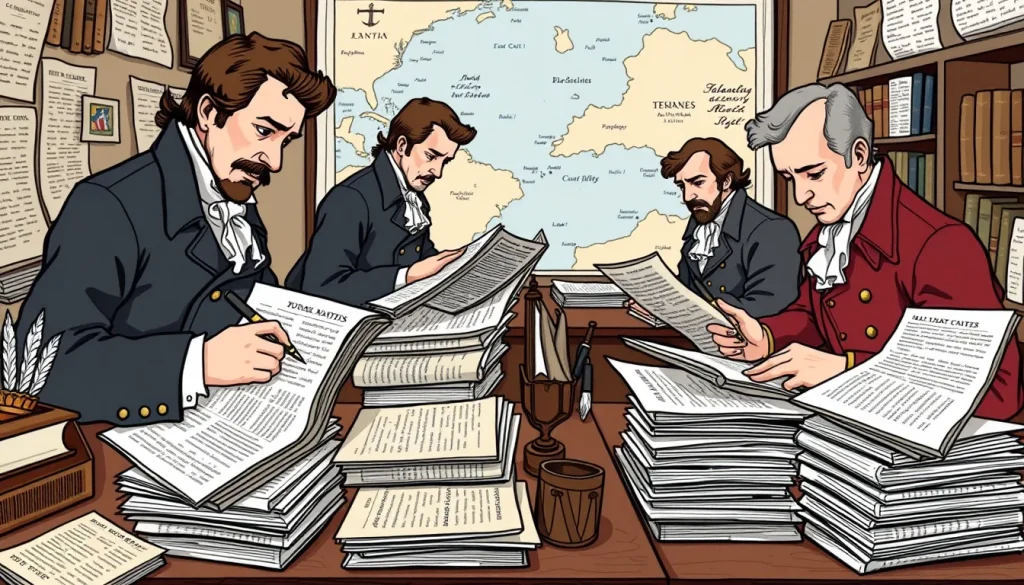
British newspapers obtained information through a network of correspondents, official dispatches from the Admiralty and War Office, and foreign newspapers, particularly from the United States. Editors often reprinted letters from naval officers or soldiers, with heavy redaction. The government could influence content through the granting of news privileges, but outright censorship was rare. Instead, newspapers exercised self-censorship and engaged in spirited debate. The speed of news was slow; a naval battle in the Atlantic might take weeks to reach London. Once received, editors shaped the story to fit their political agenda, leading to widely varying interpretations of the same event across the press.
Competing Viewpoints
The British press was divided between those who supported the war and those who opposed it. Pro-war papers, typically Tory and government-aligned, emphasized national honor, the need to protect British maritime rights, and the belief that the United States was allied with Napoleon. The Times exemplified this tone, at least initially, and its reaction to the loss of the Guerrière revealed the deep emotional investment in the invincibility of the Royal Navy. Opposition papers, especially The Morning Chronicle and provincial papers like the Glasgow Journal, argued that the war was economically ruinous and morally unjustifiable. They highlighted the harm to trade and industry, criticized the Orders in Council, and questioned the wisdom of fighting a former colony that shared British cultural ties. The burning of Washington generated rare cross-party condemnation, with many editors calling it an act of barbarism unbecoming a civilized nation.
Role in the War of 1812
British newspapers played a direct role in the war by shaping public morale and pressuring the government. The shock of early naval defeats led to a crisis of confidence, which in turn motivated the Admiralty to reinforce the North American squadron and to restrict frigate duels. The economic arguments of the opposition press contributed to the government’s decision to repeal the Orders in Council, although the move came too late to prevent war. During the later stages, press criticism of the war’s cost and the burning of Washington helped create a political climate favorable to peace, leading to the Treaty of Ghent. Through their editorials, newspapers also framed the conflict for readers, influencing how British citizens perceived the relative strengths and weaknesses of the two nations.
Consequences and Historical Interpretation
The coverage of British newspapers had lasting consequences for both policy and memory. In the short term, the press helped galvanize opposition to the war and contributed to the movement for peace. In the long term, newspaper stories shaped the narrative of the war in British historiography. British historians often emphasized the Royal Navy’s dominance in blockade and amphibious operations, while downplaying the humiliating frigate defeats. The moral condemnation of the burning of Washington persisted, influencing later diplomatic relations. Modern historians like Troy Bickham and Andrew Lambert use these newspaper accounts to understand public sentiment and the political dynamics of the time, recognizing both the value and the bias of the sources.
Primary Sources
The most relevant contemporary sources are the newspapers themselves, including The Times, The Morning Chronicle, London Evening Star, Glasgow Journal, and provincial papers. Historians also rely on published collections of letters by naval officers, such as Captain Philip Broke’s correspondence, and official government records of parliamentary debates. Notable quotations include The Times’ lament over the loss of the Guerrière and the Morning Chronicle’s anonymous letters (signed “A.B.”) warning of economic harm. These sources provide vivid insights but must be read with caution, as they reflect partisan and propagandistic motives.
Further Reading
- Troy Bickham, The Weight of Vengeance: The United States, the British Empire, and the War of 1812 (Oxford University Press, 2012).
- Andrew Lambert, “A British Perspective on the War of 1812,” WNED/PBS, 2011.
- Henry Adams, History of the United States of America, Vol. VII, Chapter 1 (1891).
- Marco M. Sioli, “War Fever: The American Press and the War of 1812,” conference paper, 2012.
- William C. Brown, “The History of American Journalism,” Chapter 10 (Wikisource).
References
- Henry Adams, History of the United States, Vol. VII, Chapter 1. Available at Bartleby.
- William C. Brown, History of American Journalism, Chapter 10. Available at Wikisource.
- “Opposition to the War of 1812 in Britain,” Wikipedia. Available at Wikipedia.
- Jeremy Black, “A British View of the Naval War of 1812,” Naval History Magazine, August 2008, Vol. 22, No. 4. Available at USNI.
- Marco M. Sioli, “War Fever: The American Press and the War of 1812,” 2012. Available at University of Milan.
FAQ
How did British newspapers react to the American naval victories?
British newspapers were shocked and humiliated. The Times lamented that never before had an English frigate struck to an American, and the London Evening Star had earlier dismissed American ships with contempt. The press demanded explanations and helped fuel public anxiety about the Royal Navy's invincibility.
Did British newspapers support the burning of Washington?
No, the burning of Washington in August 1814 was widely condemned in the British press, even by papers that had supported the war. Many editors considered it a moral wrong to burn public buildings in a capital city, fearing it would damage Britain's reputation in Europe.
How did the press influence the end of the war?
The opposition press, especially The Morning Chronicle, highlighted the economic costs of the war and the suffering it caused. Combined with the moral backlash over Washington, this criticism helped create a climate in which the government was willing to negotiate peace, leading to the Treaty of Ghent.


Leave a Reply