Military Engineering During the War of 1812

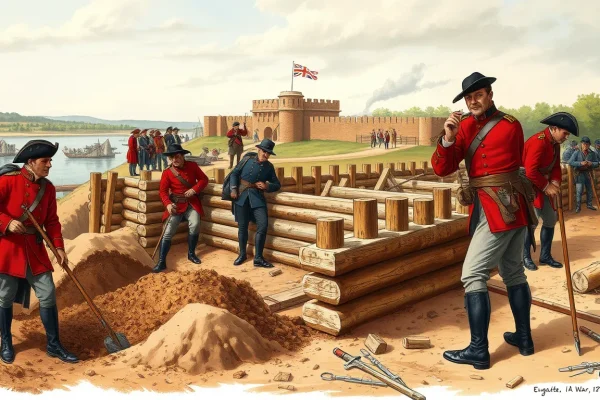
Military engineering in the War of 1812 encompassed the construction of fortifications, field works, roads, and bridges that directly influenced the outcome of battles and campaigns. Both American and British forces relied on engineers to strengthen defenses and enable offensive movements, leaving a lasting legacy on military practice.

Read More →

Who Fought in the War of 1812?

The War of 1812 was fought between the United States and Great Britain, but its combatants extended far beyond those two governments: British regulars, Canadian militias, dozens of Indigenous nations, American regulars and militia, navies, privateers, and African American soldiers on both sides. This article identifies the participants and explains how their differing aims shaped the conflict.

Read More →

The War of 1812 and the Napoleonic Wars

The War of 1812 was fought inside the shadow of the Napoleonic Wars (1803–1815). Britain’s Orders in Council, its blockade of Napoleonic Europe, and the impressment of American seamen grew directly from the European struggle, while Napoleon’s decrees and misleading promises helped push the United States toward war. Napoleon’s defeat in 1814 freed British forces for the campaigns that burned Washington, and the peace at Ghent was shaped by the wider European settlement.

Read More →

The War of 1812: A Complete History

The War of 1812 (1812–1815) pitted the United States against Great Britain and their respective allies across the Atlantic, Great Lakes, Canadian frontier, Chesapeake, and Gulf Coast. Declared on June 18, 1812, over British maritime restrictions and impressment, it ended with the Treaty of Ghent restoring prewar boundaries. Though militarily inconclusive, the war transformed American politics, Canadian identity, and Indigenous North America.

Read More →

Congressional Debates Before the War of 1812

In 1811 and 1812, Congress engaged in a heated and regionally divided debate over whether to declare war on Great Britain for the first time under the Constitution. President James Madison’s war message of June 1, 1812, and the subsequent votes in the House and Senate resulted from months of oratory that centered on impressment, the Orders in Council, frontier conflicts, and the question of territorial expansion into Canada. The debates revealed deep partisan and sectional divisions, leading critics to call the conflict ‘Mr. Madison’s War.’

Read More →

Who Won the War of 1812? Results and Consequences

The War of 1812 ended in the Treaty of Ghent with no transfer of territory and no formal victor, leaving military results close to a draw. Consequences, however, differed sharply: Americans gained nationalism and security, Britain defended Canada, colonists in British North America forged a founding memory, and Indigenous nations lost the most. Historians therefore treat the question of who won as a matter of interpretation.

Read More →

What Caused the War of 1812? Maritime Rights, Impressment, and the Road to June 1812

The War of 1812 grew out of Britain’s maritime struggle with Napoleonic France, which produced trade restrictions and the impressment of American sailors that the United States judged intolerable. Frontier violence involving British-allied Indigenous nations and the ambitions of congressional War Hawks added land and honor to the maritime grievances. Congress declared war on June 18, 1812, by the narrowest margin of any formally declared war in American history.

Read More →