Short Answer
Impressment—the forced recruitment of sailors into the British Royal Navy—was one of the most contentious issues between the United States and Great Britain in the years before the War of 1812. British naval officers regularly boarded American merchant ships and seized men they claimed were British deserters, a practice that Americans saw as a violation of their national sovereignty. The exact number of American citizens impressed remains uncertain, with historical estimates varying widely, but the practice was a major factor in the U.S. declaration of war in June 1812.
Historical Context
During the French Revolutionary and Napoleonic Wars (1793–1815), Britain’s Royal Navy expanded rapidly. According to Encyclopedia.com, manning requirements climbed from a prewar low of 10,000 to 85,000 in 1794 and 140,000 by 1812. To meet these demands, the navy relied heavily on impressment, which had been a legal practice in England since at least 1563 when Queen Elizabeth I authorized it. Impressment provided about 75 percent of Royal Navy crews during these wars, as noted by Encyclopedia.com. The need for experienced sailors was acute, as a sailor required years of training to become proficient in nautical skills. Meanwhile, the United States, as a neutral trading nation, saw its ships and sailors become targets. British officers often could not distinguish between British deserters and American citizens, and many American sailors were seized.
What Happened
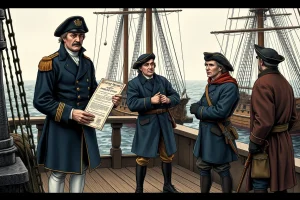
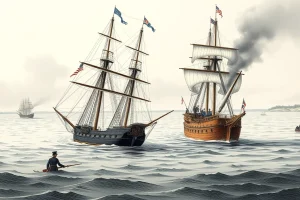
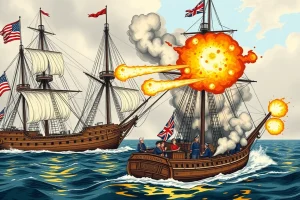
British press gangs operated both on land and at sea. At sea, warships stopped American merchant vessels, mustered the crews, and removed men suspected of being British subjects. The practice angered Americans, as described by the National Park Service, and was one cause of the War of 1812. The U.S. government attempted to protect its citizens through diplomatic protests and by issuing protection certificates, but these were often ignored. A major incident was the Chesapeake–Leopard affair in 1807, when a British ship attacked the USS Chesapeake and impressed four crew members. The National Archives notes that the U.S. government appointed agents to foreign ports to seek the release of impressed Americans, but the practice continued. From 1793 to 1814, the U.S. government maintained records of impressed seamen, but the total number of American citizens impressed is not precisely known.
Why It Matters
Impressment was a central grievance leading to the War of 1812. It symbolized American sovereignty and the rights of neutral nations. The war ended in 1815 without a clear resolution of impressment, but the practice declined after the defeat of Napoleon, and it was no longer a major issue. Historians debate the relative importance of impressment compared to other causes such as trade restrictions and frontier conflicts, but it remains a key factor in understanding the conflict.
Definition
Impressment was the legal practice of forcibly recruiting men into the British Royal Navy. It had been used in England since the 16th century and was considered a legitimate way to man the fleet during wartime. The practice involved press gangs, which could seize eligible men on land or at sea.
Background
The immediate background lay in Britain’s prolonged war with France. As the Royal Navy expanded, it faced a chronic shortage of sailors. Impressment was a traditional solution, and by the 1790s it provided the majority of naval crews. The United States, as a neutral power, asserted the right of its citizens to sail freely, but British officers often ignored American citizenship claims.
How It Worked
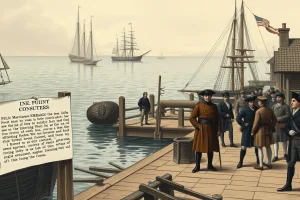
At sea, British warships would stop American merchant vessels and board them. The boarding officer would inspect the crew and impress any men who were suspected of being British subjects, often based on accent or appearance. American sailors could present citizenship papers, but these were often rejected. On land, press gangs operated in British ports, but also sometimes in American ports, though that was less common.
Competing Viewpoints
Americans viewed impressment as an affront to national sovereignty and individual liberty. They argued that American citizens should not be subject to British service. The British, on the other hand, maintained that they had the right to reclaim deserters and that many American crews contained British deserters. British officers often could not distinguish between the two, leading to errors. The British also argued that “once an Englishman, always an Englishman”—that naturalization in the United States did not release a British subject from his obligations.
Role in the War of 1812
Impressment was a leading cause of the war. The U.S. government listed it among the grievances in its declaration of war. The practice directly challenged American maritime rights and the concept of a neutral flag. The failure of diplomacy to resolve impressment contributed to the decision to go to war.
Consequences and Historical Interpretation
The war did not explicitly end impressment; the Treaty of Ghent was silent on the issue. However, with the end of the Napoleonic Wars in 1815, Britain’s need for sailors diminished, and impressment of American citizens effectively ceased. Historians have debated the exact number of impressed Americans. Estimates range from a few thousand to ten thousand, but no reliable count exists. The National Archives holds records of impressed seamen, but these are incomplete. Modern historians generally agree that impressment was a significant cause of the war, though its relative importance is debated.
Primary Sources
Key primary sources include the records of the U.S. government’s efforts to secure the release of impressed seamen, as described by the National Archives. These records include protests made by ship masters, correspondence between American consuls and foreign authorities, and lists of impressed men. The act of May 28, 1796, authorized the appointment of agents to assist impressed Americans. Another source is the correspondence of American diplomats, such as James Madison and Thomas Jefferson, which details diplomatic protests. The British side is documented in Admiralty records, which are less accessible but contain records of impressment. The National Park Service article provides a visual source: a drawing by Howard Pyle showing British officers inspecting American sailors.
FAQ
How many American sailors were impressed by Britain?
No reliable total exists. Estimates range from a few thousand to over ten thousand, but the National Archives records are incomplete and historians have not reached a consensus.
Why did Britain impress American sailors?
Britain needed experienced sailors to crew its expanding navy during the Napoleonic Wars. British officers often claimed the right to reclaim deserters and frequently mistook American citizens for British subjects.
Did impressment end after the War of 1812?
The practice declined after the Napoleonic Wars ended in 1815, and the Treaty of Ghent did not address it. Impressment of American citizens effectively ceased, though it was never formally abolished.

Leave a Reply