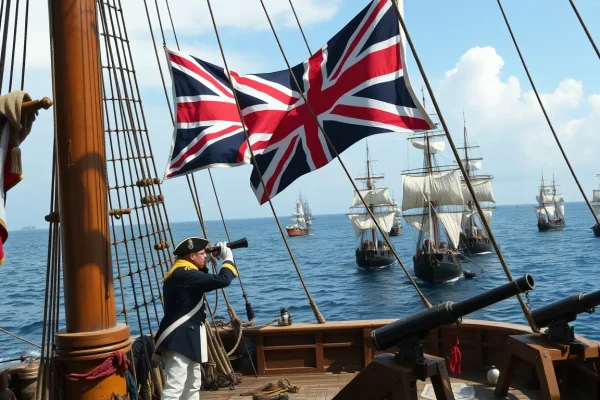
Signals and Communications on Warships in the War of 1812

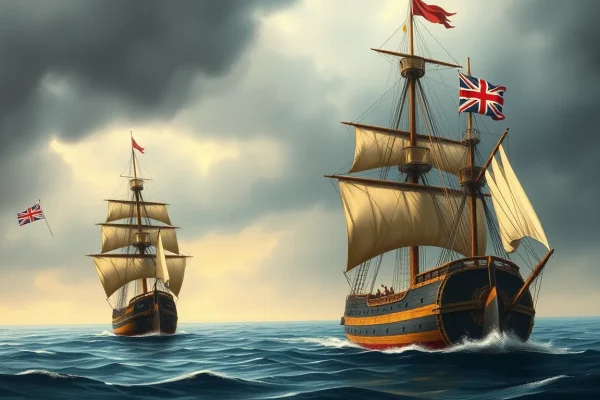
Signals and communications on warships during the War of 1812 relied on visual methods such as flag hoists, signal guns, and semaphore. Effective signaling was crucial for fleet coordination, and both the British and American navies developed distinct systems to manage their forces. This article explores how these systems worked and their impact on key naval engagements.
Read More →

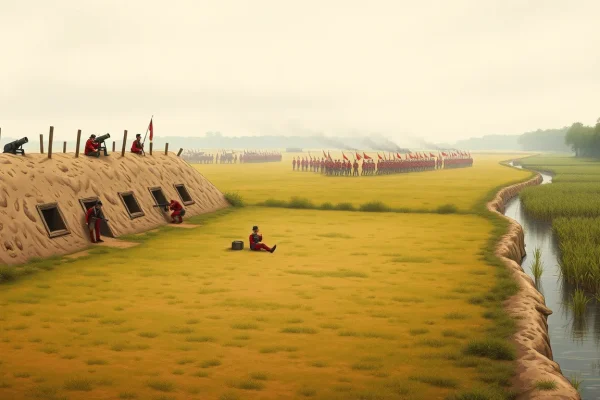
Andrew Jackson’s Defensive Line at New Orleans

Andrew Jackson’s defensive line at New Orleans was a roughly one-mile-long earthwork built along the Rodriguez Canal at Chalmette Plantation in late December 1814. It anchored the American right flank on the Mississippi River and the left on an impassable swamp, and its artillery and infantry firepower repulsed a major British frontal assault on January 8, 1815, securing a decisive American victory in the War of 1812.

Read More →

The 1812 Presidential Election and the War

The 1812 United States presidential election, held during the early months of the War of 1812, saw incumbent James Madison defeat DeWitt Clinton in a contest widely viewed as a referendum on the conflict. Madison’s victory ensured the continuation of the war and the survival of the Democratic-Republican administration.

Read More →

Battle of Frenchman’s Creek

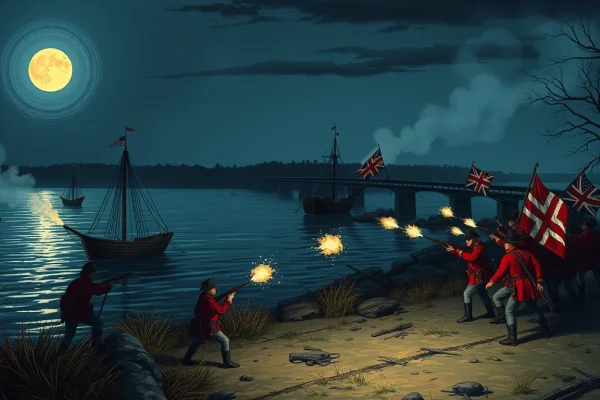
The Battle of Frenchman’s Creek (November 28, 1812) was a night action on the Niagara River in Upper Canada during the War of 1812. It was a failed American attempt to secure a foothold for a larger invasion after the defeat at Queenston Heights. British and Canadian forces under Cecil Bisshopp repulsed the American raiders, ending American hopes for a 1812 offensive on the Niagara frontier.

Read More →

Neutral Shipping During the Napoleonic Wars

Neutral shipping during the Napoleonic Wars involved attempts by non-belligerent nations, especially the United States, to continue maritime trade while Britain and France sought to cut off each other’s commerce. Seizures of American ships and cargoes became a principal cause of the War of 1812.

Read More →

Jacob Brown and the Niagara Campaign

Jacob Brown commanded the American Left Division during the 1814 Niagara Campaign, leading his troops to victories at Fort Erie and Chippawa before the hard-fought, inconclusive Battle of Lundy’s Lane. The campaign demonstrated the growing professionalism of the United States regular army even though it failed to secure lasting territorial gains.

Read More →

American Politics During the War of 1812

American politics during the War of 1812 pitted the dominant Democratic-Republicans, who favored the conflict, against a Federalist minority that opposed it as a ‘war of party.’ This internal struggle shaped military recruitment, funding, and culminated in the Hartford Convention, leaving a lasting impact on the nation’s party system.

Read More →

Lake Ontario Naval Campaign

The Lake Ontario Naval Campaign was a prolonged naval arms race and series of small engagements between American and British forces on Lake Ontario during the War of 1812. It ended in a strategic stalemate, as neither side secured decisive control of the lake.

Read More →