
Short Answer
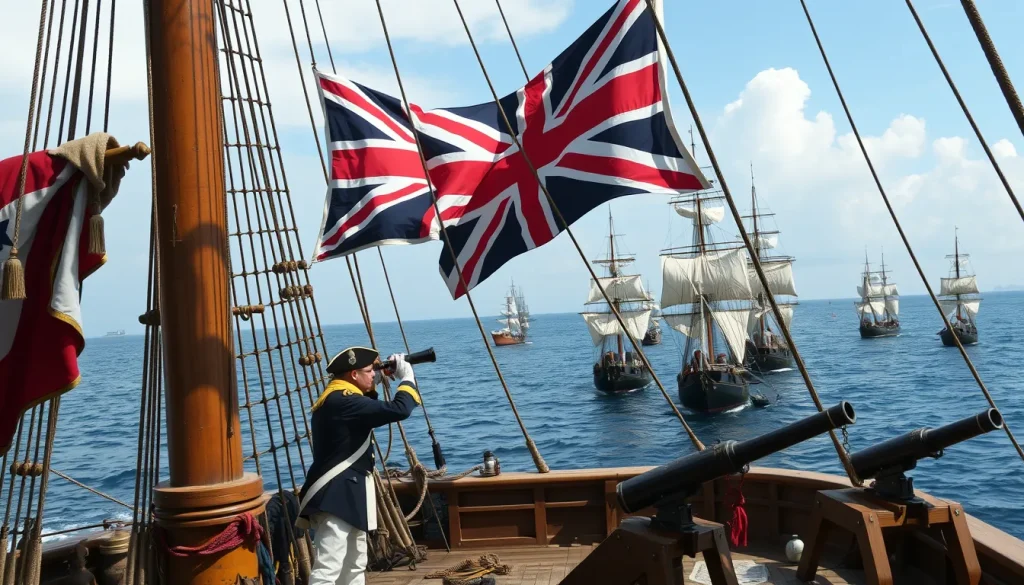
During the War of 1812, warships relied on a mix of visual communications—flag hoists, signal guns, and occasionally semaphore—to transmit orders and coordinate maneuvers. The effective use of these signals often determined the difference between victory and defeat in battles on the Atlantic and the Great Lakes. This article examines the systems and practices of naval signaling in the early nineteenth century and their role within the broader conflict.
Historical Context
The age of sail demanded that fleets operate in close order, often within sight of each other. Commanders needed to issue orders for formations, attack, retreat, or changes in course without electronic aids. By the early nineteenth century, the Royal Navy had developed a sophisticated flag-based signaling system, largely refined by Admiral Richard Kempenfelt in the 1780s. The American Navy, smaller and less standardized, adopted similar principles but often adapted them to local needs. The War of 1812 featured a range of naval operations—fleet actions on the Great Lakes, frigate duels in the Atlantic, privateering, and blockades—each requiring reliable communication between ships and with shore authorities.
What Happened
Signals were used extensively throughout the war. At the Battle of Lake Erie (September 10, 1813), Commodore Oliver Hazard Perry famously flew a blue battle flag emblazoned with the words “Don’t give up the ship,” but he also communicated with his squadron via flag hoists, including the signal to engage. In the Atlantic, British frigates used the Admiralty signal book to execute complex maneuvers, as seen in engagements like the capture of the USS Chesapeake by HMS Shannon (June 1, 1813). On the Great Lakes, the logistics of moving ships and supplying armies also required constant communication between naval forces and army detachments. Signal guns were used to announce sightings or convey simple orders, while signal lanterns could be used at night. However, the effectiveness of these measures depended on clear visibility and the skill of signal officers.
Why It Matters
Efficient communication allowed commanders to concentrate their forces, execute coordinated attacks, and avoid collisions. Failures in signaling could lead to missed opportunities or confusion, as occurred during some operations on Lake Ontario. The war highlighted the need for standardized signal books and improved training, leading to post-war refinements in both the British and American navies. Historians view naval signaling as a crucial, often underappreciated, element of maritime warfare in the Age of Sail.
Definition
Signals and communications on warships in the War of 1812 encompassed all methods used to transmit information between vessels and from ship to shore. These included visual signals such as flag hoists, semaphore, and flashing lights, as well as acoustic signals like gunfire and horns. The primary purpose was to convey orders, tactical instructions, and intelligence over distances where line-of-sight was possible.
Background
Early naval signaling was ad hoc, using simple flags and pennants. The eighteenth century saw the development of systematic signal codes, notably in the Royal Navy, where Admiral Kempenfelt introduced a numerical flag system that allowed for a wide range of messages. Meanwhile, the French and American navies developed their own methods. By the War of 1812, most major naval powers had published signal books that assigned numbers to signals, which could be hoisted as flags.
How It Worked
Flag signaling involved hoisting combinations of colored flags and pennants from a ship’s mast. Each ship carried a set of signal flags representing letters, numerals, or specific meanings. The signal book contained a table of signals, each with a number and a corresponding message, such as “engage the enemy” or “form line of battle.” The signal officer would order the appropriate flags to be raised. The receiving ship would observe the flags, consult its own signal book, and interpret the message. Repeater flags allowed for sending messages longer than the initial set. At night, signal lanterns could be mounted in patterns. Signal guns provided a simple means to attract attention or convey prearranged commands.
Competing Viewpoints
The British placed great emphasis on centralized signaling and had detailed procedures, which gave their admirals flexibility in tactics. The Americans, with fewer ships, often used simpler systems and sometimes relied on individual initiative. Some historians argue that American improvisation was effective in the Great Lakes, while others contend that British standardization contributed to their successes on the Atlantic. Another viewpoint is that signal systems were only as good as the training of the crews, and that both sides faced difficulties in transmitting complex instructions in the chaos of battle.
Role in the War of 1812
Signal flags and guns were integral to the major naval engagements. At the Battle of Lake Erie, Perry’s flagship Lawrence used flag hoists to order the squadron into action. On Lake Ontario, both American and British forces used signals to coordinate maneuvers. In the Atlantic, the British blockade and frigate actions relied on effective communication to exploit superior seamanship. Additionally, communication between naval forces and army units, such as during the attack on Washington or the defense of Baltimore, demonstrated the need for inter-service signaling.
Consequences and Historical Interpretation
The war revealed both strengths and weaknesses in naval signaling. The British system proved robust but required extensive training. The American approach was more adaptable but sometimes led to misunderstandings. Post-war, the U.S. Navy standardized its signal book, and the Royal Navy continued to refine its own. Historians often analyze specific battles to assess the impact of signaling, such as whether Perry’s actions were due to effective signals or individual bravery. Overall, signaling is seen as a critical component of naval command and control.
Primary Sources
Primary sources include the British Admiralty Signal Book (many editions), which was used by Royal Navy ships during the war. The U.S. Navy had its own signal book, and examples survive in archives such as the National Archives and Records Administration. Official dispatches, such as Perry’s report after Lake Erie, often mention signals. Logbooks and journals provide evidence of daily communication practices. One limitation is that these sources are often technical and require interpretation.
Further Reading
- Theodore Roosevelt, The Naval War of 1812 (1882).
- William S. Dudley, ed., The Naval War of 1812: A Documentary History (Naval Historical Center, 1985).
- Julian S. Corbett, Fighting Instructions, 1530–1816 (Navy Records Society, 1905).
- U.S. Navy, Signalman 1 and C Rate Training Manual (NAVEDTRA 10136-C, 1974).
- U.S. Navy, Introduction to Visual Communication (NAVEDTRA 14243).
References
- U.S. Navy, Naval Communications (NAVPERS 10898, 1961). Available: navy-radio.com/manuals/comm-10898.pdf
- U.S. Navy, Introduction to Visual Communication (NAVEDTRA 14243). Available: globalsecurity.org/military/library/policy/navy/nrtc/14243_ch1.pdf
- U.S. Navy, Signalman 1 and C Rate Training Manual (NAVEDTRA 10136-C, 1974). Available: files.eric.ed.gov/fulltext/ED106512.pdf
- Theodore Roosevelt, The Naval War of 1812, 1882.
- William James, The Naval History of Great Britain, 1837.
FAQ
How did warships communicate during the War of 1812?
Warships used visual signals such as flag hoists, signal guns, and signal lanterns. Flag hoists were the most common method, with each combination of flags representing a coded message from the signal book.
What was the role of signal books?
Signal books contained lists of flags or numbers along with their meanings. Both British and American navies used them to standardize messages and ensure that ships could decode signals quickly and accurately.
Why were signals important in the War of 1812?
Signals allowed commanders to coordinate fleet maneuvers, issue tactical orders, and convey intelligence. Effective communication could mean the difference between victory and defeat, as seen at Lake Erie and in Atlantic frigate engagements.


Leave a Reply