
Short Answer
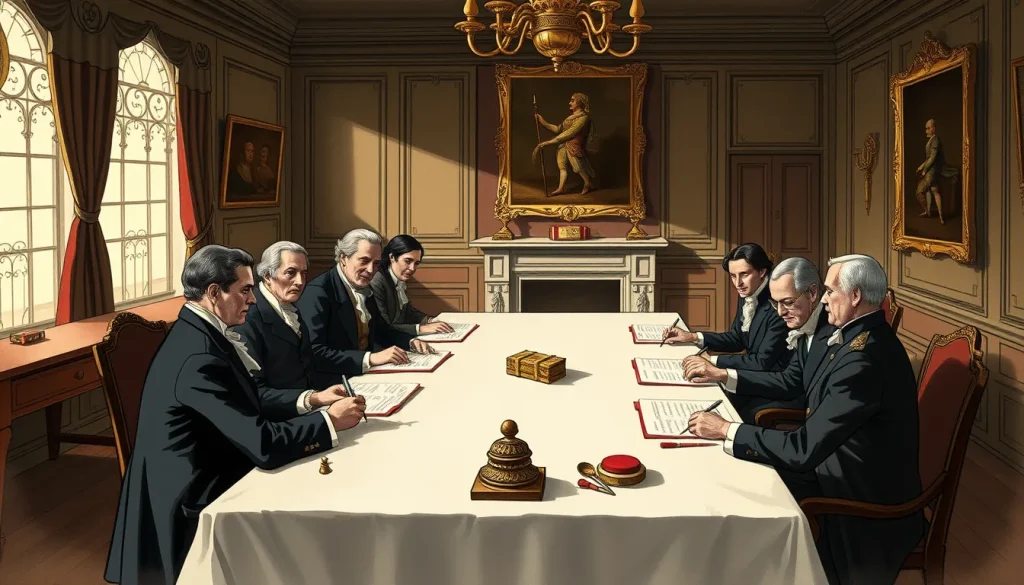
The Treaty of Ghent, signed on December 24, 1814, in Ghent, then in the United Kingdom of the Netherlands, brought an end to the War of 1812 between the United States and the United Kingdom of Great Britain and Ireland. The treaty restored relations between the two nations to the status quo ante bellum, effectively ending the conflict on the basis of prior territorial boundaries and mutual restoration of conquered possessions. This article provides the full text of the treaty along with a detailed explanation of its background, terms, and historical significance.
Historical Context
The War of 1812 began in June 1812 as the United States declared war on Great Britain. Major American grievances included British impressment of American sailors, restrictions on American trade due to the Napoleonic Wars, and British support for Indigenous nations resisting American expansion into the Northwest. The war saw early American naval victories and significant setbacks, including the burning of Washington in 1814. By late 1814, both sides faced war-weariness: Britain was exhausted after years of war with France (Napoleon had been defeated in April 1814), and the United States faced financial and military challenges. British and American negotiators met in Ghent to discuss peace terms.
What Happened
Peace negotiations began in August 1814 in Ghent. The British negotiators initially demanded territorial concessions, the creation of an Indigenous buffer state, and other conditions, while the Americans insisted on the status quo ante bellum and the end of impressment. As the negotiations dragged on, British public opinion shifted and the military situation became less favorable, leading to a compromise. On December 24, 1814, the two delegations signed the Treaty of Ghent. The treaty provided for the restoration of all territory taken during the war, the return of prisoners, and the establishment of commissions to resolve boundary disputes. It did not address impressment or neutral trade rights. After ratification by the United States (February 16, 1815) and Britain, peace took effect, though the Battle of New Orleans had been fought on January 8, 1815, before news of the treaty arrived.
Why It Matters
The Treaty of Ghent ended two and a half years of fighting and restored peace between the United States and Britain. It is significant for its lasting impact: the boundary commissions eventually settled the U.S.-Canadian border, leading to the demilitarization of the Great Lakes through the later Rush-Bagot Agreement (1817). The treaty also had major consequences for Indigenous peoples, who were excluded from the negotiations and lost a British ally that had previously provided support. For Americans, the war’s end, combined with the Battle of New Orleans, fostered a sense of national pride and the “Era of Good Feelings.” For Britain, it allowed focus on other imperial matters. Historians have debated the treaty’s significance, with some seeing it as a stalemate and others as a turning point in Anglo-American relations.
Document
The primary source under examination is the Treaty of Ghent, formally titled “A Treaty of Peace and Amity between His Britannic Majesty and the United States of America.” It is a diplomatic treaty that ended the War of 1812.
Date
The treaty was signed on December 24, 1814. Ratifications were exchanged on February 16, 1815.
Author
The treaty was negotiated by plenipotentiaries appointed by the United States and the United Kingdom. The British delegation consisted of Admiral James, Lord Gambier; Henry Goulburn, a member of Parliament and Under-Secretary of State; and William Adams, a Doctor of Civil Laws. The American delegation was composed of John Quincy Adams, James A. Bayard, Henry Clay, Jonathan Russell, and Albert Gallatin.
Historical Context
The negotiations took place in Ghent, in the United Kingdom of the Netherlands, from August to December 1814. The British were negotiating after their victory over Napoleon, while the Americans sought an end to the conflict that had become costly. The treaty was concluded against the backdrop of the final campaigns of the war, including the British capture of Washington and the American defense at Baltimore and Plattsburgh.
Transcript
Treaty of Peace and Amity between His Britannic Majesty and the United States of America.
His Britannic Majesty and the United States of America desirous of terminating the war which has unhappily subsisted between the two Countries, and of restoring upon principles of perfect reciprocity, Peace, Friendship, and good Understanding between them, have for that purpose appointed their respective Plenipotentiaries, that is to say, His Britannic Majesty on His part has appointed the Right Honourable James Lord Gambier, late Admiral of the White now Admiral of the Red Squadron of His Majesty’s Fleet; Henry Goulburn Esquire, a Member of the Imperial Parliament and Under Secretary of State; and William Adams Esquire, Doctor of Civil Laws: And the President of the United States, by and with the advice and consent of the Senate thereof, has appointed John Quincy Adams, James A. Bayard, Henry Clay, Jonathan Russell, and Albert Gallatin, Citizens of the United States; who, after a reciprocal communication of their respective Full Powers, have agreed upon the following Articles.
Article the First
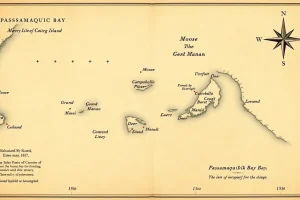
There shall be a firm and universal Peace between His Britannic Majesty and the United States, and between their respective Countries, Territories, Cities, Towns, and People of every degree without exception of places or persons. All hostilities both by sea and land shall cease as soon as this Treaty shall have been ratified by both parties as hereinafter mentioned. All territory, places, and possessions whatsoever taken by either party from the other during the war, or which may be taken after the signing of this Treaty, excepting only the Islands hereinafter mentioned, shall be restored without delay and without causing any destruction or carrying away any of the Artillery or other public property originally captured in the said forts or places, and which shall remain therein upon the Exchange of the Ratifications of this Treaty, or any Slaves or other private property; And all Archives, Records, Deeds, and Papers, either of a public nature or belonging to private persons, which in the course of the war may have fallen into the hands of the Officers of either party, shall be, as far as may be practicable, forthwith restored and delivered to the proper authorities and persons to whom they respectively belong. Such of the Islands in the Bay of Passamaquoddy as are claimed by both parties shall remain in the possession of the party in whose occupation they may be at the time of the Exchange of the Ratifications of this Treaty until the decision respecting the title to the said Islands shall have been made in conformity with the fourth Article of this Treaty. No disposition made by this Treaty as to such possession of the Islands and territories claimed by both parties shall in any manner whatever be construed to affect the right of either.
Article the Second
Immediately after the ratifications of this Treaty by both parties as hereinafter mentioned, orders shall be sent to the Armies, Squadrons, Officers, Subjects, and Citizens of the two Powers to cease from all hostilities: and to prevent all causes of complaint which might arise on account of the prizes which may be taken at sea after the said Ratifications of this Treaty, it is reciprocally agreed that all vessels and effects which may be taken after the space of twelve days from the said Ratifications upon all parts of the Coast of North America from the Latitude of twenty three degrees North to the Latitude of fifty degrees North, and as far Eastward in the Atlantic Ocean as the thirty sixth degree of West Longitude from the Meridian of Greenwich, shall be restored on each side:-that the time shall be thirty days in all other parts of the Atlantic Ocean North of the Equinoctial Line or Equator:-and the same time for the British and Irish Channels, for the Gulf of Mexico, and all parts of the West Indies:-forty days for the North Seas for the Baltic, and for all parts of the Mediterranean-sixty days for the Atlantic Ocean South of the Equator as far as the Latitude of the Cape of Good Hope.- ninety days for every other part of the world South of the Equator, and one hundred and twenty days for all other parts of the world without exception.
Article the Third
All Prisoners of war taken on either side as well by land as by sea shall be restored as soon as practicable after the Ratifications of this Treaty as hereinafter mentioned on their paying the debts which they may have contracted during their captivity. The two Contracting Parties respectively engage to discharge in specie the advances which may have been made by the other for the sustenance and maintenance of such prisoners.
Article the Fourth
Whereas it was stipulated by the second Article in the Treaty of Peace of one thousand seven hundred and eighty three between His Britannic Majesty and the United States of America that the boundary of the United States should comprehend “all Islands within twenty leagues of any part of the shores of the United States and lying between lines to be drawn due East from the points where the aforesaid boundaries between Nova Scotia on the one part and East Florida on the other shall respectively touch the Bay of Fundy and the Atlantic Ocean, excepting such Islands as now are or heretofore have been within the limits of Nova Scotia” and whereas the several Islands in the Bay of Passamaquoddy, which is part of the Bay of Fundy, and the Island of Grand Menan in the said Bay of Fundy, are claimed by the United States as being comprehended within their aforesaid boundaries, which said Islands are claimed as belonging to His Britannic Majesty as having been at the time of and previous to the aforesaid Treaty of one thousand seven hundred and eighty three within the limits of the Province of Nova Scotia: In order therefore finally to decide upon these claims it is agreed that they shall be referred to two Commissioners, one to be appointed by His Britannic Majesty and one by the President of the United States, with the power to appoint a third in case of disagreement; and the decision of the said Commissioners, or of a majority of them, shall be final and conclusive.
Article the Fifth
Whereas the boundary line between the United States and the Province of New Brunswick, as described in the second Article of the Treaty of Peace of 1783, has not been surveyed and established, it is agreed that a commission shall be appointed, composed of two commissioners, one from each party, with power to appoint a surveyor and other persons; and that the said commissioners shall decide upon the said boundary line, and mark it out, and their decision shall be final.
Article the Sixth
It is agreed that the boundary line from the point where the forty-fifth degree of north latitude meets the River St. Lawrence, to the River St. Lawrence, and from the latter to the most northwestern point of the Lake of the Woods, shall be ascertained and marked by a joint commission, with the consent of the Indians dwelling on the said line.
Article the Seventh
The boundary line from the most northwestern point of the Lake of the Woods to the Mississippi River shall be determined by a joint commission, and if the line so found shall not be satisfactory, the points in question shall be submitted to a friendly power for decision.
Article the Eighth
The two high contracting parties agree to use their best endeavors to secure the final abolition of the slave trade.
Article the Ninth
Peace and friendship are declared between His Britannic Majesty and the United States, and the said parties agree that all hostilities and acts of violence shall cease, and that the Indians with whom either party may have been engaged or in alliance shall be restored to the enjoyment of their rights and possessions, and no further acts of hostility shall be committed against them.
Article the Tenth
It is agreed that the vessels and effects of the two contracting parties which may have been taken after the expiration of the time specified in the second Article shall be restored, and that the prizes taken before the said time shall be governed by the law of nations.
Article the Eleventh
The present treaty shall be ratified by both parties, and the ratifications exchanged at Washington within four months from the date of the signature, or sooner if possible.
Modernized Transcript
In plain language, the Treaty of Ghent established an immediate cessation of hostilities, ordered the restoration of all territories and possessions taken during the war (except certain disputed islands), and provided for the exchange of prisoners. It created commissions to settle boundary disputes between the United States and British North America, including the islands in Passamaquoddy Bay and the boundary line from the St. Lawrence River to the Lake of the Woods. The treaty also urged the end of the slave trade and promised peace with Indigenous nations, but it did not mention impressment, neutral trade rights, or other original causes of the conflict.
What the Document Tells Us
The treaty’s terms reflect the diplomatic realities of 1814: both sides were exhausted and willing to return to pre-war conditions without resolving the maritime disputes that had launched the war. Its use of status quo ante bellum, without any mention of impressment or trade restrictions, indicates that the war was seen more as a stalemate than a victory for either side. The establishment of boundary commissions reveals the importance of clearly defining the U.S.-Canadian frontier to prevent future conflicts. The absence of any Indigenous representation underscores the limited agency of Native nations in the peace process.
Limitations and Bias of the Source
The Treaty of Ghent is a diplomatic document framed entirely by the interests of the United States and Great Britain. It omits the perspectives of Indigenous peoples, who were heavily affected by the war and its territorial consequences. The treaty also did not address the issue of impressment, which had been a primary American casus belli. Its language is formal and legalistic, reflecting the power structures of the two nations rather than the experiences of soldiers, civilians, or enslaved people who had been involved in the conflict.
Citation
Treaty of Peace and Amity between His Britannic Majesty and the United States of America, signed at Ghent, December 24, 1814, 8 Stat. 218 (1815). The full text is available from the U.S. Senate and other archival and educational sources.
Primary Sources
Other primary sources related to the Treaty of Ghent include the official correspondence and journal of the American peace commissioners, especially John Quincy Adams’s diary and letters; the instructions from the British Foreign Office to the British negotiators; and the U.S. Senate’s ratification debate records. The treaty itself is the central document, but these ancillary sources provide insight into the negotiation process and the intentions of the parties.
Further Reading
- Hickey, Donald R. The War of 1812: A Forgotten Conflict. University of Illinois Press, 1989.
- Benn, Carl. The War of 1812. Osprey Publishing, 2002.
- Updyke, Frank Arthur. The Diplomacy of the War of 1812. Johns Hopkins Press, 1915.
- Stagg, J.C.A. The War of 1812: Conflict for a Continent. Cambridge University Press, 2012.
References
- “Transcript: Treaty of Ghent” U.S. Senate, https://www.senate.gov/about/powers-procedures/treaties/treaty-of-ghent/transcript-treaty-of-ghent.htm.
- “Treaty of Ghent,” Wikisource, https://en.wikisource.org/wiki/Treaty_of_Ghent.
- “The Treaty of Ghent: Annotated,” JSTOR Daily, https://daily.jstor.org/the-treaty-of-ghent-annotated/.
- “Treaty of Ghent,” American Battlefield Trust, https://www.battlefields.org/learn/primary-sources/treaty-ghent.
- “A treaty of peace and amity between His Britannic Majesty and the United States of America: signed at Ghent, December 24, 1814,” Internet Archive, https://archive.org/details/treatyofpeaceami00unse.
FAQ
Did the Treaty of Ghent address impressment?
No. The treaty was silent on impressment, which had been a major American grievance. This failure was a significant compromise by the United States.
Why is the Treaty of Ghent called status quo ante bellum?
Because it restored all territories and boundaries to their pre-war states, essentially ending the war without territorial changes or major concessions from either side.
What was the impact of the Treaty of Ghent on Indigenous peoples?
The treaty excluded Indigenous nations, who were not signatories. It ended British military support for Indigenous resistance, weakening native peoples' position against American expansion.
When did the Battle of New Orleans occur relative to the treaty?
The Battle of New Orleans was fought on January 8, 1815, after the treaty was signed but before it was ratified, making it technically unnecessary but symbolically important.




Leave a Reply