
Short Answer
Primary sources bring the War of 1812 into focus through the records people created while making decisions, conducting operations, seeking assistance, and describing what they experienced. Presidential messages, military orders, ship logs, newspapers, petitions, account books, maps, and treaty documents reveal a conflict that extended well beyond famous battles.
They also present difficulties. A commander’s report may defend his conduct. A newspaper may repeat an unverified dispatch. A memoir may describe events decades after they happened. An Indigenous speech may survive through translation and publication by someone else.
The goal of primary-source research is therefore more than finding an old document. It is establishing what the document is, how it reached the researcher, what its creator could know, and what conclusions the evidence can support.
This guide explains where to begin, which collections to search, how to evaluate different source types, and how to build a documented argument. It is designed for readers researching battles, diplomacy, military service, Indigenous participation, civilian experience, slavery, and the war’s later memory.
where can you find War of 1812 primary sources?
Begin with the Library of Congress War of 1812 resource guide, the U.S. National Archives military research page, and Library and Archives Canada’s War of 1812 guide.
For British records, consult The National Archives’ Napoleonic-era and War of 1812 overview. For naval operations, use the Naval History and Heritage Command’s documentary history.
Then search by a specific person, unit, ship, place, date, or record creator. A focused question usually produces better results than searching only for “War of 1812.” These portals provide starting points, not a complete inventory of surviving evidence. [1–5]
What is a primary source of the War of 1812?
Primary evidence includes material produced by participants, observers, institutions, and communities connected to the events or experiences under investigation.
A letter written in 1813 may offer immediate testimony. A pension application filed years later may preserve a veteran’s account and supporting statements. A military medal may reveal how service was recognized after the conflict.
These sources are valuable in different ways. Their usefulness depends on the question rather than their age alone.
Primary sources and secondary sources
A modern historian’s account generally interprets primary evidence. An archive’s introductory essay or museum label usually performs a similar explanatory role.
An edited documentary volume can contain both. The reproduced letters are primary-source texts; editorial introductions and annotations are later scholarship.
Keep that distinction visible in your notes. If an editor identifies an officer or explains an obscure term, that explanation is not necessarily something the original letter says.
Contemporary evidence and retrospective evidence
A contemporary account records information close to the event. A retrospective account looks back from a later moment.
Neither category is automatically superior. An immediate report may be hurried and incomplete. A later account may incorporate reflection and additional information, while also being affected by memory and subsequent controversy.
The useful question is what each record can establish and where its limitations begin.
Begin with a question, not a collection
Large digital archives can encourage unfocused browsing. A clearly framed question helps identify the records you actually need.
Instead of asking, “What happened in the War of 1812?” try:
- What reasons did American officials publicly give for declaring war?
- How did British and American commanders describe the same engagement?
- What supplies did a particular military post request?
- How did a Canadian household document wartime losses?
- What evidence establishes a named person’s service?
- How did newspaper coverage change as reports of a battle arrived?
- What did treaty language promise, and how was it implemented?
Each question suggests a different source strategy. A service question points toward musters and personnel records. A question about public persuasion points toward speeches, pamphlets, and newspapers.
Write an initial question in one sentence. Identify the place and period involved, then list the people or offices likely to have created records. This preliminary map helps prevent a famous commander’s papers from becoming the sole basis for an account of an entire community.
Where to find War of 1812 primary sources
| Repository or resource | Useful starting material | Research consideration |
|---|---|---|
| Library of Congress | Manuscripts, newspapers, maps, broadsides, government publications | Read item descriptions and distinguish original material from later reproductions. |
| U.S. National Archives | Federal military, administrative, service, pension, and related records | Follow record groups and series as well as names. |
| Founders Online | Edited correspondence and documents associated with early American political figures | Use editorial notes and document provenance. |
| Library and Archives Canada | Militia records, claims, correspondence, maps, medals, and personal papers | Some digitized records require browsing by unit or reel. |
| The National Archives, United Kingdom | British governmental, military, and naval collections | Begin with the relevant guide and catalog reference. |
| Naval History and Heritage Command | Edited documentary history and naval research resources | Separate document text from editorial commentary. |
| Archives of Ontario | Regional records and guidance for Upper Canadian history | Check the current guide and the underlying collection. |
| State, provincial, local, and community repositories | Militia material, family papers, local administration, community knowledge | National institutions do not hold every relevant source. |
These institutions serve different purposes. A record associated with Canada may be held in Britain or the United States, while an American service history may require state as well as federal research.
Library of Congress
The Library’s War of 1812 guide organizes routes into manuscripts, government documents, newspapers, books, broadsides, and maps.
It is useful for exploring the range of evidence before choosing a narrow research path. Its digital-collections page also connects researchers to material whose titles may not mention the war directly. [1]
A letter filed under a correspondent’s name or a map cataloged by place can be relevant even when “1812” does not appear in the record title.
U.S. National Archives
The National Archives’ War of 1812 portal directs researchers to military service, pensions, bounty-land applications, discharge certificates, impressed seamen, and related research guidance. [2]
Its archivists also identify broader administrative series. Records of the Adjutant General’s Office, Army commands, the Secretary of War, and the Quartermaster General can lead to correspondence, orders, prisoner material, receipts, and supply records. [6]
This organization reflects how government work produced records. A single event may leave evidence across several offices, each concerned with a different part of it.
Library and Archives Canada
LAC’s guide identifies militia musters and pay lists, service certificates, pension material, wartime-loss claims, maps, personal papers, and other collections.
Some militia records are arranged by regiment or unit rather than searchable personal name. Researchers may need to locate a unit, follow the archival hierarchy, and browse the appropriate images.
The guide also identifies later records about the war. Their creation dates matter when assessing testimony and claims. [3]
British repositories
The National Archives’ overview points researchers toward British records of the Napoleonic era, including the War of 1812, and relevant resources beyond its own holdings. [4]
Do not assume that every British soldier has a complete surviving personal file. Establish the service branch, regiment or ship, approximate dates, and record type before searching.
For merchant seamen, use a guide specifically covering the early nineteenth century. Later registration systems cannot simply be projected backward onto 1812. [7]
Regional archives
Regional repositories can reveal experiences that national collections summarize only briefly.
The Archives of Ontario’s War of 1812 page directs readers to research guidance covering war diaries, administrative material, and later commemoration. Its current page also notes that some older links may need help from archive staff. [8]
An archival guide is a route into collections. Follow it to the records, rather than treating the guide’s summary as direct wartime testimony.
The main types of primary sources
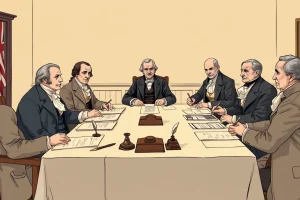
Government messages, legislation, and diplomatic papers
These records are essential for studying official policy and the reasons governments gave for their decisions.
A strong starting example is James Madison’s message to Congress of June 1, 1812. The document presents grievances against Britain and frames the question Congress faced.
It is evidence of Madison’s argument. It is not, by itself, an impartial account of every cause of the war or proof of every allegation it contains. Compare its statements with other official correspondence and opposing views. [9]
The National Archives’ congressional teaching collection offers documents from different participants in the decision over war, including government actors and concerned citizens. It provides a useful model for comparing positions rather than reading the declaration as the inevitable result of unanimous opinion. [10]
Military orders and official reports
Orders show what commanders intended. Reports show how they described what followed. The two should not be treated as equivalent.
An order to advance does not prove that every unit advanced as planned. A report claiming success does not establish that all objectives were achieved.
Ask when the report was composed, what the writer personally observed, and what information came from subordinates. Consider whether the author faced criticism, disciplinary proceedings, or a dispute over credit.
Compare reports with returns, correspondence, maps, and opposing accounts. A commander may describe a battlefield accurately in one respect while presenting responsibility selectively in another.
Muster rolls, pay lists, and service records
These documents help establish who was associated with a unit and at what time.
They can record service, payment, absence, transfer, sickness, or discharge. They do not automatically establish every action an individual performed.
A name on a roll shortly before an engagement is evidence of unit association. Additional material may be needed to show whether that person actually participated.
For American Regular Army research, the National Archives’ discharge-certificate guidance explains the value of combining certificates with enlistment registers, descriptive rolls, returns, and other records. The amount of information varies by individual. [11]
Ship logs and naval correspondence
Naval research requires attention to weather, navigation, visibility, signals, damage, supply, and timekeeping.
A log can provide a structured sequence, but it is not a complete account of everyone aboard. Officers’ letters may explain decisions that the log records only briefly.
The Naval History and Heritage Command’s The Naval War of 1812: A Documentary History brings together selected documents with editorial context. The series was completed with a fourth volume, making it a substantial starting point for locating naval evidence. [5]
Use a documentary edition to identify relevant records, then note whether you consulted the edited text or the manuscript image. Different presentations may require different citations.
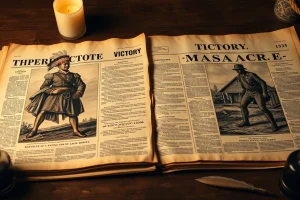
Newspapers, pamphlets, and broadsides
Printed material reveals what readers were told, how arguments circulated, and how events became public stories.
Its reporting may include official dispatches, anonymous letters, partisan commentary, rumors, and copied items from other papers.
Separate the date of an event from the date of publication. A report appearing two weeks after a battle may reproduce a letter written much earlier.
The Library of Congress’s newspaper resources include both digitized issues and descriptions of newspaper holdings. A directory entry identifying a title is not a guarantee that the desired issue is available online. [12]
Letters, diaries, and memoirs
Private writing can reveal fear, frustration, shortages, family concerns, and opinions absent from official reports.
But “private” does not mean candid in every respect. Writers could reassure relatives, withhold sensitive information, or shape how they wished to be understood.
Diaries also require checking. Was the entry written that day, copied later, or published with editing? Does the original volume survive?
Memoirs deserve similar attention to their publication circumstances. A veteran remembering a battle decades later is providing testimony from that later perspective as well as describing an earlier experience.
Petitions, pensions, and compensation claims
Claims often preserve details missing from operational accounts: household property, relationships, injuries, occupation, witnesses, and hardship.
They were also written to obtain something. Claimants needed to satisfy rules and persuade officials.
The National Archives explains how pension and bounty-land applications belong to particular federal record series. Use those applications alongside service evidence rather than assuming the claim itself settles every disputed fact. [13]
Canadian wartime-loss claims offer another route into civilian experience. LAC identifies the Board of Claims for War of 1812 losses among its relevant collections. [3]
A rejected claim does not automatically mean no loss occurred. It may reflect eligibility rules, insufficient documentation, jurisdiction, or an official’s assessment.
Maps, artworks, and objects
A map can help identify routes and spatial assumptions, but its date and purpose are essential.
A wartime planning map, a postwar survey, and a later battlefield illustration answer different questions. Features may have been simplified or reconstructed.
Artwork requires the same care. A dramatic painting is not necessarily an eyewitness image. A photograph of surviving veterans records a later encounter with people who experienced the war; it cannot show the battle itself.
LAC explicitly advises checking dates because many images associated with the war are later interpretations. [3]
A starter reading list of documents and collections
| Source or collection | Research question it can help answer |
|---|---|
| Madison to Congress, June 1, 1812 | How did the president justify possible war? |
| Congressional sources on the declaration of war | What positions and arguments surrounded the decision? |
| Treaty of Ghent document and transcript | What did the peace agreement actually provide? |
| Defence of Fort M’Henry | How was the defense represented in an early printed text? |
| Early Star-Spangled Banner sheet music | How did the text circulate as a song? |
| U.S. Army discharge-certificate collection guide | What records might establish a soldier’s identity and service? |
| LAC militia and related records guide | Where can Canadian service and claims evidence be found? |
| Naval documentary history | What documents explain naval operations and decisions? |
| Joseph Edwards’s Niagara record book | How were identity, military obligations, and movement administered? |
Some entries lead directly to an item; others lead to guides or edited collections. Record that difference when building your bibliography.
The Edwards example is particularly instructive: a record about Upper Canada is held by the U.S. National Archives. Records do not always reside in the country most closely associated with their contents. [14]
How to search effectively
Search names, roles, and places
Build a list of terms before starting:
- The person’s name, initials, title, and spelling variants.
- The unit’s name, number, commander, and militia district.
- A ship’s name and relevant commanders.
- Historical and modern place names.
- The event date and a wider surrounding period.
- Likely record types, such as “return,” “muster,” “petition,” or “letters received.”
Start with broad combinations, then narrow. A catalog may identify “correspondence” without listing every person named inside.
Use historical vocabulary carefully
Historical records may use terms different from modern descriptions. Indigenous names, racial classifications, military designations, and place names can vary.
Searching an outdated term may be necessary to locate a record. That does not require adopting it as neutral language in your own writing.
Maintain a note showing how a historical label relates to the identity or community you are discussing. Where the relationship is uncertain, leave the uncertainty explicit.
Follow the archival hierarchy
A catalog may describe a collection, series, file, or individual item.
Read the parent description. It can explain who created the records, why they were kept, and what the series excludes.
A search result with no images may still give the reference needed to request material or locate digitized microfilm elsewhere. Conversely, hundreds of images may appear under one description without individual names indexed.
Treat OCR as a finding aid
Optical character recognition helps search printed text, but it can misread damaged type, columns, names, and unusual spelling.
An unsuccessful search does not prove a word is absent. Try fragments, variants, or browsing.
Check every quotation against the page image. Searchable text is a convenience, not a substitute for reading the source.
How to evaluate a document
The Library of Congress’s analysis tools encourage observation, reflection, questions, and further investigation. A research project can apply that approach through a structured source note. [15]
| Question | What to establish |
|---|---|
| Who created it? | Author, office, speaker, recorder, or issuing authority |
| When was it created? | Relationship between event date, writing date, and publication date |
| Who was the audience? | Superior officer, family, public readers, officials, or another community |
| Why was it created? | Reporting, persuasion, administration, compensation, recollection |
| How was the information obtained? | Direct observation, hearsay, copied dispatch, translation |
| What version are you reading? | Original, copy, transcript, translation, excerpt, later edition |
| What can it support? | Specific claims within the creator’s knowledge and the document’s purpose |
| What remains uncertain? | Missing context, disputed identification, unreadable text, contradictions |
Do not label a source “biased” and discard it. Determine what the perspective makes visible and what it may distort.
A partisan editorial may be poor evidence for exact troop numbers but excellent evidence for how a newspaper tried to persuade its readers.
Corroboration: compare evidence with different origins
Two accounts agreeing is useful only if they are meaningfully independent.
A newspaper copying an official report is not a second witness to the battle. A later historian quoting that newspaper does not create a third independent account.
Trace information backward where possible. Identify the earliest version, copied passages, named informants, and editorial additions.
For a battle, compare a commander’s report with opposing correspondence, unit returns, terrain evidence, and other testimony. For a claim, compare the applicant’s account with service records and supporting witnesses.
Agreement may establish a point confidently. Disagreement can reveal differing viewpoints, times of observation, or definitions.
Avoid resolving every contradiction by choosing the more famous author. Sometimes the defensible conclusion is that surviving evidence does not permit an exact answer.
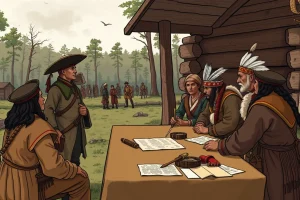
Indigenous perspectives and the limits of the archive
Researching Indigenous participation requires more than adding a quotation attributed to Tecumseh.
Identify the nation and community involved. Examine diplomatic correspondence, council records, claims, service evidence, and relevant community-held knowledge.
Recorded speeches require special attention. Who heard the speech? In what language? Who translated it? Who wrote it down? When was that version published?
The Clarke Historical Library’s guide to speeches and councils identifies material involving multiple Indigenous nations and intermediaries. Such a guide can help locate records while also reminding researchers how much documentation passed through colonial officials. [16]
Do not treat a mediated text as worthless. Explain the mediation and limit claims accordingly.
Community histories and oral traditions deserve their own methodological attention. Identify the narrator or knowledge holder, the circumstances of recording, the tradition’s transmission, and any conditions governing use.
A contemporary community history may combine inherited testimony with later scholarship. Describe those components accurately rather than treating every community webpage as a document written in 1812.
Official archives can preserve Indigenous statements while organizing them through outside categories. Read both the statement and the institutional setting that shaped its preservation.
Researching Black participation and freedom seeking
A guide centered only on commanders can miss Black soldiers, sailors, civilians, and people escaping slavery.
Search personnel records, correspondence, proclamations, claims, and local material. Historical classifications may be inconsistent, and absence of a label does not settle a person’s identity.
Cochrane’s April 1814 proclamation is a useful example of a policy document that must be compared with implementation. The proclamation offered a route toward British protection; researchers should also ask what happened to people who acted on it. [17]
Distinguish an authority’s promise from an individual’s experience. Government correspondence may document arrangements while preserving little of the person’s own voice.
Claims concerning escaped people can also present individuals through an enslaver’s property demands. Analyze that framing without allowing it to define the person solely as property.
Worked example: researching how the war ended
Suppose the question is: “Why did fighting continue after the Treaty of Ghent was signed?”
First, read the treaty’s provisions on ratification, cessation of hostilities, and maritime captures. The text establishes the agreed mechanism for peace. [18]
Next, distinguish signing from ratification and notification. Look for dated approval records, proclamations, dispatches, and operational documents.
Then examine a particular engagement. Ask what the commander knew at the time, rather than assuming that information available in Ghent was already available in Louisiana or aboard a distant ship.
Finally, separate evidence from explanation. The treaty supports claims about its requirements. Dispatches support claims about transmission. A commander’s correspondence may support claims about knowledge.
This sequence produces an argument from connected records instead of a familiar story repeated without checking its chronology.
Worked example: researching a soldier or sailor
Begin with the person’s approximate age, residence, service branch, unit or ship, and possible service dates.
Search for variants of the name. Record near matches instead of immediately combining them.
Establish identity through multiple details: age, birthplace, occupation, residence, associates, or service chronology. Two people sharing a name may have entirely different careers.
Then compare service documentation with later pension, bounty-land, family, or local records.
Do not assign a battle to an individual solely because the unit fought there. Check whether the person was present, detached, hospitalized, transferred, or discharged.
Keep identity confidence separate from event confidence. You may securely identify a veteran while remaining unable to reconstruct everything that veteran did.
Transcribing, citing, and organizing evidence
Make quotations verifiable
Preserve spelling and wording when quoting. Use brackets for editorial additions and mark uncertain or unreadable passages.
If you modernize spelling for readability, explain that choice. Keep a literal transcript available in your notes.
Record whether you used the image, a repository transcript, or an edited publication. If a translation is involved, identify it.
Capture citation details immediately
For an archival record, collect:
- Creator and recipient, where applicable.
- Document title or a concise description.
- Creation date.
- Collection, series, file, and reference number.
- Repository.
- Page, folio, or image number.
- Stable URL and access date, if required by your citation style.
For a newspaper, include title, place, issue date, page, column when useful, article heading, and digital identifier.
For an edited document, include the document’s creator and date as well as the editor, edition, volume, and page.
Keep a research log
| Field | Example entry type |
|---|---|
| Research question | The claim being investigated |
| Repository and query | Where and how you searched |
| Source identifier | Reference number or persistent link |
| Notes | Summary kept separate from quotation |
| Evidence status | Direct observation, reported information, retrospective testimony |
| Follow-up | Related file, missing page, identity check |
| Use in argument | What the source supports and what it cannot establish |
These are suggested fields, not a transcription of an actual historical record.
Save documents with meaningful filenames, but preserve archival identifiers. A filename alone is not a citation.
Common mistakes to avoid
Confusing a guide with a document.
A modern description can help locate evidence without being contemporary testimony.
Treating every old book as an eyewitness account.
Check authorship, date, and the basis of its claims.
Using later artwork as a literal battlefield record.
Investigate when and why it was made.
Assuming newspaper repetition proves accuracy.
Trace copied reports to their common origin.
Ignoring material outside 1812–1815.
Earlier records explain context; later records document memory, claims, and consequences.
Assuming a name search is exhaustive.
Many records require browsing by unit, office, collection, or reel.
Quoting searchable text without checking the image.
OCR errors can change names, numbers, and meaning.
Equating official status with neutrality.
Institutional records can be selective, mistaken, or self-protective.
Treating missing evidence as proof of nonparticipation.
Record survival and indexing are uneven.
A practical research checklist
Before writing, confirm that you have a focused question, a record of searches, identifiable sources, and notes separating quotation from interpretation.
For each important claim, ask whether the evidence establishes it directly or whether you are making an inference. Identify repeated reports that share a common source.
Before publication, verify dates, quotations, reference numbers, and links. Check image rights and repository requirements if reproducing material.
A persuasive historical account makes its evidence traceable and its uncertainty understandable. That is the central purpose of working with primary sources.
References and research portals
- Library of Congress: War of 1812 resource guide and digital collections.
- U.S. National Archives: War of 1812.
- Library and Archives Canada: War of 1812.
- The National Archives: Napoleonic wars and the War of 1812.
- Naval History and Heritage Command: documentary history; fourth-volume announcement.
- Researching the War of 1812: Where to Begin, National Archives.
- Merchant Navy seamen in service before 1914, The National Archives.
- Archives of Ontario: War of 1812 records.
- James Madison to Congress, June 1, 1812, Founders Online.
- Congress’s First Declaration of War Under the Constitution, National Archives.
- War of 1812 discharge certificates, National Archives.
- Library of Congress: War of 1812 digital collections and Chronicling America topic guides.
- Pre-World War I U.S. Army pension and bounty-land applications, National Archives.
- Joseph Edwards’s Niagara record book, National Archives.
- Primary-source analysis guides and tools, Library of Congress.
- Speeches and councils, Clarke Historical Library.
- African Americans and the War of 1812, National Park Service.
- Treaty of Ghent, National Archives.
Collection interfaces and access arrangements can change. Use the repository’s current guidance and stable record references when a link or search route changes.
FAQ
What are the most important primary sources for studying the War of 1812?
The core record includes Madison's war message of June 1, 1812, the declaration of war, the British Orders in Council, commanders' dispatches, the Treaty of Ghent, contemporary newspapers such as Niles' Weekly Register, and personal journals like those of John Norton and John Richardson. Researchers should compare American, British, Canadian, and Indigenous materials rather than relying on one national record.
Do Indigenous-authored primary sources survive?
Very few texts survive in Indigenous authors' own hands. Most Indigenous perspectives, including speeches associated with Tecumseh, exist only as transcriptions and translations by American or British officials, which shaped the wording. Edited journals such as The Journal of Major John Norton, 1816 are among the closest available sources, and historians treat mediated speeches cautiously.
Where can researchers access War of 1812 records?
Major holdings include the US National Archives (service, muster, and prize records), the Library of Congress (James Madison Papers and digitized newspapers), the UK National Archives at Kew (Admiralty, War Office, and Colonial Office records), and Library and Archives Canada (militia records, claims files, and digitized microfilm). Many items are digitized or available through research libraries such as the William L. Clements Library.
Leave a Reply