
Short Answer
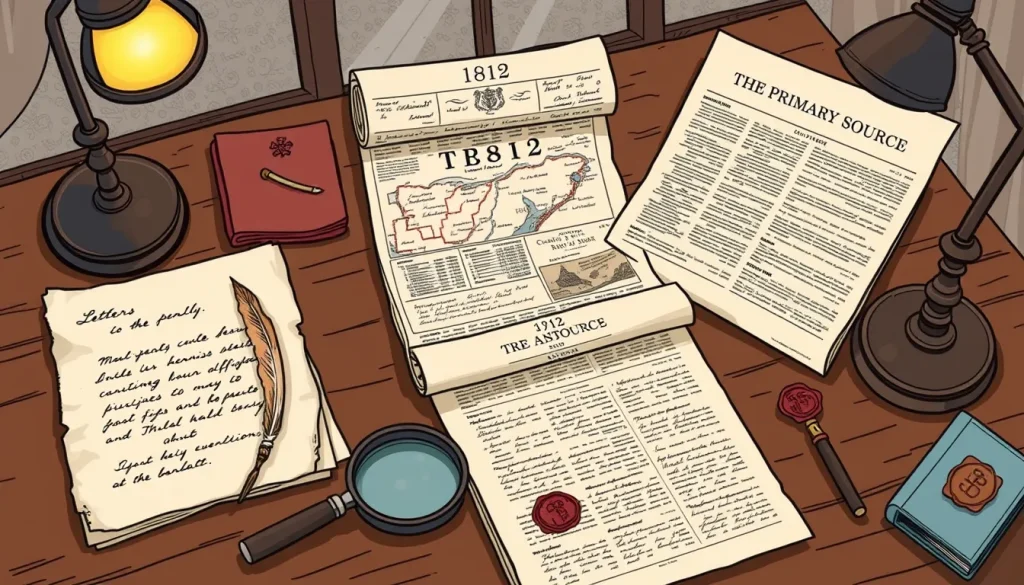
The War of 1812 (1812–1815) between the United States and Great Britain, with its complex interactions involving British North America and Indigenous nations, produced a rich body of primary sources essential for historical study. These include government documents, military orders, personal letters, diaries, newspapers, maps, and published accounts that capture the perspectives of participants and contemporaries. This article identifies and evaluates the best primary sources for researching the war, highlighting archival repositories, digital collections, and key documentary series.
Historical Context
The War of 1812 stemmed from long-standing maritime disputes, including impressment of American sailors, trade restrictions, and British support for Indigenous resistance in the American Northwest. The conflict unfolded across multiple theaters: the Atlantic Ocean, the Great Lakes and St. Lawrence River, the Chesapeake Bay, the Gulf Coast, and the Pacific. Primary sources from the period are scattered among national and local archives in the United States, Canada, Britain, and among Indigenous communities (many preserved in European and North American institutions). Understanding the war requires consulting sources created by all belligerents, each with distinct biases and limitations. The documentary record includes official diplomatic correspondence, naval and military reports, legislative debates, personal narratives, and Indigenous oral traditions that were only later written down.
What Happened
The United States declared war on Great Britain on June 18, 1812, launching offensives into Upper Canada (modern Ontario). Initial American invasions failed, while British and Canadian forces, often with Indigenous allies, defended the border. In 1813, the Americans gained control of Lake Erie and won the Battle of the Thames, but suffered defeats elsewhere. The British blockade and raids, culminating in the burning of Washington, D.C., in August 1814, marked a turning point. The American victories at Baltimore and at the Battle of Plattsburgh in September 1814, followed by Andrew Jackson’s triumph at New Orleans in January 1815, occurred after the Treaty of Ghent had been signed on December 24, 1814. The treaty restored pre-war borders and left unresolved many issues. Primary sources document these events through orders, reports, correspondence, and newspaper accounts.
Why It Matters
Primary sources are the raw materials of historical reconstruction. For the War of 1812, they allow scholars and students to examine the causes, conduct, and consequences of the conflict from multiple perspectives. They reveal operational details, strategic decisions, and the experiences of soldiers, sailors, civilians, Indigenous peoples, and enslaved African Americans. Without these sources, historians would rely on later interpretations, which often reflect nationalist narratives. Primary sources provide direct evidence of what people at the time said, thought, and did, enabling balanced analysis of the war’s significance.
Definition
Primary sources are materials created during the period under study, by participants or contemporary observers. For the War of 1812, they include official government records (presidential messages, congressional debates, military and naval orders, departmental correspondence), personal documents (letters, diaries, memoirs), published items (newspapers, pamphlets, broadsides), and non-textual materials (maps, artwork, artifacts). Primary sources are distinguished from secondary sources, which are later interpretations based on primary evidence.
Background
The War of 1812 generated an extensive and varied documentary record. Governments produced official records: American legislative journals and reports, British Admiralty and War Office dispatches, Canadian colonial reports, and treaty texts. Military and naval officers kept letterbooks and journals; enlisted men sometimes left diaries. Indigenous nations, lacking a written tradition, left few contemporary documents, but their views appear in treaty council records and speeches transcribed by Euro-American secretaries. Newspapers proliferated, carrying official announcements, battle reports, and editorials that reflect public opinion. Personal correspondence of political and military leaders, like James Madison, James Monroe, Andrew Jackson, and Sir George Prevost, provides insight into decision-making. This wealth of materials is distributed across archives in Washington, Kew (UK), Ottawa (Canada), and many state and local repositories.
How It Worked
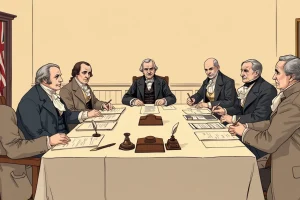
Accessing primary sources for the War of 1812 has become increasingly easy thanks to digitization and online finding aids. Major national collections are available through the Library of Congress (e.g., the Madison, Monroe, and Jackson papers), the National Archives and Records Administration (NARA), the UK National Archives, and Library and Archives Canada. The Library of Congress’s Chronicling America database provides free access to digitized historical newspapers. The Gilder Lehrman Institute of American History holds significant manuscripts, and its digital resources support research. The Naval War of 1812: A Documentary History, published by the Naval Historical Center, offers annotated transcripts of naval documents. Researchers should also consult state archives and historical societies, as well as published documentary editions, such as the Papers of James Madison and The Papers of Andrew Jackson. When using these sources, it is critical to evaluate their provenance, purpose, and potential bias. Official reports may be self-serving; personal letters may be candid but incomplete; newspapers often reflect partisan viewpoints.
Competing Viewpoints
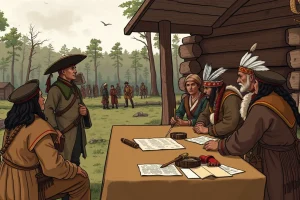
Primary sources from different participants often conflict. American naval officers exaggerated enemy losses, while British reports downplayed their own. Canadian accounts emphasized the role of their militia and Indigenous allies, whereas American narratives minimized them. Indigenous perspectives, transmitted through speeches recorded by Euro-American officials, reveal a distinct worldview and grievances. For example, Tecumseh’s speeches, as recorded, portray a leader seeking to preserve Indigenous lands against American expansion—a viewpoint rarely found in American official documents. The competing narratives require careful cross-referencing to reconstruct events accurately. Historians also debate the reliability of later memoirs, such as those written decades after the war, which may be colored by memory and personal agenda.
Role in the War of 1812
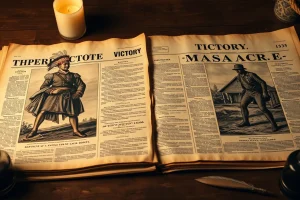
Primary sources played an active role in the war itself. Orders and dispatches directed military movements; proclamations sought to rally troops and civilians; treaties and diplomatic exchanges attempted to resolve or prolong the conflict. The U.S. Declaration of War issued by President Madison on June 18, 1812, is a primary source that formally initiated hostilities. The Treaty of Ghent, signed December 24, 1814, ended it. During the war, newspapers shaped public opinion and reported on battles, often with patriotic fervor. These documents are not merely records; they were instruments of policy and persuasion. Understanding their immediate function helps interpret their content.
Consequences and Historical Interpretation
The availability and interpretation of primary sources have shaped historical scholarship on the War of 1812. Early American historians relied heavily on official American sources, producing a hero-centric narrative emphasizing Jackson, Perry, and the defense of Baltimore. Later scholars, using British and Canadian sources, corrected imbalances and introduced Indigenous perspectives. The digitization of records has democratized access, enabling broader research. Current historiography, informed by social history and memory studies, uses primary sources to explore gender, race, and civilian experiences, as well as the war’s long-term consequences for national identity in the United States and Canada. The ongoing reinterpretation demonstrates that primary sources remain essential to evaluating the war’s meaning and legacy.
Primary Sources
Among the most useful primary sources for studying the War of 1812:
- U.S. Declaration of War (June 18, 1812) – Official congressional act based on President James Madison’s message of June 1, 1812, outlining American grievances.
- Treaty of Ghent (December 24, 1814) – The peace treaty, available via the Avalon Project at Yale Law School, that restored antebellum boundaries and ended hostilities.
- Congressional Debates and Reports – The Annals of Congress record legislative discussions on war and military policy; the Library of Congress provides digital access.
- Presidential Papers Collection – James Madison Papers (Library of Congress) include correspondence and notes on military operations; James Monroe Papers contain Secretary of State and War records.
- Andrew Jackson Papers (Library of Congress) – Document his military campaigns, particularly the Battle of New Orleans, including his official reports and outgoing correspondence.
- Naval War of 1812: A Documentary History – A multi-volume series edited by the Naval Historical Center (now Naval History and Heritage Command), available online through the American Naval Records Society.
- Gilder Lehrman Collection – Holds manuscripts like the James Winchester papers, covering prisoners of war and the New Orleans campaign.
- Chronicling America – Digitized U.S. newspapers, including patriotic declarations and battle reports.
- British Admiralty and War Office Records – Held at the UK National Archives, these include dispatches from generals and admirals, and are essential for the British perspective.
- Canadian Military Records – Library and Archives Canada provides access to muster rolls, casualty lists, and correspondence of Canadian militia units.
Further Reading
- Hickey, Donald R. The War of 1812: A Forgotten Conflict. University of Illinois Press, 1989.
- Stagg, J.C.A. The War of 1812: Conflict for a Continent. Cambridge University Press, 2012.
- Dudley, William S., ed. The Naval War of 1812: A Documentary History. Naval Historical Center, 1985–2016.
- Library of Congress, “War of 1812: A Resource Guide.” https://guides.loc.gov/war-of-1812.
- Gilder Lehrman Institute, “War of 1812 Collections.” https://www.gilderlehrman.org/collection/glc06997.
References
- Library of Congress. “Digital Collections – War of 1812: A Resource Guide.” https://guides.loc.gov/war-of-1812/digital-collections.
- Gilder Lehrman Institute of American History. “War of 1812: Correspondence and documents on war, POWs in Canada, New Orleans [Decimalized .01- .80].” https://www.gilderlehrman.org/collection/glc06997.
- American Naval Records Society. “The Naval War of 1812: A Documentary History.” https://www.ibiblio.org/anrs/1812.html.
- Goshen College. “U.S. History: Primary Source Collections Online: War of 1812.” https://libraryguides.goshen.edu/c.php?g=1345952&p=9928486.
FAQ
Where can I find free online primary sources for the War of 1812?
Digitized collections at the Library of Congress, the National Archives, and the Internet Archive include official records and newspapers. The Library of Congress Guide to War of 1812 Resources lists specific collections.
What are the most important primary source types for studying the War of 1812?
Official government documents (declarations, treaties, orders), personal correspondence and diaries, military reports, newspapers, and maps. Each type illuminates different aspects of the conflict.
How do I evaluate the bias in a War of 1812 primary source?
Consider the author's position, the purpose of the document, the intended audience, and the events described. Cross-reference multiple sources to account for differing perspectives.
Leave a Reply