
Short Answer
The Great Lakes Campaign of 1813 was a pivotal series of naval and military operations during the War of 1812, concentrated on the freshwater lakes of the North American interior. Spanning from the spring to the autumn of 1813, the campaign saw American forces under Commodore Oliver Hazard Perry and General William Henry Harrison challenge and ultimately defeat British naval and land forces on Lake Erie, culminating in the decisive Battle of Lake Erie and the Battle of the Thames. This victory secured American control over the upper lakes, led to the recapture of Detroit, and disrupted British and Indigenous alliances, shifting the strategic balance in the western theater.
Historical Context
The Great Lakes formed the most practical transportation network between the United States and British North America (Canada). At the outbreak of the war, the British held naval superiority on the lakes via the Provincial Marine, a small armed transport force, and had captured American posts at Michilimackinac and Detroit in 1812. The Americans, lacking a dedicated lake force, recognized that control of the lakes was essential for any invasion of Canada or defense of the Northwest Territory. President James Madison and Secretary of War John Armstrong therefore prioritized building a freshwater navy. By early 1813, both sides were engaged in a naval arms race, with Commodore Isaac Chauncey commanding American forces on Lake Ontario and Commodore Sir James Lucas Yeo leading the British. Lake Erie became a critical focus because it controlled access to Detroit and the western frontier.
What Happened
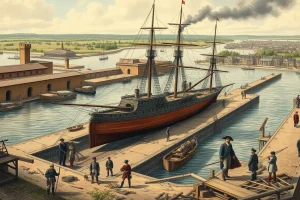
The campaign unfolded across several fronts. In April 1813, an American force under General Henry Dearborn and Commodore Chauncey captured and burned York (modern Toronto), the capital of Upper Canada, but the raid failed to destroy the British shipbuilding capability at Kingston. In May, Americans seized Fort George on the Niagara River, forcing the British to retreat toward Burlington Heights. Meanwhile, on Lake Erie, American forces under Oliver Hazard Perry built a squadron at Presque Isle (Erie, Pennsylvania), overcoming obstacles to get the newly built ships over the sandbar. On 10 September 1813, Perry engaged the British squadron under Robert Heriot Barclay near Put-in-Bay, Ohio. The American victory at the Battle of Lake Erie gave them command of the lake, forcing British General Henry Procter to abandon Detroit and Fort Amherstburg. Perry ferried Harrison’s army across the lake, and on 5 October 1813, they defeated Procter’s retreating British and Indigenous forces at the Battle of the Thames, where Tecumseh was killed. On Lake Ontario, efforts to capture Kingston failed, and by year’s end the British had regained Fort George and Fort Niagara, but the critical command of Lake Erie remained with the Americans.
Why It Matters
The campaign’s outcome was strategically decisive for the western theater. The American victory at Lake Erie and the Thames reestablished United States control over the Detroit frontier and severed British supply lines to the northwest. It also dealt a severe blow to British-allied Indigenous peoples, ending Tecumseh’s confederacy and weakening their bargaining position. For the British, the loss of Lake Erie forced a defensive posture in Upper Canada and contributed to their eventual willingness to negotiate peace. The campaign demonstrated the importance of freshwater naval power and set the stage for the 1814 campaigns.
Prelude
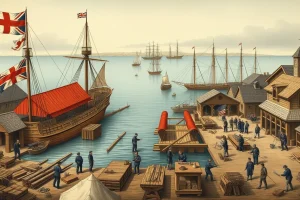
After the reverses of 1812, including the surrender of Detroit and the failure of American invasions of Canada, the Madison administration recognized that naval supremacy on the lakes was a prerequisite for offensive operations. Chauncey and his counterpart on Lake Erie, Lieutenant Jesse Elliott, began constructing warships at Black Rock, Sackets Harbor, and Presque Isle. British forces, under General Procter and Commodore Barclay, also built warships at Amherstburg and Kingston, but they faced severe shortages of men and supplies.
Forces and Commanders
American forces on Lake Erie included nine vessels under the command of Master Commandant Oliver Hazard Perry (later promoted to captain). His flagship was USS Lawrence and later USS Niagara. The land component was led by General William Henry Harrison, commander of the Army of the Northwest. British forces on Lake Erie comprised six vessels under Captain Robert Heriot Barclay, supported by land forces under Major-General Henry Procter. On Lake Ontario, American naval forces were commanded by Commodore Isaac Chauncey, opposed by Commodore Sir James Lucas Yeo of the Royal Navy.
Battlefield and Map Context
The operational area stretched from Lake Huron and Georgian Bay in the north to the western end of Lake Erie, with critical points at Presque Isle, Put-in-Bay, and the Detroit River. Lake Erie is the shallowest of the Great Lakes, with its islands providing sheltered anchorages. The battle of 10 September took place near South Bass Island and Middle Bass Island, Ohio. The terrain around the Thames River and Moraviantown was heavily wooded, suited to the British retreat route.
Battle Chronology
Key events of the campaign include: the American capture of York (27 April 1813), the British attack on Sackets Harbor (29 May 1813) which was repulsed, the American capture of Fort George (27 May 1813), the construction and launch of American ships at Presque Isle (July-August 1813), the Battle of Lake Erie (10 September 1813), the British evacuation of Detroit and Amherstburg (27 September 1813), and the Battle of the Thames (5 October 1813). Operations on Lake Ontario continued indecisively throughout the year, with the British maintaining control of Kingston and the Americans unable to mount a decisive attack.
Casualties and Losses
In the Battle of Lake Erie, American casualties were approximately 27 killed and 96 wounded; British losses were about 41 killed, 93 wounded, and 306 captured. At the Battle of the Thames, American losses were around 55 killed and wounded; British and Indigenous losses were heavier, including the death of Tecumseh. Overall, the campaign saw significant attrition on both sides, though the American victory at Lake Erie was decisive.
Result
The campaign resulted in an American strategic victory in the western theater. The U.S. gained undisputed control of Lake Erie, enabling the recapture of Detroit and the destruction of the British position in the Northwest. The British relinquished Fort Amherstburg and withdrew to the Niagara Peninsula, while American forces on Lake Ontario achieved no comparable breakthrough.
Strategic Consequences
The American success at Lake Erie and the Thames secured the northwest frontier for the United States, prevented a British counteroffensive against Ohio and Pennsylvania, and undermined efforts to unite the Indigenous tribes. For Britain, the loss meant the fallback of Upper Canada’s western defenses. The campaign also demonstrated the effectiveness of joint naval and army operations, a model that would be repeated with mixed success in 1814. The death of Tecumseh marked the end of the pan-Indian confederacy and reduced Indigenous power in the region.
Primary Accounts
Contemporary accounts include Oliver Hazard Perry’s dispatch to the Secretary of the Navy after the battle, famously beginning, “We have met the enemy and they are ours.” Harrison’s reports to the War Department, and Barclay’s court-martial testimony provide further perspective. The official logs of American and British vessels survive, as do personal letters and newspaper accounts that reflect the contemporary interpretation of events.
Battlefield Today
The site of the Battle of Lake Erie is memorialized at Perry’s Victory and International Peace Memorial on South Bass Island, Ohio. The battlefield at Put-in-Bay is preserved by the National Park Service, which also interprets the broader naval campaign. The Thames battle site is in present-day Ontario, near Chatham, and is marked by Canadian heritage sites. Fort Malden in Amherstburg is a National Historic Site of Canada, interpreting the British naval and military heritage. The former Presque Isle Bay is part of Erie, Pennsylvania, where the U.S. Navy’s early 19th-century shipbuilding is commemorated.
Primary Sources
Primary sources include Oliver Hazard Perry’s after-action report of 13 September 1813, which is preserved in the National Archives and published in American State Papers. Harrison’s official dispatches from the Thames campaign are also accessible. British correspondence, including Barclay’s report to Admiral Sir John Borlase Warren and Procter’s defensive orders, is housed in the National Archives (UK) and the Library and Archives Canada. These documents reveal the challenges of logistics, command, and morale on both sides; however, each carries the biases of its author and must be interpreted with care.
Further Reading
- Brodine, Charles E. Jr. “The War’s Most Challenging Theater.” Naval History 27, no. 5 (2013).
- Gough, Barry M. “War on the Lakes in the War of 1812.” The Canadian Encyclopedia, 2011.
- Skaggs, David Curtis, and Gerard T. Altoff. A Signal Victory: The Lake Erie Campaign, 1812-1813. Naval Institute Press, 1997.
- American Battlefield Trust. “The Great Lakes in the War of 1812.” Battlefields.org, 2019.
References
- Gough, Barry M. “War on the Lakes in the War of 1812.” The Canadian Encyclopedia, 2011. URL.
- American Battlefield Trust. “The Great Lakes in the War of 1812.” Updated 2024. URL.
- Brodine, Charles E. Jr. “The War’s Most Challenging Theater.” Naval History Magazine 27, no. 5 (2013). URL.
- U.S. Army Center of Military History. “War of 1812 Campaigns.” URL.
FAQ
Who won the Great Lakes Campaign of 1813?
The United States won the campaign, achieving decisive naval control of Lake Erie and land victories at the Battle of the Thames, but did not break British command of Lake Ontario.
What was the significance of the Battle of Lake Erie?
The American victory at Put-in-Bay gave the U.S. control of Lake Erie, enabling the recapture of Detroit and the defeat of British and Indigenous forces at the Thames River.
How did the campaign affect Indigenous peoples?
The death of Tecumseh at the Battle of the Thames disrupted the pan-Indian confederacy and weakened Indigenous resistance to American expansion in the Northwest.


Leave a Reply