
Short Answer
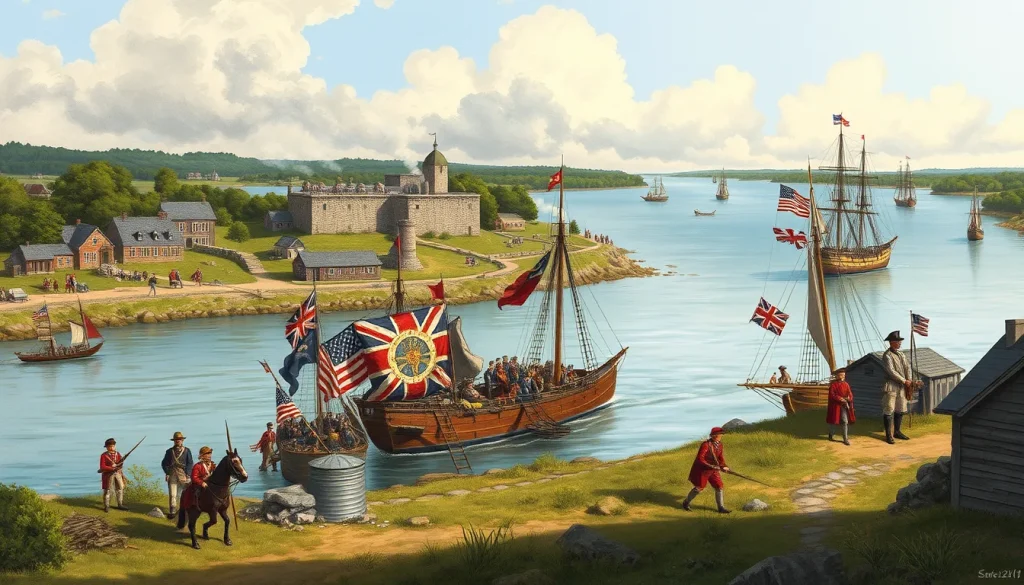
The British occupation of eastern Maine from July 1814 to April 1815 was a combined military and naval operation that seized American territory east of the Penobscot River, including the towns of Eastport, Castine, Hampden, and Bangor. The occupation, conducted under Lieutenant General Sir John Coape Sherbrooke, established a short-lived colonial administration known as “New Ireland.” It proved the strategic vulnerability of the United States on its northern frontier and had lasting consequences for Maine’s identity and for Canadian higher education.
Historical Context
During the War of 1812, Great Britain was primarily engaged in the Napoleonic Wars, but after Napoleon’s abdication in April 1814, it could devote more military resources to North America. British strategy in 1814 aimed at securing the Canadian provinces, raiding the American coast, and strengthening its hand in peace negotiations. Eastern Maine was a tempting target: it was geographically adjacent to British New Brunswick and Nova Scotia, and its largely Federalist population bitterly opposed the war. The United States, meanwhile, had concentrated its regular army along the Niagara and Lake Champlain frontiers, leaving the New England coast nearly defenseless. Political divisions compounded military weakness; Massachusetts, which governed the District of Maine, refused to authorize its militia for federal service. This combination of British opportunity and American neglect set the stage for the occupation.
What Happened
The British first moved against Eastport and Moose Island in Passamaquoddy Bay on 11 July 1814. A force of about 2,000 men under Lieutenant Colonel Andrew Pilkington, escorted by Captain Sir Thomas Hardy’s squadron including HMS Ramillies, appeared off the town. Major Perley Putnam’s eighty-man garrison surrendered without firing. The British demanded an oath of allegiance from the civilian population; most complied, though those who refused were forced to leave. Eastport remained under British control until 1818, even after the Treaty of Ghent.
The main expedition against the Penobscot region began on 26 August 1814, when Sherbrooke and Rear Admiral Edward Griffith sailed from Halifax with approximately 2,500–3,000 regulars from the 29th, 62nd, and 98th Foot, plus artillery and naval support. On 1 September they captured Castine, the principal fort at the mouth of the Penobscot, after the small garrison spiked its guns and evacuated. The British then advanced up the river. At Hampden on 3 September, they encountered the damaged USS Adams (26 guns) under Captain Charles Morris and about 1,400 militia. After a brief exchange of musketry, the militia broke and fled. Morris burned his ship to prevent capture. The British continued to Bangor, demanded a $30,000 bond, and occupied the town. Within days, the entire coast east of the Penobscot, roughly present-day Hancock and Washington Counties, was under British military administration.
Sherbrooke established a civil government and a customs house at Castine, reviving the old colonial name “New Ireland.” Inhabitants who surrendered their weapons received protection, and trade with British territories resumed. For eight months, the Penobscot served as an international boundary. Massachusetts made no serious effort to retake the territory, and the local population largely acquiesced. The British withdrew in April 1815 after ratification of the Treaty of Ghent, having collected approximately £10,000 in customs duties.
Why It Matters
The occupation exposed the limits of American military capacity and the deep partisan divisions of the war era. It demonstrated that Britain could seize and hold American soil at will, and that the United States’ northern frontier was dangerously exposed. The ease of the campaign and the lack of organized resistance underscored the Federalist disaffection in New England. The occupation also directly influenced Maine’s drive for statehood, achieved in 1820, as the people of the District concluded that Massachusetts would not defend them. The customs revenue taken from Castine was later used to found Dalhousie College in Halifax, now Dalhousie University, a lasting Canadian institution. Historians have debated whether the occupation was a strategic failure or success: some argue that Britain missed a chance to capture Portland or Portsmouth and permanently annex the region, while others see it as a bargaining chip skillfully used at Ghent. Popular American memory has largely forgotten the episode, which conflicts with narratives of national resilience.
Prelude
Eastern Maine was a weak point in American defenses. Jefferson’s embargo and the subsequent war crippled its maritime economy, feeding Federalist resentment. British authorities in Halifax had long considered the region part of a natural sphere of influence, and with the end of the European war in 1814 they could finally act. The capture of Eastport in July was a preparatory move that secured the border and provided a base for the larger Penobscot operation.
Forces and Commanders
The British expedition was commanded by Lieutenant General Sir John Coape Sherbrooke, Lieutenant Governor of Nova Scotia, with Rear Admiral Edward Griffith commanding naval forces. Ground troops included the 29th, 62nd, and 98th Regiments of Foot, plus Royal Artillery, totaling about 2,500–3,000. The American defenders were fewer than 100 regulars and militia in Castine, plus about 1,400 local militia at Hampden under Major Perley Putnam and Captain Charles Morris. The Americans had no naval support except the damaged USS Adams.
Battlefield and Map Context
Key sites included Fort Sullivan at Eastport, Fort George at Castine, the village of Hampden, and the town of Bangor. The Penobscot River provided a natural line of advance. A map of the operations shows British control extending from Passamaquoddy Bay to the Penobscot, with Halifax as the staging point. The terrain was heavily wooded, with settlements along the river.
Battle Chronology
- 11 July 1814: British capture Eastport and Moose Island.
- 26 August 1814: Sherbrooke’s expedition sails from Halifax.
- 1 September 1814: Castine falls without resistance.
- 3 September 1814: Battle of Hampden; militia disperses; Adams burned.
- 4 September 1814: Bangor occupied; $30,000 bond imposed.
- April 1815: British withdraw under Treaty of Ghent.
- 1818: Eastport returned to U.S. control.
Casualties and Losses
British losses were minimal: two killed and eight wounded across the entire operation. American losses were also few—one killed and about eighty captured at Hampden—but the destruction of the USS Adams and the payment of $30,000 from Bangor were significant costs. No civilian casualties were recorded during the peaceful occupation of Castine and Bangor.
Result
The British achieved a complete success, capturing the entire eastern Maine region with negligible resistance. They established a working administration, collected revenue, and held the territory until the war’s end. The Americans failed to mount any counterattack.
Strategic Consequences
In the short term, the occupation strengthened Britain’s negotiating position at Ghent and protected sea lanes to Halifax. It also demonstrated that New England was effectively outside the federal government’s reach. Longer-term consequences included the Castine Fund’s endowment of Dalhousie University and Maine’s movement toward statehood. Military historians have argued about whether the British should have extended the campaign to Portland or Portsmouth; some contend that limiting the occupation was a strategic error, while others see it as a rational use of limited force.
Primary Accounts
Primary sources include Sherbrooke’s dispatches to London describing the operation, and reports from American officers like Captain Morris and Major Putnam. Local newspapers in both the United States and British North America covered the events. The customs records from Castine, later transferred to Halifax, are held in Nova Scotia archives. These accounts generally agree on the basic events but interpret the occupation from opposing perspectives.
Battlefield Today
Fort George at Castine is a preserved historic site with earthworks and interpretive signage. Fort Sullivan at Eastport is a public park. The sites of the Battle of Hampden are marked by state historical markers. No major structures from the occupation survive intact, but the landscape along the Penobscot River remains recognizable. Museum exhibits in Castine and Eastport interpret the 1814–1815 period.
Primary Sources
Key contemporary documents include:
- Sherbrooke’s official dispatches (fall 1814) to the Earl of Bathurst, describing the expedition and the establishment of New Ireland.
- Captain Charles Morris’s report to the Navy Department regarding the burning of the USS Adams.
- Eastport oath documents and customs records from the British occupation, held in Halifax archives.
- American newspaper accounts from Boston and Portland, often hostile to the war, which reported the occupation with limited alarm.
These sources are reliable for chronology and basic facts but reflect each side’s military and political biases.
Further Reading
- Hickey, Donald R. The War of 1812: A Forgotten Conflict. University of Illinois Press, 1989.
- Lambert, Andrew. The Challenge: Britain Against America in the Naval War of 1812. Faber and Faber, 2012.
- Latimer, Jon. 1812: War with America. Harvard University Press, 2007.
- Lohnes, Barry J. “A New Look at the Invasion of Eastern Maine, 1814.” Maine History 15, no. 1 (1975): 4–29.
- Stagg, J.C.A. The War of 1812: Conflict for a Continent. Cambridge University Press, 2012.
References
- Hickey, Donald R. The War of 1812: A Forgotten Conflict. University of Illinois Press, 1989.
- Lambert, Andrew. The Challenge. Faber and Faber, 2012.
- Latimer, Jon. 1812: War with America. Harvard University Press, 2007.
- Lohnes, Barry J. “A New Look at the Invasion of Eastern Maine, 1814.” Maine History 15, no. 1 (1975).
- “The Maine Campaign – War of 1812.” TheWarof1812.org. Accessed 2025. https://thewarof1812.org/campaigns/the-maine-campaign/.
- “Battle of Hampden and Capture of Castine.” TheWarof1812.org. Accessed 2025. https://thewarof1812.org/battles/battle-of-hampden-and-capture-of-castine/.
- “Capture of Eastport and Moose Island.” TheWarof1812.org. Accessed 2025. https://thewarof1812.org/battles/capture-of-eastport-and-moose-island/.
FAQ
How long did the British occupation of eastern Maine last?
The main occupation of eastern Maine east of the Penobscot lasted from September 1814 to April 1815. Eastport was seized earlier, in July 1814, and remained under British control until 1818 due to lingering border disputes.
Why did the British occupy eastern Maine?
The British sought to secure the approach to Halifax, gain a bargaining chip for peace negotiations, and demonstrate British power after Napoleon's defeat. The region was also valuable for its timber and trade connections.
What was the Castine Fund?
The Castine Fund was about £10,000 in British customs duties collected at Castine during the occupation. After the war, the funds were used to help establish Dalhousie University in Halifax, Nova Scotia.



Leave a Reply