How Did Battle Reports Portray Indigenous Allies on Each Side?

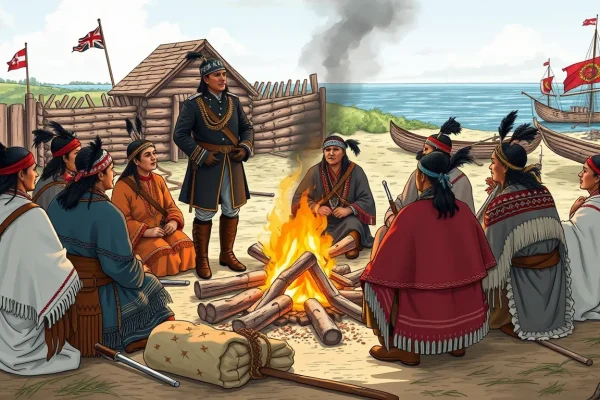
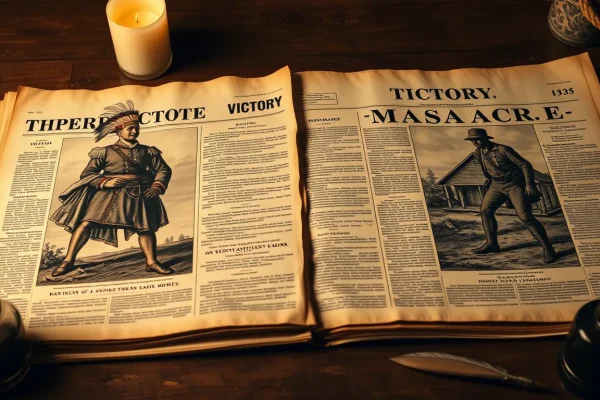
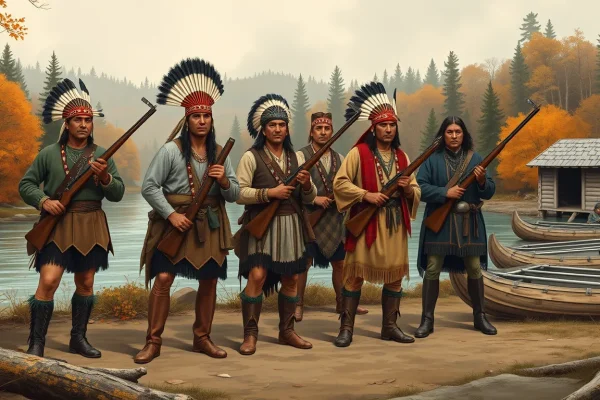
During the War of 1812, battle reports from American and British commanders offered sharply contrasting images of Indigenous allies: British reports often praised their skill and courage, while American reports frequently depicted them as fearsome savages. These portrayals shaped public opinion, influenced military policy, and left a lasting legacy in historical memory.
Read More →

How Did the Seven Nations of Canada Participate in the War of 1812?

The Seven Nations of Canada, a confederation of Catholic First Nations communities along the St. Lawrence River, participated in the War of 1812 mainly as British allies in Lower Canada and the St. Lawrence frontier. Warriors from Kahnawake, Akwesasne, Kanesatake, Odanak, Bécancour, and Wendake served as scouts, skirmishers, boatmen, and defenders, notably at Châteauguay and Crysler’s Farm. Their participation was community-based rather than directed by a single centralized war council, and it helped delay American advances on Montreal while deepening their reliance on British protection.

Read More →

What Was the Provincial Marine and How Did It Shape the Early Naval War?

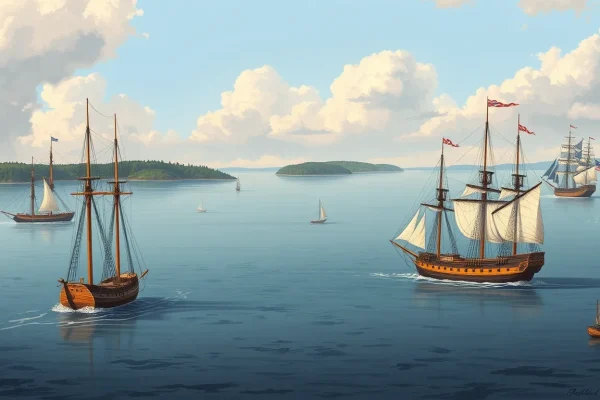
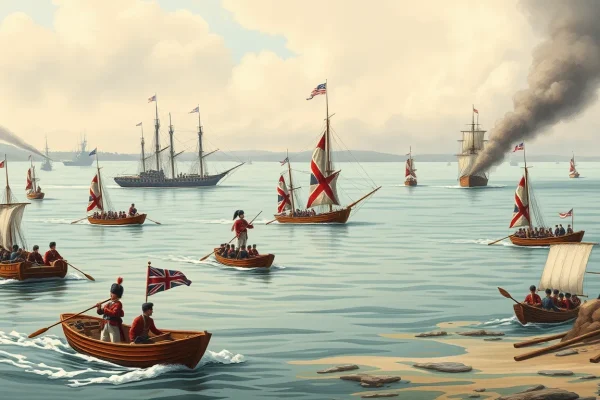
The Provincial Marine, also called the Marine Department, was Britain’s army-administered naval and transport service on the Great Lakes, the St. Lawrence River, and Lake Champlain. Its small squadrons were the only organized British naval force on the upper lakes in 1812, and their performance in that first campaign led the Royal Navy to take over the lakes in 1813.

Read More →

The British Indian Department: Organizing Indigenous Alliances

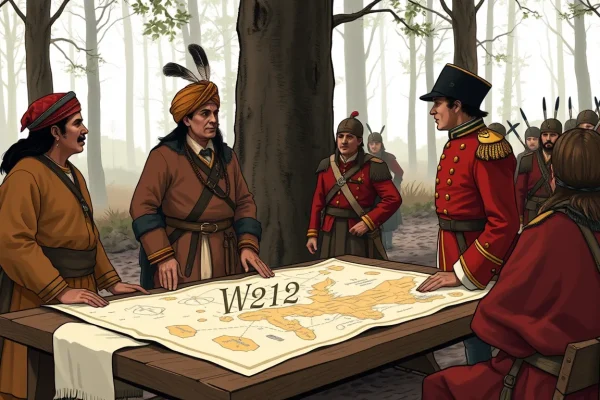
The British Indian Department was established in 1755 to manage relations between the British Crown and First Nations. During the War of 1812, its officers organized Indigenous alliances that supplied warriors, intelligence, and military support to British and Canadian forces. The wartime alliance helped defend Canada and shaped the department’s later role in administering reserves and Indigenous affairs.

Read More →

How Did Macdonough’s Use of Springs Change Naval Tactics?

At the Battle of Plattsburgh on September 11, 1814, Master Commandant Thomas Macdonough used spring lines to pivot his anchored ships and keep their broadsides bearing on the British squadron. The technique was not new, but Macdonough’s careful deployment on Lake Champlain demonstrated how springs could turn an anchored line into a flexible defensive weapon. The resulting American victory helped stop the British invasion of New York and shaped later assessments of naval tactics in the War of 1812.

Read More →

What Was the Immediate Aftermath of the Burning of Washington for the City’s Residents?

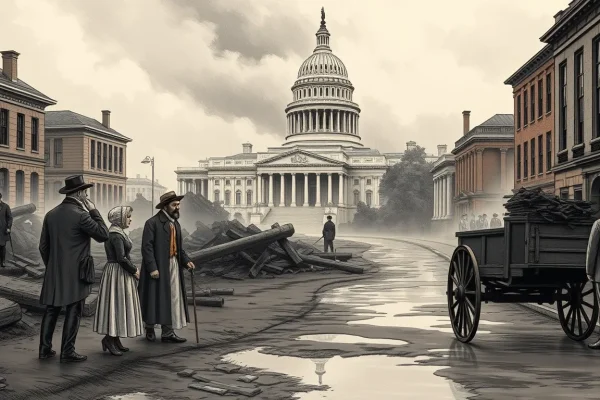
On 24–25 August 1814, British forces under Major General Robert Ross and Vice Admiral Alexander Cochrane occupied Washington City and burned the Capitol, the President’s House, and other public buildings. For the roughly 8,000 residents, the immediate aftermath brought displacement, looted or damaged property, a wrecked local economy, and a government operating from temporary quarters outside the city. Congress debated abandoning the capital before voting to rebuild it on the same site.

Read More →

What Happened to Free Men of Color After the War of 1812?

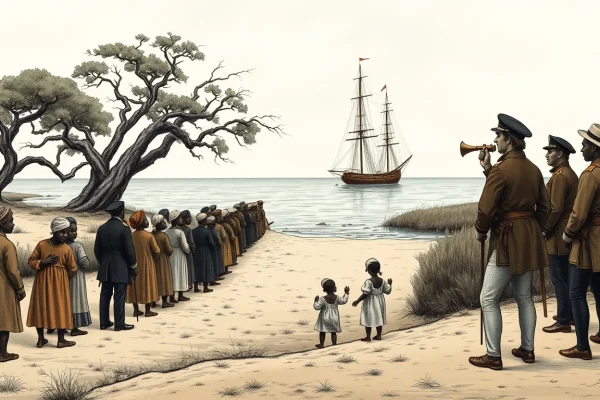
After the War of 1812, free men of color in the United States saw few of the rights they had hoped loyal service would bring, and many faced new legal restrictions. Several thousand Black people who escaped to British lines were evacuated as free settlers to Bermuda, Nova Scotia, New Brunswick, Trinidad, and Sierra Leone, while Article I of the Treaty of Ghent produced a British-American claims dispute over carried-away people that was not closed until 1828.

Read More →