Indigenous Forces in the Niagara Campaign

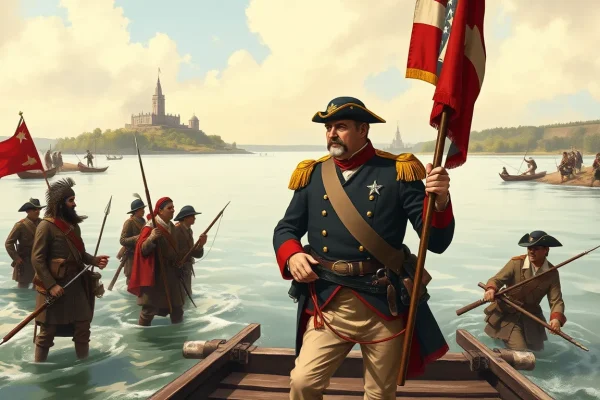
During the War of 1812, Indigenous warriors from the Haudenosaunee, Anishinaabe, and other nations played decisive roles in the Niagara Campaign, serving as allies to both the British and Americans. Their skillful use of forest warfare shaped key battles from Queenston Heights to Lundy’s Lane and influenced the war’s outcome in Upper Canada.

Read More →

Who Negotiated the Treaty of Ghent?

The Treaty of Ghent, signed December 24, 1814, was negotiated by five American commissioners—John Quincy Adams, James A. Bayard, Henry Clay, Jonathan Russell, and Albert Gallatin—and three British delegates—Admiral James Gambier, Henry Goulburn, and William Adams—who met in Ghent, Belgium, to end the War of 1812 with a return to prewar conditions.

Read More →

Andrew Jackson’s Rise After the War of 1812

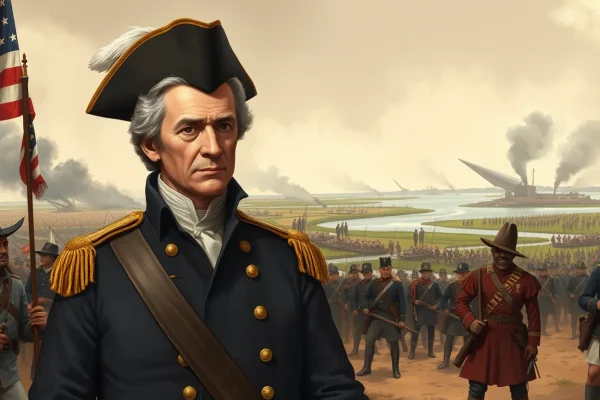
Andrew Jackson’s victory in the Battle of New Orleans on January 8, 1815 transformed him from a regional militia commander into a national hero, setting him on a path to the presidency in 1829. His successes during the War of 1812, especially against the Creek Nation and at New Orleans, came to symbolize a youthful American republic’s ability to triumph over a European power, overshadowing the war’s many American failures.

Read More →

William Hull’s Invasion of Upper Canada

In July 1812, American Brigadier General William Hull led an invasion of Upper Canada from Detroit, crossing the Detroit River and occupying Sandwich. The campaign ended in disaster with Hull’s surrender of Fort Detroit to British Major General Isaac Brock on August 16, 1812, a major early setback for the United States.

Read More →

Why 1814 Was the Decisive Year of the War of 1812

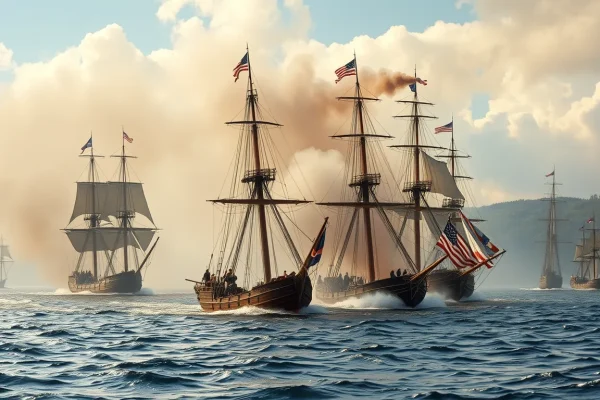
The year 1814 proved decisive in the War of 1812 because the defeat of Napoleon freed thousands of British regulars for North America, shifting the conflict from a stalemate to a series of invasions that culminated in the burning of Washington, successful American defenses at Plattsburgh and Baltimore, and the Gulf Coast campaign that ended at New Orleans.

Read More →

British Memory of the War of 1812

British memory of the War of 1812 is characterized by widespread neglect, overshadowed by the Napoleonic Wars. This article explores why the conflict is largely forgotten in Britain, how it has been interpreted by historians, and its consequences for historical understanding.

Read More →

Desertion During the War of 1812

Desertion plagued both the American and British armies during the War of 1812, sapping manpower, undermining campaigns, and prompting harsh punishments. Driven by low pay, harsh discipline, and bounty fraud, desertion rates peaked in 1814 and shaped the conflict’s outcome.

Read More →

York During the War of 1812

York, the capital of Upper Canada, was captured by American forces on 27 April 1813, leading to the burning of government buildings and later British retaliation at Washington. The attack underscored the strategic importance of Lake Ontario and became a defining event of the War of 1812.

Read More →