Short Answer
The Niagara Campaign of the War of 1812 (1812–1814) was a series of military operations along the Niagara River and the Niagara Peninsula, where Indigenous forces played a decisive role. Haudenosaunee (Six Nations), Anishinaabe (including Mississauga and Chippawa), and other First Nations warriors fought on both sides, though the majority allied with the British. Their participation was pivotal in battles such as Queenston Heights, Beaver Dams, Chippawa, and Lundy’s Lane, and their support significantly influenced the defence of Upper Canada. This article examines the composition, actions, and legacy of Indigenous forces in that campaign.
Historical Context
Before the War of 1812, Indigenous nations in the Great Lakes region faced increasing pressure from American expansion. The British, through the Indian Department and alliances formed after the American Revolution, cultivated strong military relationships with these nations. The United States, by contrast, largely excluded Indigenous peoples from military service and sought to acquire their lands. When war broke out in June 1812, the British immediately called upon their Indigenous allies to help defend Upper Canada, while many Indigenous nations saw the conflict as an opportunity to resist American encroachment. The Niagara region was a strategic corridor between Lake Ontario and Lake Erie, and its control was vital for both sides.
What Happened
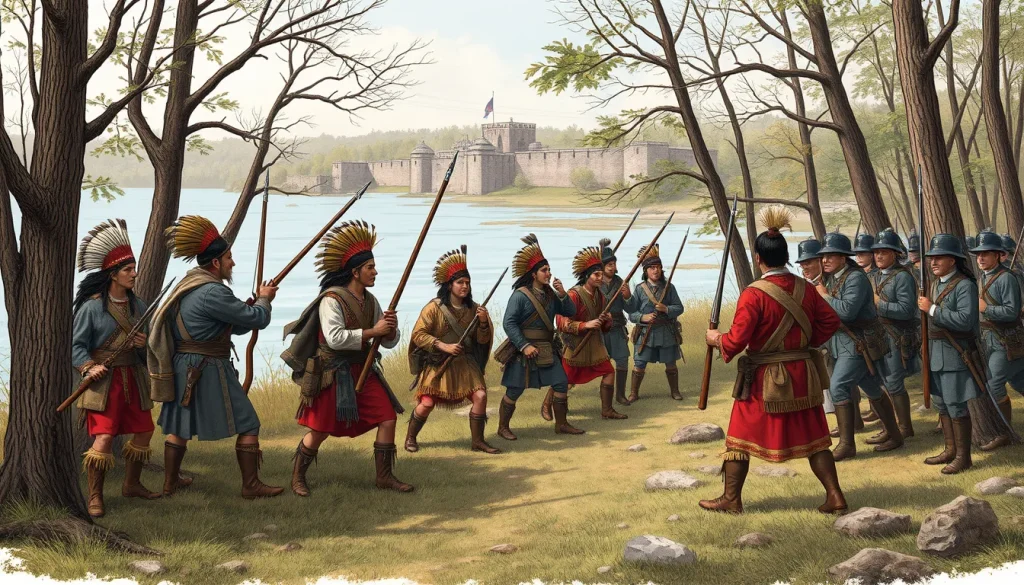
The Niagara Campaign unfolded in three main phases. In 1812, American invasions were repelled at Queenston Heights (October 13) and later raids along the Niagara. Indigenous warriors, including Mohawk leaders John Norton and John Brant, provided crucial skirmishing and flank attacks. In 1813, American forces captured Fort George (May 27), but Indigenous scouts and warriors under Norton and others helped the British at the Battle of Stoney Creek (June 6) and the Battle of Beaver Dams (June 24), where a small British-Indian force compelled a larger American column to surrender. In 1814, a renewed American campaign saw victories at Chippawa (July 5) and Lundy’s Lane (July 25), with Indigenous warriors on both sides. At Chippawa, some Indigenous allies fought for the Americans, including Seneca, Tuscarora, and Cayuga from New York, but many refused to fight against their kinsmen on the British side. The campaign ended with the American retreat to Fort Erie and the eventual ratification of the Treaty of Ghent in December 1814.
Why It Matters
The contribution of Indigenous forces was essential to the British defense of Upper Canada. Without their scouts, skirmishers, and knowledge of the terrain, the British might have lost control of the Niagara frontier. The war also had profound consequences for Indigenous peoples: the defeat of Tecumseh in 1813 and the loss of British support after the war led to the erosion of Indigenous land claims and sovereignty. Historians have increasingly recognized that the war’s outcome in the Niagara region cannot be understood without acknowledging Indigenous agency. The commemoration of Indigenous participation has become a central theme in the war’s bicentennial memory, exemplified by the Landscape of Nations Memorial at Queenston Heights.
Definition
Indigenous forces in the Niagara Campaign refers to warriors from various First Nations, chiefly the Haudenosaunee (Six Nations of the Grand River and New York), Anishinaabe peoples such as the Mississauga and Chippawa, and other nations like the Shawnee and Delaware who participated in military operations along the Niagara frontier. They served as allies of the British (and some of the Americans) rather than as regular soldiers, and their style of warfare was based on mobile skirmishing, ambush, and scouting.
Background
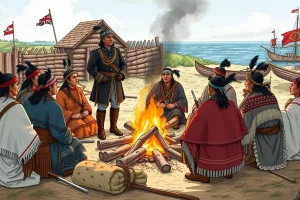
The British had maintained formal alliances with Indigenous nations since the 18th century, including the Covenant Chain with the Iroquois. After the American Revolution, many Haudenosaunee were granted land on the Grand River in Upper Canada. The U.S. government, in contrast, generally prohibited Indigenous enlistment early in the war, fearing it would escalate violence. As the war progressed, however, American commanders began to recruit Indigenous allies from New York and other states, albeit on a limited scale. The British Indian Department, under officers like William Claus and John Norton, coordinated with war chiefs and provided gifts, supplies, and ammunition to maintain loyalty.
How It Worked
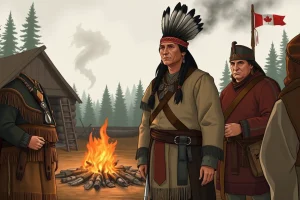
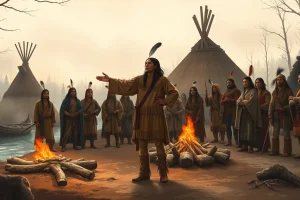
Indigenous warriors operated as autonomous units under their own leaders, with British officers providing overall direction. They used traditional warfare tactics—scouting, ambushes, and rapid attacks—which proved highly effective in the wooded terrain along the Niagara. They also served as skirmishers ahead of regular infantry and as raiders against American supply lines. The British often exaggerated the threat of ‘Indian massacres’ to intimidate American soldiers, contributing to American surrenders such as at Beaver Dams. Indigenous women also played support roles, though their contributions are less documented.
Competing Viewpoints
Historical interpretations of Indigenous involvement vary. British and Canadian historians often emphasize the loyalty and essential service of Indigenous allies, while American accounts traditionally downplayed their efficacy or highlighted fearsome behavior. Some Indigenous oral traditions stress that they fought to protect their lands and sovereignty, not simply as pawns of the British. Later scholars, such as Carl Benn, argue that the Iroquois were astute political actors who bargained with both empires. The decision of some Haudenosaunee to fight for the Americans in 1814 demonstrates that Indigenous decisions were often based on local interests and kinship ties rather than simple allegiance to empire.
Role in the War of 1812
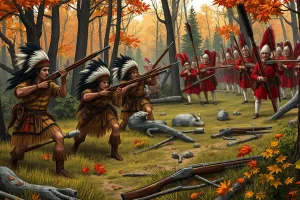
Indigenous forces were central to several Niagara engagements. At Queenston Heights, they helped prevent American reinforcements from advancing. At Beaver Dams, Laura Secord’s warning to the British was aided by Indigenous scouts, and the subsequent ambush forced an American surrender. In 1814, at Chippawa, Indigenous warriors on both sides were present; many Iroquois from Grand River initially fought with the British, while some Seneca and other nations joined the Americans. After the battle, many Indigenous allies withdrew from the fighting due to the horror of fighting relatives. At Lundy’s Lane and the later Siege of Fort Erie, Indigenous warriors participated in skirmishes but the campaign was dominated by regular infantry. Their contributions, however, were recognized by British commanders like Sir Gordon Drummond, who praised their service.
Consequences and Historical Interpretation
The end of the war brought profound changes for Indigenous peoples. The British abandoned many of their allies at the Treaty of Ghent, agreeing to restore territorial status quo ante bellum but making no provisions for Indigenous lands. This betrayal contributed to the decline of Indigenous bargaining power in the following decades. Commemoration of Indigenous contributions grew in the 20th century, with monuments and plaques at battle sites. The Landscape of Nations memorial, unveiled in 2016, officially recognized the Six Nations and allied Indigenous peoples’ role. Historians now see Indigenous participation not as a sideshow but as a critical factor in the war’s military and political outcomes.
Primary Sources
Contemporary accounts include British military reports, such as Major General Isaac Brock’s correspondence, which frequently noted the role of Indigenous warriors. Mohawk leader John Norton kept journals that provide an Indigenous perspective on battles like Queenston Heights and Fort George. American sources include letters from generals such as Jacob Brown and Peter Porter, who grappled with using Indigenous allies. The ‘Norton Papers’ and the ‘Claus Papers’ in Canadian archives are key documents. These sources are biased by their authors’ perspectives but offer valuable details on Indigenous tactics and diplomacy.
Further Reading
- Carl Benn, The Iroquois in the War of 1812 (University of Toronto Press, 1998).
- Crown-Indigenous Relations and Northern Affairs Canada, ‘Exhibit: Indigenous Contributions to the War of 1812’ (online exhibit).
- Niagara Parks, ‘Indigenous Connections along the Niagara Parkway’ (online resource).
- Donald E. Graves, Where Right and Glory Lead: The Battle of Lundy’s Lane, 1814 (Robin Brass Studio, 1997).
References
- Crown-Indigenous Relations and Northern Affairs Canada, ‘Exhibit: Indigenous Contributions to the War of 1812,’ https://www.rcaanc-cirnac.gc.ca/eng/1348771334472/1607906032957.
- Carl Benn, The Iroquois in the War of 1812, University of Toronto Press, 1998.
- Niagara Parks, ‘Indigenous Connections along the Niagara Parkway,’ https://www.niagaraparks.com/things-to-do/indigenous-connections.
- Niagara Parks, ‘Indigenous Culture in the Niagara Region,’ https://niagaraparks.com/explore/explore-the-niagara/indigenous-culture-in-niagara-region/.
FAQ
Why did most Indigenous nations side with the British in the Niagara Campaign?
The British had long-standing alliances and offered support against American expansion, while the U.S. generally sought Indigenous lands. Many nations saw the British as the lesser threat to their sovereignty.
Were there Indigenous forces fighting for the Americans in the Niagara Campaign?
Yes, some Seneca, Tuscarora, and Cayuga from New York fought with American forces in 1814, particularly at Chippawa, though many disliked fighting Iroquois kinsmen on the other side.
What was the impact of Indigenous participation on the outcome of the Niagara Campaign?
Indigenous warriors were essential as scouts, skirmishers, and flankers, contributing to British victories at Queenston Heights, Beaver Dams, and other engagements. Their presence also intimidated American forces and influenced decisions.
Leave a Reply