Short Answer
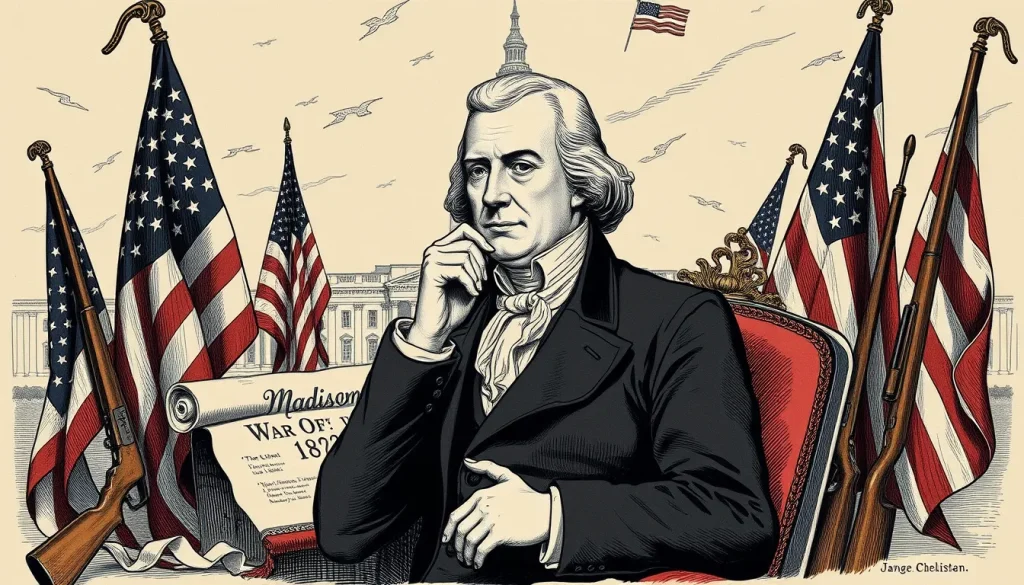
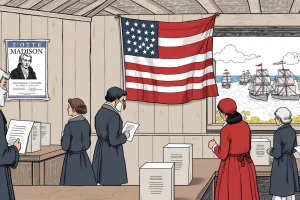
The Democratic-Republican Party, also known as the Jeffersonian Republicans, was the dominant political party in the United States during the War of 1812. Under Presidents Thomas Jefferson and James Madison, the party advocated for a limited central government, agrarian interests, and American neutrality in European conflicts. Yet it was the party that led the nation into war with Great Britain in June 1812, a conflict that tested its principles and ultimately reshaped American politics.
Historical Context
Following the American Revolution, the new republic saw the emergence of two competing political factions: the Federalists, who favored a strong central government and closer ties to Britain, and the Democratic-Republicans, who championed states’ rights and were suspicious of concentrated power. The French Revolutionary Wars and the subsequent Napoleonic Wars created constant friction between the United States and both Britain and France, as each belligerent sought to restrict neutral trade. The British practice of impressment—seizing American sailors for the Royal Navy—and the seizure of American ships under the Orders in Council created deep grievances, particularly among Democratic-Republicans who saw these actions as an affront to national sovereignty. After the failure of economic coercion through Jefferson’s Embargo Act of 1807 and Madison’s Non-Intercourse Act, the party moved toward open conflict.
What Happened
In 1810, a new Congress was elected, bringing a contingent of younger, more aggressive Democratic-Republicans known as “War Hawks,” including Henry Clay of Kentucky and John C. Calhoun of South Carolina. They argued for war against Britain to defend American maritime rights and to end British support for Native American resistance in the Northwest. On June 1, 1812, President Madison sent a war message to Congress, citing impressment, the Orders in Council, and British incitement of Indian attacks. Congress voted on June 18, 1812, with a narrow division: 79–49 in the House and 19–13 in the Senate. The vote fell largely along sectional and party lines, with Democratic-Republicans from the South and West supporting the war, while Federalist New England largely opposed it. During the conflict, Democratic-Republican leaders oversaw military campaigns in Canada, the Great Lakes, and the Chesapeake, but the war was hampered by inadequate funding, militia indiscipline, and poor coordination. The party also faced internal opposition from peace factions, particularly in New England, where the Federalist Party gained strength. The war ended with the Treaty of Ghent in December 1814, which restored the pre-war status quo but resolved none of the original grievances.
Why It Matters
The War of 1812 had profound effects on the Democratic-Republican Party. The party’s inability to achieve its stated war aims, combined with growing opposition, led to a period of introspection and fragmentation. The Hartford Convention of 1814–1815, in which Federalists aired grievances, was discredited by Andrew Jackson’s victory at New Orleans, but the war nonetheless discredited the Federalist Party as a national force. By 1816, the Democratic-Republicans adopted a more nationalist agenda, including support for a national bank, tariffs, and internal improvements—positions once associated with Federalists. This shift eventually led to the “Era of Good Feelings” under James Monroe, but also sowed the seeds for the party’s dissolution in the 1820s. Historians argue that the war marked a turning point in which the Democratic-Republicans abandoned their strict constructionist principles and embraced a stronger federal government, thus transforming American political culture.
Definition
The Democratic-Republican Party was one of the first two political parties in the United States, existing from the early 1790s to the 1820s. Its adherents championed a limited federal government, strict interpretation of the Constitution, states’ rights, agrarianism, and opposition to aristocratic privilege. The party took its name from its democratic principles and its republican insistence on popular sovereignty. It is not to be confused with today’s Democratic or Republican parties, as it is an ancestor of the modern Democratic Party.
Background
The party traced its origins to the opposition to Alexander Hamilton’s financial program in George Washington’s administration. Thomas Jefferson and James Madison founded an alliance of like-minded leaders, press editors, and local politicians to resist what they saw as monarchical tendencies and pro-British policies. Over time, the party built a coalition of Southern planters, western farmers, urban artisans, and immigrant groups, particularly in the mid-Atlantic. By the election of 1800, the Democratic-Republicans had defeated the Federalists, beginning a quarter-century of dominance. The party’s ideology was deeply rooted in the republican ideals of the American Revolution, emphasizing civic virtue, agrarian simplicity, and opposition to standing armies and heavy national debt.
How It Worked
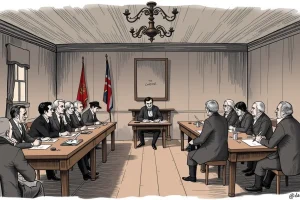
The Democratic-Republicans operated through a decentralized structure, relying on a network of state parties, congressional caucuses, and party newspapers. The congressional caucus nominated presidential candidates, and partisan newspapers spread the party’s message and attacked its opponents. In Congress, party discipline was maintained through caucuses and committee assignments. Patronage and other government largesse helped build loyalty. However, the party was never monolithic; it contained factions based on region, economic interest, and personal loyalties. The War of 1812 exposed these divisions, as the War Hawks clashed with more moderate Republicans who favored diplomacy, and New England Republicans often defied the national party line.
Competing Viewpoints
Within the Democratic-Republican Party, there were significant disagreements about going to war. War Hawks, many from the South and West, saw war as necessary to assert American sovereignty, eliminate British influence over Native Americans, and possibly annex Canada. Others, particularly those from coastal regions with commercial interests, feared the economic disruption of war and preferred continued economic coercion. The Democratic-Republican press was also divided, with newspapers like the National Intelligencer supporting Madison, while others criticized his leadership. The party also faced external pressure from Federalists, who branded the war “Mr. Madison’s War” and argued it was a reckless gamble that would harm trade. Historians have debated whether the war was a quest for territorial expansion or a defense of neutral rights, with modern scholarship emphasizing the role of Indian policy in the West.
Role in the War of 1812
The Democratic-Republican Party’s control of the presidency and Congress made it the architect of the war. President Madison, a Democratic-Republican, signed the declaration of war and directed the war effort, though he was often criticized for his indecisiveness. The party’s leaders also managed the military and financial aspects of the conflict, but they were hampered by their own ideological opposition to a strong standing army and high taxes. Nonetheless, the war allowed many Democratic-Republicans to embrace nationalist policies, such as a larger navy and better coastal defenses. The party also faced the challenge of maintaining civilian morale and dealing with the secessionist threats from Federalist New England.
Consequences and Historical Interpretation
The war’s end marked a turning point for the Democratic-Republican Party. The Treaty of Ghent returned to pre-war boundaries, and the war was seen as a victory in the sense of having stood up to Britain. This triumph boosted national confidence and allowed Democratic-Republicans to absorb many former Federalists, leading to an era of one-party rule. However, the war’s costs—in lives, debt, and commercial disruption—led to a reevaluation of the party’s founding principles. Historians have increasingly recognized the war as a catalyst that pushed the United States onto a path of industrialization, nationalism, and westward expansion. For the Democratic-Republicans, the war proved to be both a validation of their ability to govern and a source of internal contradictions that would eventually lead to the party’s transformation under Andrew Jackson.
Primary Sources
Key contemporary documents include President James Madison’s war message of June 1, 1812, which enumerated grievances against Britain; the congressional debates recorded in the Annals of Congress; and the letters and diaries of political leaders such as Henry Clay and John C. Calhoun. Party newspapers, such as the National Intelligencer, offer insight into the political rhetoric of the day. Federalist publications and the Hartford Convention proceedings provide opposing perspectives. These sources must be used with awareness of their partisan bias and the limits of early nineteenth-century political communication.
Further Reading
- Gordon S. Wood, Empire of Liberty: A History of the Early Republic, 1789–1815 (Oxford University Press, 2009).
- Donald R. Hickey, The War of 1812: A Forgotten Conflict (University of Illinois Press, 1989).
- Andrew Burstein and Nancy Isenberg, Madison and Jefferson (Random House, 2010).
- Charles Sellers, The Market Revolution: Jacksonian America, 1815–1846 (Oxford University Press, 1991).
- National Park Service, “Madison, Party Politics and the War of 1812,” https://www.nps.gov/articles/defining-a-national-system.htm.
References
- “Democratic Republicans,” Encyclopedia.com, http://encyclopedia-loadbalancer-1-1782916326.us-west-2.elb.amazonaws.com/history/encyclopedias-almanacs-transcripts-and-maps/democratic-republicans.
- Andrew Burstein and Nancy Isenberg, “Defining a national system: Madison, party politics and the road to war,” National Park Service, https://www.nps.gov/articles/defining-a-national-system.htm.
- Gordon S. Wood, Empire of Liberty: A History of the Early Republic, 1789–1815 (Oxford University Press, 2009).
- “Federalists, War Hawks & The War of 1812,” American Battlefield Trust, https://www.battlefields.org/learn/articles/federalists-war-hawks-war-1812.
FAQ
Why did the Democratic-Republicans support the War of 1812?
They believed that British impressment, seizures of American ships, and support for Native American resistance in the West violated U.S. sovereignty and national honor, leading them to advocate war.
What were the main factions within the Democratic-Republican Party during the war?
The War Hawks, who demanded war and expansion; moderate Republicans who preferred economic sanctions; and New England Republicans who were often sympathetic to Federalist opposition.
How did the War of 1812 affect the Democratic-Republican Party?
The war led to a temporary increase in nationalism, but also to internal strains that contributed to the party's absorption of Federalists and the eventual 'Era of Good Feelings', as well as the party's transformation into the Jacksonian Democrats.


Leave a Reply